1. Introduction
| Each component of an infrastructure project, such as its technical design, financial package, approach to management of its assets for revenue generation and cost recovery, relationship with stakeholders including the Government, etc. has a bearing on the other. A well-structured project ensures that the relationship between the various components is complementary and leads to the desired outcome optimally. | |
| The process of configuring a particular project in a manner that comprehensively addresses the various facets of designing, engineering, financing, constructing/rehabilitating, operating and maintaining the asset/delivering the service economically and sustainably, is referred to as project structuring. |
|
| Project Structuring, among other things, answers: • What is the scope of the project? • What are the contours of the procurement process? • How is the project defined and whether it addresses the need? • Are the expectations of stakeholders adequately addressed? • What are the general and project specific roles and responsibilities of the parties in the PPP arrangement? • What is the duration of such an arrangement? • What forms the consideration in the arrangement, payment terms and conditions? • What are the risks associated with the project and how are they allocated, mitigated and managed? • What are the remedies and redress mechanism set out for non-compliance of obligations? • What are the events of default, which of them lead to termination and what are the consequences of termination? | |
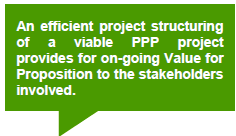
It is a holistic and comprehensive project structure that addresses the concerns of all stakeholders goes a long way towards creating a beneficial impact on the society.
| Defining the Optimal Structure for PPP The technical analysis, financial analysis, value proposition analysis and the economic analysis contribute significantly to deriving an optimal project structure for development. To design an optimal project structure under a PPP framework, different options will have to be first analysed and valued. This needs to be done to ensure that the sharing of risks between the parties is done in a manner that creates a win-win situation not only for the private partner and the public entity but also provides maximum value to the society at large. The first condition to be met for each option is a positive value from an economic perspective. In other words: is the project warranted and does it provide a net positive economic value to the society? This is assessed through an economic analysis. If the project does not have a positive impact on society, it should not even be considered as a project let alone as a PPP. The second condition to be met is a positive value to the private sector i.e. is the PPP viable? This implies that the PPP should generate sufficient revenues for the private partner for an acceptable rate of return. This is assessed through financial viability indicators obtained from the viability analysis. The third analysis aims to assess which of the viable options available (fulfilling both of the above conditions) provides the maximum value proposition and is therefore the most attractive structuring solution to pursue. The various options to be analysed include the different types of PPP configurations as well as the traditional format of procuring the needed infrastructure services to determine the optimal structure. |
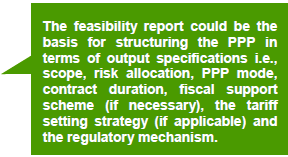
| The key tenets of project structure include - the scope of the PPP, the appropriate PPP mode, the financial scheme, how costs can be recovered, the duration of the PPP, and the overall operating framework. These tenets serve as key inputs for developing a PPP structure emanate from a range of studies or investigations that a public entity undertakes prior to configuring a structure. |
|