PSP in Australia, Malaysia, and Turkey
Australia, Malaysia, and Turkey demonstrate how successful PSP requires all three foundational elements - a PSP policy, a legal framework, and an institutional setup. They also offer several instructive lessons: First, they suggest that a unified PSP policy supports the alignment of PSP activities with the national vision and economic targets, and allows governments to prioritize sectors and projects in which PSP offers the greatest returns. Second, dedicated legal frameworks for PSP are required in civil law countries, but they can evolve over time. Third, the most appropriate institutional framework for PSP will depend on the PSP program and the capabilities within existing institutions in government.
Australia adopted a national PPP policy framework in October 2015, but does not have a privatization policy.5 Malaysia has a set of PSP policies that were created in piecemeal fashion - beginning with a privatization policy in 1983 and ending, most recently, with the adoption of guidelines for PPPs in 2009. In 1980, Turkey adopted a comprehensive policy that governs all of its PSP efforts.
Each country has a legal framework for PSP. Australia and Malaysia do not have PSP laws per se, but their common-law legal systems lessen the need for a separate legal framework for PSP. Turkey, which has a legal system based on civil law, has a dedicated law for privatizing SOEs. Turkey has a draft PPP law that is not yet adopted and a number of laws and regulations governing PPPs in different sectors that cover the sector-specific issues.
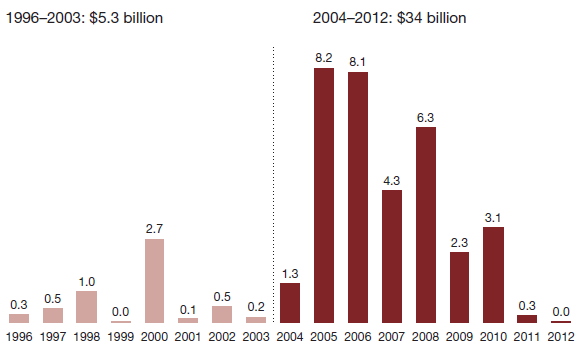
The institutional setups for PSP, which tend to develop gradually in a "learn-as-you-go" approach, also vary. Australia has adopted a decentralized institutional model for SOE privatization, with line ministries managing the process; and a centralized model for PPPs with a national policy framework. Malaysia has created another variation: a centralized institutional setup for both SOE privatization and PPPs in a dedicated entity known by its Bahasa Malaysia acronym, UKAS, which is located in the prime minister's office. Although Turkey does not have a dedicated entity for PPP projects, they are all managed by the Ministry of Development. Turkey's privatization projects, however, are supported by a dedicated entity, which answers directly to the prime minister. In conjunction with strong support from the prime minister, the creation of this entity, which includes a high council composed of ministers and an administration, has accelerated Turkey's privatization efforts and revenues (see Exhibit 6).
Exhibit 6
Most Turkish privatization revenues have accrued since the creation of a dedicated privatization entity
Privatization revenues (US$ billion)
Source: Privatization Administration, Turkey; Strategy& analysis