A new approach
A wide variety of PPP models have been adopted in Saudi to date. While the aviation sector has been using traditional models of PPPs (leaving ownership under GACA), the SAGIA announced in August 2017 its intension to privatise parts of the education and healthcare sectors, with the government retaining only a regulatory role.
Future agreements in the airports sector are likely to involve greater private ownership than under the existing agreements. The diagram below illustrates the range of PPP models available, stretching from service contracts with publically owned entities to wholly privately owned entities. A shift towards greater private ownership is expected as a result of the Saudi Vision 2030.
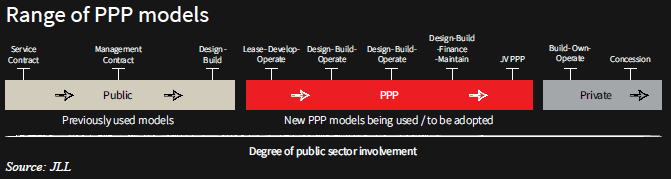
Since the announcement of the National Transformation Program, the government has set 24 of its ministries, authorities and entities with ambitious targets to achieve by 2020. With such a short timeframe and limited internal capital, many of these targets can only be achieved through far higher private sector involvement. A number of the ministries and government authorities have already announced plans to either privatise, or increasingly involve the private sector in delivering and operating services.
With a large number of PPPs in the pipeline, there will be increased competition for external investment and expertise with projects competing for limited resources. In such circumstances, a number of government ministries and authorities are seeking to produce detailed plans to improve the attraction of projects in the eyes of investors, thereby increasing the chance of completing a successful PPP.