1.6 Key Stakeholders
|
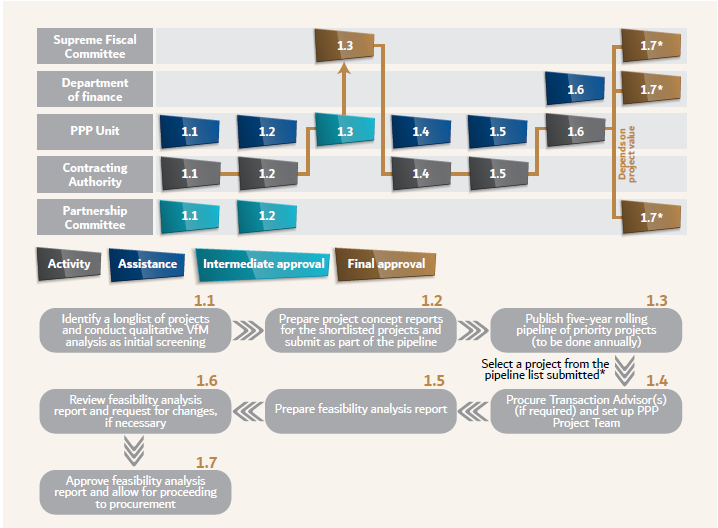
Figure 3: Initiation process lifecycle along with key approvals required at every stage and stakeholder in charge of performing activity, issuing intermediate approval (if any) and providing Final Approval |
|
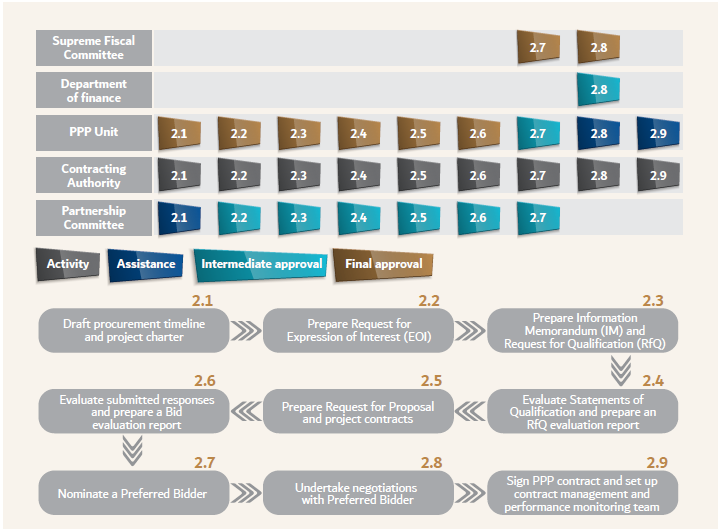
Figure 4: Procurement process lifecycle along with key approvals required at every stage and stakeholder in charge of performing activity, issuing intermediate approval (if any) and providing Final Approval |
|
*The approval process for the Feasibility Study is contingent on project value: whilst they are always prepared by government entities, for a project with a value lower than AED 200 million, the Partnership Committee recommends the study for approval, and the Director General of the entity provides the approval; for projects with a value between AED 200 and 500 million, the Director General of the entity recommends the document for approval and the Department of Finance provides the Final Approval; and, for projects with a value greater than AED 500 million, the Department of Finance recommends the document for approval and the Supreme Fiscal Committee provides the Final Approval
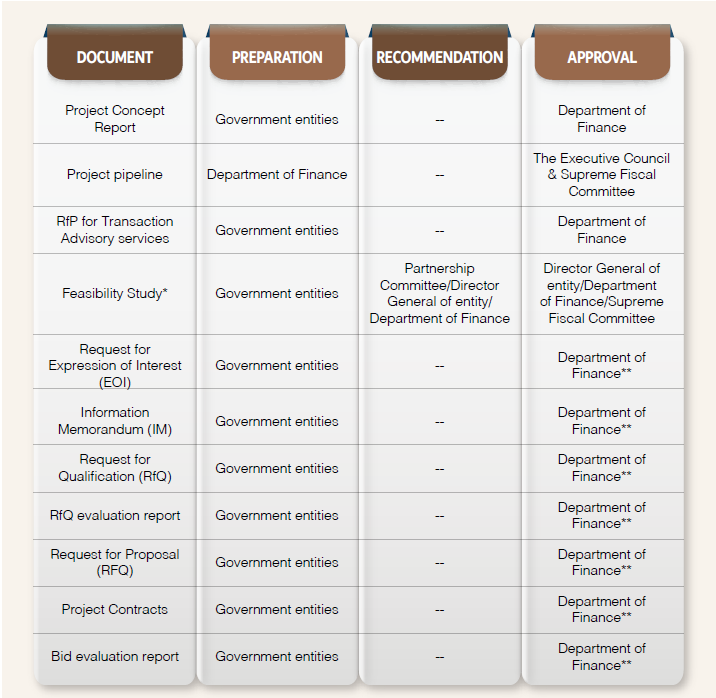
Figure 5: List of documents to be produced during the course of the procurement process and the Stakeholders responsible for preparation, recommendation, and approval
|
As outlined in the PPP Law, there are a number of key Stakeholders who will be responsible for performing tasks, accountable for review and approvals, consulted for input on a frequent basis, and informed about project progress on an intermittent basis:
1. Government Entity: All entities that are subject to the general budget of the Government, or as otherwise approved by the Supreme Fiscal Committee (see below), are "Government Entity", as referred to hereinafter in this document.
In order to screen a project for PPP potential, prepare a project as a PPP, and conduct the procurement process, a Government Entity will have to form a PPP Project Team (see 6 below), the members and responsibilities of which can be decided at the discretion of the Director General of the Government Entity. The PPP Project Team can also consist of Transaction Advisors hired with the purpose of assisting the Government Entity evaluate and procure the project. As noted in Article 10 of the PPP Law, government entities are responsible for the following:
 Preparing the studies required for determining the rationale behind implementing the proposed Project. These studies must feature the financial, economic, technical, and social feasibility and the beneficiaries of the Partnership, appropriate criteria for selecting a Partner, a Project implementation programme, and an implementation risk analysis;
Determining the human, financial, and technical resources required for the Project, financing methods, contributions of both parties to the Project, dividend distribution, service charges, exemption from these charges, intellectual property rights, and other relevant matters;
Coordinating the Government Entity concerned with the Project to determine its impact on their own plans, and on the strategic plans of the Government in general;
Studying and evaluating all financial aspects of the Partnership Contract and have them approved by the Department of Finance;
Proposing the standards that must be met by the entity that will be contracted with, and propose preliminary Partnership Contracts and their addenda;
Coordinating with the Department of Finance to determine the appropriate method of Partnership for the Project or service in accordance with the Partnership methods stipulated in the Law;
Selecting qualified consultancy companies/Transaction Advisor(s) to conduct studies related to the Project;
Forming a work team in conjunction with the private sector to agree on work methods; to gather, exchange, and update information; and, to cooperate regarding technical developments and work requirements;
Supervising the proper performance by the Project Company of its obligations under the Partnership Contract, and take immediate and appropriate measures to remedy any breach or omission in the performance of such obligations in a manner that ensures that the Project continues to achieve its objectives;
Coordinating with Competent Authorities (as defined in Article 8 of the PPP Law) to overcome any obstacles that may prevent the implementation of the Project;
Reporting to the Financial Audit Department any financial breaches committed by a Project Company; and,
Preparing quarterly reports on work progress throughout the performance of the Partnership Contract, and any obstacles hindering such performance; propose appropriate solutions to these obstacles; and, submit the reports to the Department of Finance.
2. Department of Finance: The Department of Finance, which serves as the chief budgeting body in the Emirate, will serve as the parent agency of the PPP unit, and will have the following functions:
Developing the general policy regulating Partnership Projects between the public sector and the private sector, and submit the same to the Supreme Fiscal Committee (see below) for approval;
Proposing updates and developments to the legislation regulating Partnerships based on the relevant best practices, the outcomes of Partnership Projects previously implemented by government entities, and the comments and proposals of these entities, taking into consideration the interests of the public sector and the private sector;
Providing support and assistance to government entities in the preparation and development of Partnership initiatives;
Providing Final Approval for feasibility studies for projects with total governmental commitment between AED 200 million and AED 500 million, as defined in the PPP Law No. 22 2015, which will detail the PPP structure, total budget allocation, contingent liabilities, and the PPP procurement plan;
Reviewing and recommending to the Supreme Fiscal Committee for Final Approval feasibility studies for projects with total governmental commitment greater than AED 500 million, as defined in the PPP Law No. 22 2015, which will detail the PPP structure, total budget allocation, contingent liabilities, and the PPP procurement plan;
Recommending to the Supreme Fiscal Committee the approval of the identity of the Preferred Bidder prior to commencement of contractual negotiations;
Recommending to the Supreme Fiscal Committee the approval of all PPP contracts and of the final Bid from the Preferred Bidder;
Contributing to creating a favourable environment to invest in Partnership Projects, and promoting these Projects within and outside of the Emirate in coordination with competent entities in the Emirate;
Overcoming all the difficulties that a Project Company may face, in coordination with concerned government entities;
Proposing necessary measures for developing Partnerships as a method of managing Projects and providing Government Services; and,
Performing any other duties that are required for the achievement of the objectives of the PPP Law and the governing regulations.
3. Supreme Fiscal Committee: The Supreme Fiscal Committee, which has been tasked with overall responsibility for overseeing fiscal policy, in addition to other duties as determined under the requirements of other laws, will be responsible for the following:
Monitoring the overall effectiveness, exposure, and compliance with the PPP framework and Law;
Providing Final Approval of the Feasibility Study for projects with total government commitment exceeding AED 500 million as defined in the PPP Law No. 22 2015, which will detail the PPP structure, total budget allocation, contingent liabilities, and the PPP procurement plan. The Feasibility Study shall be referred to the Committee after review by the Department of Finance;
Providing approval of the identity of the Preferred Bidder prior to commencement of contractual negotiations, following the receipt of a recommendation from the Department of Finance; and,
Providing approval of all PPP contracts and of the final Bid from the Preferred Bidder prior to award, following the receipt of a recommendation from the Department of Finance.
4. Partnership Committee: As outlined in Article 11 of the PPP Law, an internal committee named the Partnership Committee will be formed at each Government Entity, the members of which will be nominated pursuant to a resolution of the Director General of the Government Entity. Where the total cost to be incurred by a Government Entity during the course of a Partnership Project exceeds AED 200 million, the Committee must include a representative from the Department of Finance nominated by the Director General. The Committee will serve as the supervisory body on PPP Projects, with the PPP Project Team reporting directly to it, providing updates on project progress and seeking their approval at key stages, as further outlined below.
5. Financial Audit Department: Supreme audit institution of Dubai, with jurisdiction over government departments, public corporations, government-related enterprises, and any organisation receiving a government subsidy, the functions of which are outlined in Article 13 of the PPP Law, including a remit to audit the performance of a Partnership Contract and monitor financial breaches permitted by the Project Company.
6. PPP Project Team: In order to screen a project for PPP potential, prepare a project as a PPP, and conduct the procurement process, a Government Entity will have to form a PPP Project Team, the members and responsibilities of which can be decided at the discretion of the Director General of the Government Entity. The PPP Project Team will be chiefly responsible for carrying out the roles and functions assigned to the Government Entity at all stages of the project The PPP Project Team will report to the Partnership Committee within the contracting authority and to the PPP Unit in DoF. The composition of the team, its functions, the nature of supervisory bodies, and other administrative protocols are to be exclusively decided by the Director General of the Government Entity, whose sole discretion it is to decide how the Government Entity's functions must be carried out. The PPP Project Team can also consist of Transaction Advisors hired with the purpose of assisting the Government Entity evaluate and procure the project.