The age of the NHS Estate
1.2 Capital assets in the NHS include physical assets (for example, buildings and medical equipment) and non-physical assets (for example, software). The capital assets used to provide NHS services includes hospitals and equipment owned by NHS trusts and NHS foundation trusts (NHS providers) as well as private sector companies (through the Private Finance Initiative). It also includes hospitals and equipment leased through arrangements with the public sector (through NHS Property Services Limited).
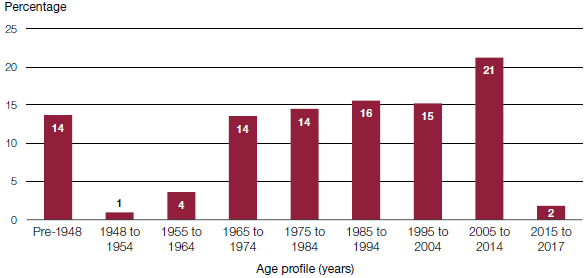
1.3 Parts of the NHS estate predate the formation of the NHS (1948) and include Victorian-era hospitals. The NHS Long Term Plan acknowledges that "some of our estate is old, in parts significantly older than the NHS itself, and would not meet the demands of a modern health service". A building's age does not necessarily indicate a problem, as it can be upgraded to meet modern standards of care, but the upkeep of any facility depends on the availability and efficient use of capital funds. Figure 1 overleaf shows that, at 2016-17, 46% of the NHS estate by gross internal area was more than 33 years old.
| Figure 1 14% of the estate dates from before the formation of the NHS and 46% was more than 33 years old |
|
|
| Notes 1 Totals may not sum due to rounding. 2 Age of the estate data last reported for 2016-17. |
| Source: National Audit Office analysis of NHS Digital Estates Return Information Collection (ERIC) data 2016-17 |