Skills and capabilities
2.2 As private finance initiative (PFI) projects come to an end, authorities will need to manage the contract expiry process alongside its daily operations, which can put pressure on resources - 30% of respondents in our survey anticipate not having enough staff to manage the expiry process.14 The priority for each authority is to ensure that public assets such as roads and hospitals are fully operational and available for day-to-day use. When resources are scarce, there is a risk that less priority is given to expiry preparations, with this being a greater risk for smaller authorities than for those departments which are directly managing a PFI contract. For example, HM Revenue & Customs directly manages four PFI contracts and established a dedicated expiry team, together with an operational management team. In contrast, we have identified examples at a local authority level where multiple PFI contracts are being managed by only one individual with limited additional support.
2.3 In 2018, the Department for Work & Pensions (DWP) exited a 20-year PFI contract known as PRIME (Private Sector Resource Initiative for Management of the Estate). Under this contract, DWP outsourced the management of its entire estate - more than 1,000 properties - to a private sector provider. Owing to the complexity of this contract, DWP had to significantly increase its expertise and capability. The team responsible for delivering the exit increased to 135 civil servants and contractors. This took time, and only after recruiting personnel with the required skillset was DWP able to properly assess its approach to the expiry negotiations.
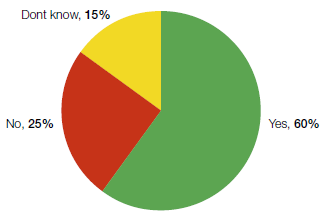
2.4 The long-term nature of a PFI contract means it is likely that the people responsible for the contract within the authority will change over time. It is therefore important that authorities have robust records management procedures and staff handover processes to ensure knowledge of the contract is not lost. The PFI expiry process also requires a different set of skills, such as contract negotiations and asset management, compared to managing day-to-day operations. About 25% of respondents consider they lack the necessary in-house skills to deliver the expiry process and 60% of respondents are planning to hire consultants (Figure 9).15,16 Our survey highlights that external consultants are required primarily to address three skill shortages: legal expertise to draft new or amend existing contracts, technical skills to assess asset conditions and validate dilapidation surveys, and financial expertise.
Figure 9 Percentage breakdown of survey respondents that require external consultants to deliver the expiry process Sixty per cent of respondents have hired or expect to hire external consultants to fill internal skill gaps
Note 1 The survey results to question 21: did the authority use or expect to use, external advisers (for example, project management consultants) to help deliver contract expiry and the transition to new arrangements? Yes - 45, No - 19, Don't know - 11. Source: National Audit Office private finance initiative expiry survey |
2.5 Addressing the lack of in-house skills, either through external consultants or by building up internal expertise, represents an additional cost to authorities. Authorities need to make a judgement about the costs and benefits of building internal expertise versus hiring consultants. There are currently no standard terms of reference to help authorities hire consultants. In addition, there is only a limited pool of technical experts, such as commercial specialists or lawyers, across central government that could support those authorities experiencing skill shortages. It is unlikely that the current piecemeal approach, whereby experts are hired directly by authorities on a case-by-case basis, will represent value for money as the volume of expiring contracts increases.
2.6 The level of central support being provided, and the amount that is considered appropriate, varies across authorities. Around 50% of respondents indicated that no support is being provided from the centre of government,17 with around 30% stating that more support would be helpful.18 Respondents identified contract expiry guidance and support with procuring consultants as helpful resources. Some departments, such as the Department for Education, told us they plan to develop sector-specific guidance. Many respondents also expressed a desire for contract expiry training as well as greater sharing of lessons learned supported by case study examples of previously expired contracts.
______________________________________________________________________________________
14 Question 18: Did or does the authority expect to have enough staff to manage contract expiry and, if applicable, the transition to new arrangements? Number of responses: Yes - 53, No - 22, 22/75 = 29.34%.
15 Question 19: Did or does the authority have staff with the appropriate skills to deliver contract expiry and the transition to new arrangements? Number of responses: Yes - 47, No - 18, Don't know - 10, 18/75 = 24%.
16 Question 21: Did the authority use or expect to use, external advisers (for example. project management consultants) to help deliver contract expiry and the transition to new arrangements? Number of responses: Yes - 45, No - 19, Don't know - 11, 45/75 = 60%.
17 Question 23: What support was or is being provided from the centre of government (for example, from HM Treasury, the Infrastructure and Projects Authority (IPA)) to help in your contract expiry preparations? Number of responses: None - 38, 38/75 = 50.67%.
18 Question 23a: Was or is the level of support sufficient? Number of responses: Yes - 52, No - 23, 23/75 = 30.67%.