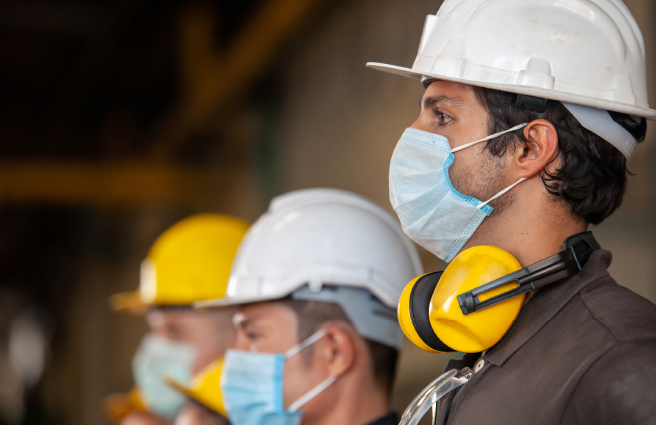
Collaborating to achieve project excellence in the wake of COVID-19
Prior to the COVID-19 outbreak, economists predicted a 3% acceleration in pace of growth in the global construction industry from what it was in 2019. However, following the global outbreak of the virus, the forecast for growth has been severely diminished. Regardless of the colossal impacts of COVID-19, some private owners are taking advantage of low interest rates to start projects rather than defer them. Similarly, some major public owners are experiencing significantly diminished use and congestion of mass transit, highways and airports and are accelerating work already in progress while avoiding public inconvenience.
At the time of this report, there is still no definitive timetable for when conditions would allow for a return in the global and regional construction markets. For projects that are shutdown, delayed, and in the queue, governments and public authorities will likely be aiming to advance spending on infrastructure projects as soon as possible to reinvigorate the economy.
There will be an overwhelming number of decisions that need to be made as the industry recovers from the COVID-19 pandemic. There will be disputes on existing projects and project startup factors of various types that need to be thought through. There will be a significant amount of schedule delay and damage considerations, but in general terms, each project can be categorized in one of three ways:
• Continuing: The project that continues through the impact of COVID-19
In these cases there will no doubt be impacts caused by social distance measures, material and labor shortages, and government orders, to name a few. As is essential in the resolution of any dispute, the quality and quantity of documentation will play a key role in the resolution of disputes around continuing projects.
• Suspended: The project that was in progress and is suspended because of the pandemic
It will be vitally important to understand exactly where projects stood from a time and financial standpoint at the time of shutdown. Owners and contractors alike will need to segregate project issues that are related to COVID-19 as opposed to other project issues that were not related to the virus.
• New project or existing project restart: What happens when a new project starts or an existing project restarts
Some project owners will change the way they administrate the delivery of their projects. The contract terms that the contractor agreed to at the time of bid may be far different. Labor and material availability and cost will no doubt be significantly different. Owners also may seek to accelerate or add in other requirements to take advantage of improved financial positions as a result of lower interest rates or stimulus packages. Post-COVID, it will be crucial at Notices to Proceed that all project participants understand the changes and requirements before construction begins.
These are just a few of the contractual, technical and financial factors that all project participants will have to consider. However, there is one vital factor that spreads across all of these and will be critical to successful project completions, regardless of where the project stood in relation to the outbreak of COVD-19 in a particular region. This vital factor for all projects is resilience to recovery through collaboration.
Collaboration among project participants is often overlooked in avoiding, mitigating and even when resolving disputes. A common thread running through the results of Arcadis' Global Construction Disputes Report is that bad relationships doom construction projects much more often than bad soil, bad weather, bad equipment, or a bad design. On the flip side, a willingness to compromise, set emotions aside and concentrate on what makes good business sense is a key contributor to successful dispute resolution.
With COVID-19, the industry is dealing with an impact that it has never faced. Creative solutions will be required to successfully start and complete projects. Components that are part of successful collaboration such as unlocking creativity, trust between project participants, dealing with change in a positive way, and sharing a common goal will all be vital for the successful completion of projects and overcoming impacts of the COVID-19 pandemic.