Optimum short-list selection
A1.18 When a long-list has been generated and assessed a small number of viable options known as the short-list can be identified. Within each category (e.g. scope), a number of alternative options should be considered and challenged according to how well they meet the CSFs. This can be done by considering their strengths, weaknesses, opportunities and threats (SWOT). These are high level assessments made on the basis of existing knowledge and research, to allow identification of a viable short-list for detailed Social CBA or Social CEA (see Chapter 5). The process is summarised below in Figure 4.
Figure 4. Summarising the Options Framework
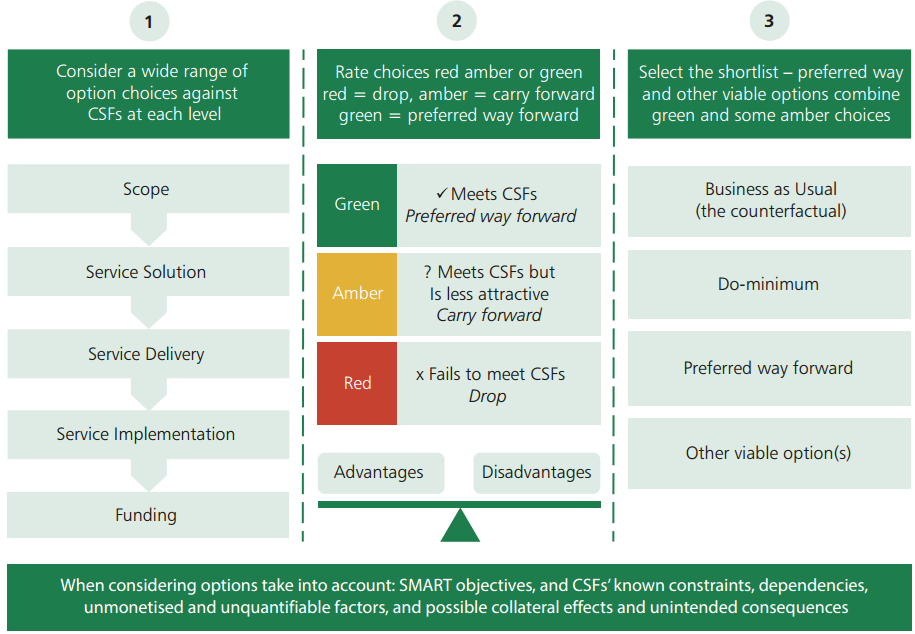
A1.19 Affordability is an important CSF and should be considered early on in the strategic analysis of the long-list. Before finalising the short-list, estimated indicative costs should be considered to see whether options are affordable given budget constraints. This will stop unaffordable (and therefore non-viable) options moving to the short-list stage. If an option fails this test, the long-list appraisal should be revisited to develop a more realistic alternative.
A1.20 The options framework identifies preferred choices and viable alternatives, and rules out non-viable alternatives. The reasons for each decision should be documented to support engagement with stakeholders on alternatives and appraisal of the long list of options should clearly identify any trade-offs between CSFs. This approach has been found to improve the speed, effectiveness and efficiency of strategic analysis through a clear focus on key issues. All implicit and explicit assumptions should be recorded and challenged as being realistic with an objective basis.
A1.21 The short-list should include the preferred way forward (the combination of choices taken through the options filter most likely to deliver the SMART objectives22), the Business As Usual benchmark, a viable do-minimum option, that meets minimum core business requirements to achieve the objectives identified and at least one alternative viable option (usually the next best choices to deliver the SMART objectives).
A1.22 The short-list is taken forward to the next stage of appraisal which involves detailed Social CBA or Social CEA of all options. The do-minimum option means it is possible to see whether other options are "gold-plated", where low value features are added to an alternative option at high cost.
_________________________________________________________________________________
22 It should not be confused with the "preferred option", which is the result of the analysis at the short-listing stage (see Chapter 5).