CHAPTER 1 National Infrastructure Development Systems
This chapter reflects the analysis of various types of national modes of infrastructure governance. We present the results in line with the several pillars of governance including national strategies for infrastructure and infrastructure plans & pipelines, dedicated governing bodies and infrastructure & PPP units, as well as domestic funds for infrastructure development. The chapter further elaborates on the selected country experiences and topics of relevance for policy and decision-makers.
| Typical PPP Procurement Process
| When it comes to developing infrastructure, all countries employ different modes of governance. At the same time, all countries aim at the same outcome, which is to develop infrastructure that lays the foundations for strong, sustainable, balanced and inclusive growth. Taking into account the infrastructure gap of USD 15 trillioniv, it is essential to pay attention to the level and quality of investments. Although the statistics show that the global infrastructure investment grows steadily,v this is not enough to close the gap. Therefore, it might be worth leveraging on the improvement of policies. Thus, the G20 survey suggested looking at country approaches to managing infrastructure development. Country Strategic Documents Country strategic approaches to managing infrastructure development are quite diverse. The G20 Survey showed that a comprehensive-level strategy is not the most common option. 9 out of 22 countries do not have such documents, including both developed and emerging markets. However, nearly all of them rely on sectoral infrastructure strategies for priority setting and allocation of budgets in the corresponding sectors of the economy. The other ten countries have comprehensive cross-sectoral infrastructure strategies. Special Public Institutions and Infrastructure & PPP Units Given the necessity to coordinate the infrastructure policy, it is not surprising the most countries have charged public bodies or expert institutions with this task. Either a single federal ministry/agency oversees the full spectrum of infrastructure needs, or a group of sectoral public bodies are tasked with their respective duties. Such coordination occurs either at the national or subnational level. In some cases, as in the UK, it may not be necessarily linked to infrastructure in a formal order. As regards infrastructure and PPP units, 9 out of 22 economies surveyed do not have economy-wide infrastructure unit. For example, in Argentina and Spain, public institutions receive expert support from ministerial and non-ministerial agencies. Still, the majority of countries rely on expertise from a single window. Such infrastructure and PPP units can offer - depending on the capacity of each institution - a wide range of services ranging from market research and consultation to project and seed financing. The general idea, therefore, is to build capacity in support of infrastructure development in a manner and form that fits each country. Several options are equally feasible to follow. It can be a sectoral PPP unit specialising on particular types of projects or an economy-wide institution. At the same time, it is essential to build inter-agency coordination and performance monitoring. In the case of the sectoral PPP unit, it may be valuable to share efficient operating models of such units with other similar bodies. As regards economy-wide institutions, sound methodology and performance monitoring may be of the top priority. National Funds for Infrastructure Development The Survey has revealed several countries, including Germany, Japan, Spain and Turkey that do not have formally established national funds for infrastructure. These countries rely mostly on the general state budgets. Aside from that, resources of state-owned and large private enterprises are another widespread source of infrastructure financing. According to the World Bank, corporations of Turkey dominate 5 out of 10 positions in the global ranking of the largest private sponsors of public infrastructure.vi Owing to the extensive resources, such companies outpace some national funds in terms of sums invested in infrastructure. The proximity of supranational sources of financing, such as the Connecting Europe Facility framework of the European Union, can be an alternative to national funds.vii Multilateral development banks also play an essential role in providing financing for infrastructure. Nevertheless, the majority of countries rely on the resources of formally established national funds. They offer a variety of instruments including grant payments, long-term loans to central governments, municipalities and public utilities, including senior, equity and subordinated loans. Recently, funds have also started dealing with partial credit guarantees, project and seed financing to support investors at project development and construction phases. Planning and Coordination of Economic Policy under the Presidency of the Council of Ministers. In Spain, tasks of a PPP unit are split between the State Society for Land Transport Infrastructure at the Ministry of Transport, Infrastructure and Housing and the National Evaluation Office under the Ministry of Finance. |
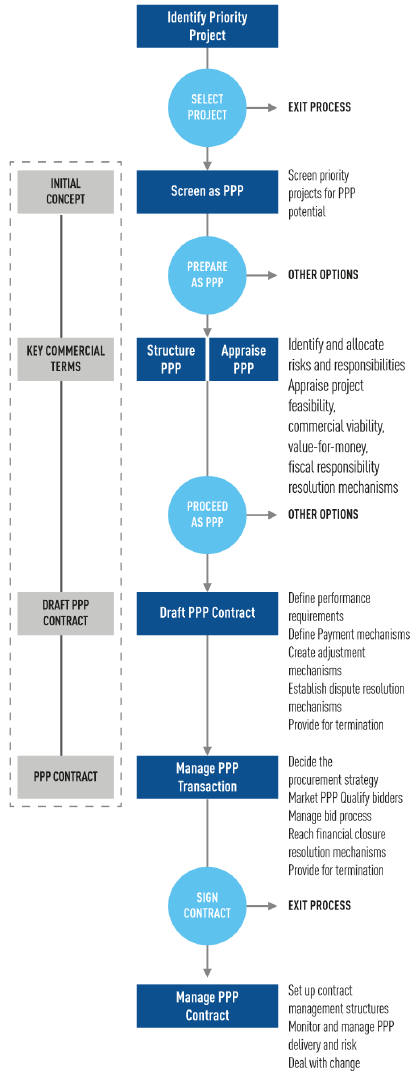
Table 1. Case study countries' models of governance in infrastructure.
| COUNTRY | National Strategy for Infrastructurea | Comprehensive Infrastructure Plan&Pipelineb | Special Public Institutionc | National Funds for Infrastructure Development | |
| Argentina | |||||
| Australia | |||||
| Brazil | |||||
| Canada | |||||
| China | |||||
| France | |||||
| Germany | |||||
| India | |||||
| Indonesia | |||||
| Italy | |||||
| Japan | |||||
| Rep. of Korea | |||||
| Mexico | |||||
| Netherlands | |||||
| Russia | |||||
| Saudi Arabia | |||||
| Singapore | |||||
| South Africa | |||||
| Spain | |||||
| Switzerland | |||||
| Turkey | |||||
| United Kingdom | |||||
| In place | Not in place |
Source: country responses to the G20 questionnaire; data from official resources.
Notes:
a) Argentina, Brazil, Germany, France, India, Indonesia, Japan, Republic of Korea, Spain and the United Kingdom have only sectoral strategies that partly cover topics related to infrastructure.
b) Argentina, Brazil, Germany, France, India, Indonesia, Republic of Korea, Russia, Saudi Arabia and Switzerland have several sectoral plans that cover infrastructure projects.
c) In Argentina, Brazil, Germany, Republic of Korea, Mexico and in the United Kingdom functions related to the governance of infrastructure development are split across several governmental bodies.
d) In Argentina, the role of the PPP unit is delegated to the Infrastructure Division of the BICE (Banco de inversion y comercio exterior - Investment and Foreign Trade Bank). In Australia and Canada, dedicated PPP units exist at subnational levels. In Italy, functions of a PPP unit are delegated to the Department for
| Ideas for Policy-Making • Apply sound and consistent multiannual approach to infrastructure policy with clear short-term and long-term goals • Build the capacity of public bodies and expert institutions to allow for spillovers and dissemination of best practices • Consolidate and make transparent different sources of financing infrastructure, as well as leverage capacities of multilateral development banks | Germany Germany is known worldwide for its quality transport infrastructure. Moreover, Germany is in the small group of countries that are not projected to have infrastructure gap until 2040.viii At the same time, the country has no single comprehensive strategy in the infrastructure, as well as no dedicated bodies that govern infrastructure per se. The country has several national strategies related to the elements of infrastructure policy that cannot be managed by states (Lander) alone. Such elements include transport, cyber-security, IT and 5G. The corresponding strategies have been prepared and are managed by the Federal Ministry of Transport and Digital Infrastructure (Bundesministerium fur Verkehr und digitale Infrastruktur). Furthermore, these topics are also covered by specialised departments of other ministries, which contributes to the joint cross-sectoral coordination. For example, the Ministry of economy and energy has departments that deal with the digitalisation of industries and prospective transport technologies. As regards other types of infrastructure, for instance, schools and hospitals, decisions are made either by states individually or jointly with the federal government. The United Kingdom In the United Kingdom, Her Majesty's Treasury plays a pivotal role in steering infrastructure policy by allocating public funding and setting strategic priorities. The National Infrastructure Commission, which is an executive agency sponsored by the Treasury, provides the government with impartial, expert advice on significant long-term infrastructure challenges. The Infrastructure and Projects Authority, part of the Treasury and the Cabinet Office, provides advice and support on infrastructure delivery to central government and line ministries. Departments, for example, the Department for Transport, are responsible for developing and delivering their projects. Until recently, the United Kingdom had no formal strategic documents to steer the development of infrastructure. Since 1992, 'Private Finance Initiative' and then 'Private Finance 2' schemes have covered the infrastructure needs of the country.ix In 2013, the first National Infrastructure Delivery Plan and Pipeline were published.x They encompass projects of all kinds of infrastructure, including those in the social sphere, agriculture, utility sector and science and technology. Currently, the National Infrastructure Delivery Plan covers the span from 2016 till 2021. In 2017, the UK's Industrial Strategy was rolled out with extensive coverage of infrastructure challenges.xi In 2018, the National Infrastructure Assessment published by the National Infrastructure Commission presented a 30-year vision for UK infrastructure.xii In its turn, the Treasury responded with a pledge for a new comprehensive National Infrastructure Strategy to be developed in 2019-2020. India At the national level, India aims to build physical and social infrastructure to achieve the goal of becoming a USD 10 trillion economy by 2030. Regarding strategic documents, there are ministerial-level programmes such as Bharamala Pariyojana (Roads Sector: a Programme to build roads and highways of 35,000 km over 2018-22), Sagarmala (Shipping Sector), Regional Connectivity Scheme for Airports and Power Sector Reforms. Further, states have their priorities in both social and physical infrastructure with several ongoing programs. In India, each ministry details out its comprehensive plan and objectives over the short and medium-term. India's infrastructure priorities are also laid out in the Budget Documents, and Budgetary allocations to achieve these objectives are decided in India's annual Union Budget. The progress in achieving these objectives is monitored by India's Ministry of Finance and the individual ministries as well. Considering the diverse infrastructure needs, India has several dedicated infrastructure ministries at the national level for different sub-sectors including Ministry of Road Transport & Highways, Ministry of Shipping, Ministry of Railways, Ministry of Health and Family Welfare, Ministry of Drinking Water and Sanitation. Additionally, a dedicated PPP Cell is housed in the Ministry of Finance.xiii Infrastructure projects are financed through budgetary resources of the Central Government and the State Governments as well and through Public-Private Partnerships. Government of India has a Viability Gap Funding Scheme to provide support in the form of a capital grant to economically viable projects. National Investment and Infrastructure Fund with 49% Government of India equity and an authorised corpus of Rs. 400 bn (USD 6 billion) has been setup with an investment mandate to invest in infrastructure assets and related businesses. The Netherlands In the Netherlands, the Ministry of Infrastructure and Water Management (MIWM) oversees the policy, implementation and inspection of infrastructure development.xiv To aid with the development of policies, the MIWM houses separate directorate- generals, responsible for designing overarching policies for development in areas of mobility, water management, aviation and maritime affairs and the environment. For large infrastructure projects, the MIWM has adopted a unique collaborative approach, namely The Multi-Year Programme for Infrastructure, Spatial Planning and Transport (MIRT) framework.xv MIRT comprises infrastructure projects and programs in which the national and regional governments collaborate to find a standard solution to specific problems, after analysing different perspectives and development objectives. MIRT projects can be either implemented through public financing or PPPs on a Design-Build-Finance-Operate-Maintain basis. Each year, the MIRT is presented to the Lower House as an appendix to the budget of the MIWM, and this provides the necessary political and fiscal commitment to the MIRT. The MIRT program has rules, procedures, and a framework to direct how a project initiative that needs state funding should be developed and how decisions on project initiatives should be made. South Africa In 2012, the Government of South Africa transferred the advisory functions of the existing Infrastructure Finance Unit that was housed in the Budget Office to the Government Technical Advisory Centre (GTAC).xvi Since then, GTAC has been providing technical support and advice to national and provincial departments and municipalities in getting a PPP project through all stages of implementation. The Infrastructure Finance Unit in the Budget Office is now responsible for the regulatory function and for recommending project approvals to the Deputy Director-General of the Budget Office. Implementation of the pipeline is monitored and reported by the National Treasury and GTAC. The Project Development Account, which is a revolving fund, is a dedicated project preparation facility under the National Treasury utilised by GTAC to finance technical assistance for all projects including PPPs. GTAC functions include technical consulting services, specialised procurement support for high impact government initiatives and advice on the feasibility of infrastructure projects. In all instances of PPP-related financing support, funds are paid to advisors following the terms of the contract between the implementing authority and the advisor. In non-grant financing instances, disbursed funds are recovered from the successful private party bidder when the PPP reaches financial close, as a 'success fee', which is part of the procurement conditions for the project. The Evaluation& Investment Committee appointed by the Head of GTAC decides whether the funds allocated to the project are recoverable or not. |
References
i "PPP Fiscal Risk Assessment Model PFRAM 2.0." IMF and World Bank. Accessed September 30, 2019. https://www.imf.org/external/np/fad/publicinvestment/pdf/PFRAM2.pdf.
ii Ibid.
iii Ibid.
iv "The World Is Facing a $15 Trillion Infrastructure Gap by 2040. Here's How to Bridge It," World Economic Forum, accessed July 26, 2019, https://www.weforum.org/agenda/2019/04/infrastructure-gap-heres-how-to-solve-it/.
v "Global Infrastructure Outlook - A G20 INITIATIVE." Accessed July 29, 2019. https://outlook.gihub.org/.
vi "Private Participation in Infrastructure (PPI) | Data Catalog." Accessed August 16, 2019. https://datacatalog.worldbank.org/dataset/private-participation-infrastructure.
vii "Connecting Europe Facility," Text, Innovation and Networks Executive Agency - European Commission, last modified March 26, 2015, accessed July 26, 2019, https://ec.europa.eu/inea/en/connecting-europe-facility.
viii "Global Infrastructure Outlook - A G20 INITIATIVE." Accessed July 29, 2019. https://outlook.gihub.org/countries/Germany.
ix "PFI and PF2 - National Audit Office (NAO) Report." National Audit Office. Accessed July 29, 2019. https://www.nao.org.uk/report/pfi-and-pf2/.
x "National Infrastructure Delivery Plan and Pipeline." GOV.UK. Accessed July 29, 2019. https://www.gov.uk/government/collections/national-infrastructure-plan.
xi "The UK's Industrial Strategy - GOV.UK." Accessed July 29, 2019. https://www.gov.uk/government/topical-events/the-uks-industrial-strategy.
xii "National Infrastructure Assessment." National Infrastructure Commission. Accessed July 29, 2019. https://www.nic.org.uk/our-work/national-infrastructure-assessment/.
xiii"Home - Public Private Partnerships in India." Accessed August 20, 2019. https://www.pppinindia.gov.in/.
xiv "Ministry of Infrastructure and Water Management - Governmental." Last modified August 26, 2011. Accessed August 20, 2019. https://www.government.nl/ministries/ministry-of-infrastructure-and-water-management.
xv "The Dutch Multi-Year Programme for Infrastructure, Spatial Planning and Transport (MIRT)". Last modified February 7, 2018. Accessed August 20, 2019. https://www.government.nl/documents/leaflets/2018/02/07/the-dutch-multi-year-programme-for-infrastructure-spatial-planning-and-transport-mirt---summary.
xvi "Leading Practices in Governmental Processes Facilitating Infrastructure Project Preparation." Last modified August 20, 2019. Accessed March 10, 2019. https://cdn.gihub.org/umbraco/media/2344/gih_project-preparation_full-document_final_art_web.pdf.