3. Poor Environment for Governance
Trustworthy partners being a prerequisite for a successful partnership, it is essential that partner governments have a demonstrated commitment to the rule of law. A culture of corruption is among the more serious hazards for developing a PPP because an environment that does not ensure binding contracts is not a suitable one for a public-private partnership. This does not necessarily limit the private sector to partnering with democratic governments, but in general, a culture of corruption makes partnerships more expensive, less credible with the public, and ultimately less viable. Transparency is a prerequisite for success in PPPs.
Let's explore how issues of transparency can prove challenging even for a successful PPP, by examining the case of the National Kidney Foundation of Singapore (NKF). In the wake of a significant scandal, NKF struggled to regain credibility. Ultimately, only through a government takeover of NKF could credibility be restored and transparency reestablished, illustrating the importance of clear, consistent governance in managing a PPP. It's important to note that while this case does not involve a culture of corruption, it does demonstrate the importance of diligently monitoring the potential for corruption, even in seemingly trustworthy institutions. Constant vigilance is required.
CASE STUDY National Kidney Foundation of Singapore13
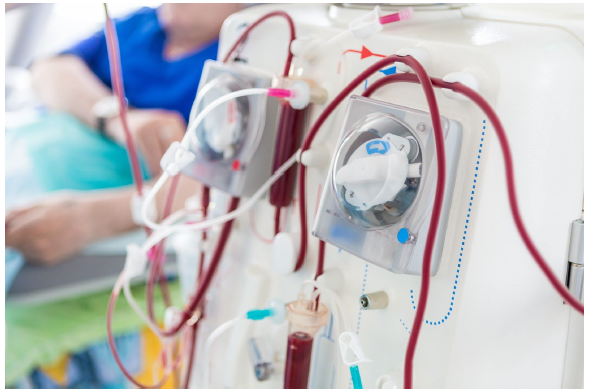
In the late 1990s and early 2000s, the National Kidney Foundation of Singapore (NKF) was the largest and most well-endowed charity in the country. A public-private partnership established in 1969, NKF provided chronic dialysis care to 70% of Singapore's end-stage renal disease (ESRD, also known as "kidney failure") population. From 1992-2004, CEO T. T. Durai made NKF a household name in Singapore. His inventiveness in acquiring research money was notable. Using new and innovative kinds of fundraising activities (even including live variety shows and celebrity performances), Durai established a formidable fundraising machinery within NKF. He developed an innovative business model that included well-funded programs focused on education and prevention, as well as large budgets for research and marketing. But in 2005, Durai and other employees at NKF were embroiled in a corruption scandal centering around the misuse of donated funds. Durai would eventually go to jail, serving a three-month sentence for his lavish unsanctioned spending, and the scandal seriously compromised public trust in NKF. In the two days following the opening of Durai's trial, an online petition for his resignation garnered around 40,000 signatures, and some 6,800 of NKF's regular donors called to cancel their donations. Donations plummeted from $37 million USD in 2005-2006 to $16 million in 2006-2007. In order to maintain NKF's public interest work, the Minister of Health took drastic action, reforming NKF and appointing an all-new board to rebuild public confidence in the organization. The return to credibility came at a price. NKF slashed staff, cut non-core programs, rented out its former offices to others, and drew down its endowment to respond to decreased donation revenue. Moreover, the government became more involved in NKF operations. The new leadership refocused the mandate of NKF and slowly transformed NKF into a highly transparent charitable institution based on a significantly more traditional organizational model. NKF's transition to a more bureaucratic model was successful in restoring public confidence, but it did mean that Durai's innovative means for collecting donations would need to be restrained. Scandal struck again in 2016, when the NKF board of directors announced that it had fired CEO Edmund Kwok for improper behavior with an employee. This scandal was weathered somewhat more easily, but NKF's statement to the media was a telling reference to the turmoil of its earlier scandal: "The board of NKF would like to assure all stakeholders, including patients, donors, supporters and employees, that Mr. Kwok's personal indiscretion has nothing to do with the stewardship of our finances. Our operations are not affected by this matter and our services to patients and beneficiaries continue as per normal."14 With the second scandal, the Ministry of Health was able to employ a lighter touch, and allowed NKF leadership to manage the scandal internally. Today, with NCDs on the rise, NKF's challenges are more pronounced than ever. Diabetes rates are skyrocketing in Singapore. In 2017, diabetes was responsible for 70 percent of all kidney disease cases, compared to 10 percent in 1992. As demand for dialysis begins to outpace supply, NKF has even begun to reconsider its mandate: can it become a force for prevention as well as treatment? While NKF has moved successfully past both scandals-one centering on corruption and the other on personal indiscretions-it now faces important strategic questions in light of new operational challenges and its transformed model. Will NKF continue to attract top-tier private-sector partners given the circumstances? Should NKF change its current allocation of responsibility and resources with the Ministry of Health? Can NKF return to some of its older strategies to address some of its current operational difficulties, or has the corruption scandal irreversibly defined NKF's trajectory? If the latter, then how is it to move past its current difficulties? Key Skills and Frameworks: • Communication • Strategic Thinking • Political Management |
___________________________________________________________________________________________________
13Trager, A., Kng, C., & Lotti, M., "The National Kidney Foundation Singapore: Charity Juggernaut or Semi-Public Agency?" PPP Initiative, 2017.
14Boh, Samantha. (2016). "NKF sacks CEO Edmund Kwok, says personal indiscretion not related to stewardship of finances." The Straits Times , 20 Retrieved at https://www.straitstimes.com/