4. Flawed Assumptions
Strong PPPs depend on sound financial structures. So much so, in fact, that financial structuring is one of our six key skills (we will discuss it further in Chapter Three). But sound financial structures are dependent on sound financial assumptions. After all, a financial model is only as good as the data that goes into it. Models that assume incorrect costs, rates of use, or levels of demand are ultimately doomed to fail, as partners cannot draw legitimate conclusions from illegitimate assumptions. Flawed assumptions often emerge from wishful thinking. Even when elaborate models are constructed, partners are often incentivized-wittingly and unwittingly-to develop models that confirm their biases. Independent review by a third party can help mitigate this risk, but too often, consultants play an unhelpful role by producing studies that are too optimistic, possibly designed to satisfy a public sector client's desire to justify a project. Accordingly, the private sector is increasingly skeptical of projections they deem to be overly optimistic. Well-designed PPPs will rely on disinterested third parties to form assumptions, and will assure that those assumptions are vetted.
Using the case of Indiana Toll Road, we can examine how flawed assumptions and overly optimistic projections proved highly detrimental to a transportation PPP.
CASE STUDY Indiana Toll Road15
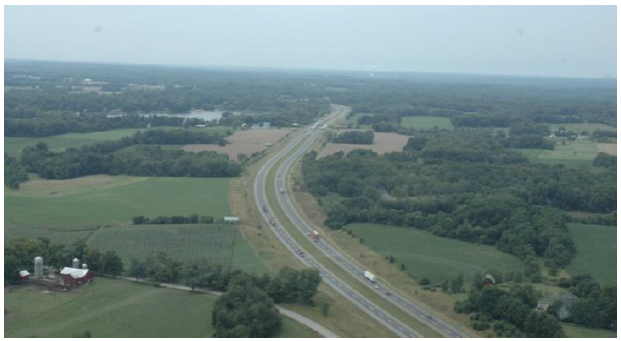
The Indiana Toll Road is a 157-mile stretch of Interstate 80/90 spanning the width of the state of Indiana, linking the Chicago Skyway to the Ohio Turnpike. In 2005, as a part of his Major Moves initiative, a 10-year plan to modernize Indiana's highway infrastructure, then-Governor Mitch Daniels conceived of a plan to lease the road to a private company, offloading maintenance costs to a private-sector partner in exchange for the potential toll revenues. Daniels, an experienced politician and a graduate of Princeton, felt that the private sector could help him remove the maintenance liabilities from the public balance sheet. In 2006, the Indiana Toll Road Concession Company (ITRCC), a joint venture between Spanish construction firm Cintra and Australian toll road company Macquarie Atlas Roads, assumed responsibility for operating, maintaining, and improving the road, paying $3.8 billion for a 75-year lease. The $3.8 billion winning bid was an optimistic $1 billion more than the second-highest bid, but ITRCC believed that, based on their traffic estimates, the price still represented a significant potential for profit. Governor Daniels was thrilled. A $3.8 billion deal far exceeded his expectations. ITRCC, too, felt they had negotiated a fair price. It set to making infrastructure improvements on the road and waited for the toll revenues to pour in. But the increased traffic never came. Just two years after the deal was signed, the 2008 global financial crisis plunged the United States into the Great Recession. Economic turmoil set in; people began to drive less. More importantly, commercial trucking, which was identified in early projections as key to the toll road's profitability, decreased dramatically. In fact, traffic along the route was 11% lower in 2013 than it had been in 2007. The flawed traffic estimates led to low toll revenues, and ITRCC was unable to cover its debt servicing obligations. In 2014, just eight years into a 75-year agreement, ITRCC filed for bankruptcy. Under the terms of the agreement, it would have to continue to operate the road until a new operator was identified, and in 2015, Australian firm IFM Investors agreed to buy ITRCC for $5.75 billion. Indiana Toll Road is a classic example of flawed assumptions dooming an otherwise potentially sound PPP. While-to be fair to ITRCC-the financial crash of 2008 could not have been so easily predicted, the exceptionally high $3.8 billion price left very little room for error in their traffic estimates. Furthermore, the inflexible structure underpinning the deal made it impossible for ITRCC to renegotiate and avoid bankruptcy. (We will discuss the importance of flexible agreements in more detail in Chapter Five.) Had the traffic estimates been correct and the bid price lower, the Indiana Toll Road PPP could have been a win-win. Instead, it's become a costly liability for the private sector. The more interesting question, though, is this: was the Indiana Toll Road PPP a win for the government? The answer is undoubtedly "yes." Governor Daniels out-negotiated the private sector to provide his state with cheap infrastructure. But, lest we take the wrong lessons from the Indiana Toll Road case, it is important to remember that not all PPPs are like toll roads. Some healthcare PPPs involve the continued provision of services over long periods of time. While physical infrastructure (like improvements to a road) remain long after the private-sector operator goes bankrupt, in a service-based PPP (such as a hospital or clinic) such an outcome would be a loss for both partners. Ultimately, forming a viable PPP over the long run is generally better for both parties than a failure that benefits any one side. Key Skills and Frameworks: • Communication • Allocation of Risks and Opportunities • Negotiation • Financial Structuring |
We have just identified a number of favorable and unfavorable conditions for engaging in PPPs. While these conditions are meant to be instructive, they are not meant to be exhaustive, nor definitive. In establishing a PPP, you may run into serious risks and hazards not applicable to any of the categories above. You may also be able to mitigate these hazards through effective incentive design.
The conditions underpinning a given policy issue are flexible. Flawed assumptions can be fixed with new, better assumptions. Inconsistent leaders can demonstrate consistency on certain items. The above items should be considered a toolbox more than a template. The favorable conditions are not absolute, nor are the hazards necessarily fatal.
By using a disciplined approach and employing the frameworks, case studies, and skills we will discuss in Chapters Two and Three, most issues and obstacles can be overcome.
___________________________________________________________________________________________________
15Hillion, Pierre, & Wee, Jean. "Public-Private Partnerships: The Project Financing of the Indiana Toll Road," Harvard Business School, May 2012.