Optimal vs. Conventional Configurations: Two Case Studies
The difference between an optimal configuration and a conventional configuration lies in the sharing of values. While conventionally configured PPPs allow partners to have divergent values, optimally configured PPPs are those in which partners see value in the same things. In other words: in both configurations partners are in agreement about the PPP's goals, but in optimal configurations partners are also in agreement about their motivations and incentives. We can better understand how these configurations differ with the help of some illuminating case studies. First, let's look at a real-world example of a conventional configuration-using the world's most famous park.
CASE STUDY Parks and Partnerships: Central Park22
Spanning 840 acres and stretching from 59th to 110th Streets in New York City, Central Park is visited 42 million times every year by New Yorkers and tourists alike.23 It is the most-visited urban park in the United States, and one of the most-visited tourist attractions in the world. As an economic entity, it provides massive value to its neighbors in the form of sky-high property values, improved health and happiness, and tourism revenues for local businesses. But this was not always the case. In fact, at the peak of New York City's financial crisis in the 1970s, this now-magnificent park was in a sorry state of disrepair. Starved for resources, the Parks Department was unable to keep the parks clean, well-maintained, or safe. Knowing that the park system could not be saved using public money alone, the New York Parks Department decided to see if it could harness private money to bring Central Park into a state of good repair. The Central Park Conservancy was founded in 1980 as a way to fundraise from private donors to contribute to the maintenance, safety, and improvement of Central Park. In the 40 years since, neighbors of the park-both corporate and individual-have raised over $700 million. It's a large sum, but it pales in comparison to the value that the resurgence of the park has bestowed on its neighbors. According to an analysis commissioned by the Conservancy, in 2014, Central Park added $26 billion to the value of the properties surrounding it (defined as being between Amsterdam Avenue, Lexington Avenue, 53rd Street, and 116th Street).24 And, of course, that's just the property value alone. The same report estimates the additional annual economic output in 2014 due to park visitors and tourists at $203.8 million. The city and the private sector had different reasons for wanting to see the park succeed. The public sector was looking to decrease the financial strain associated with Central Park, removing the liability of maintenance from its balance sheet. The private sector, on the other hand, saw an obvious financial upside to being located next to a clean, safe park and world-famous tourist attraction. In this case, though operational capacity-park safety and maintenance, capital improvement initiatives-is shared, value is not. |
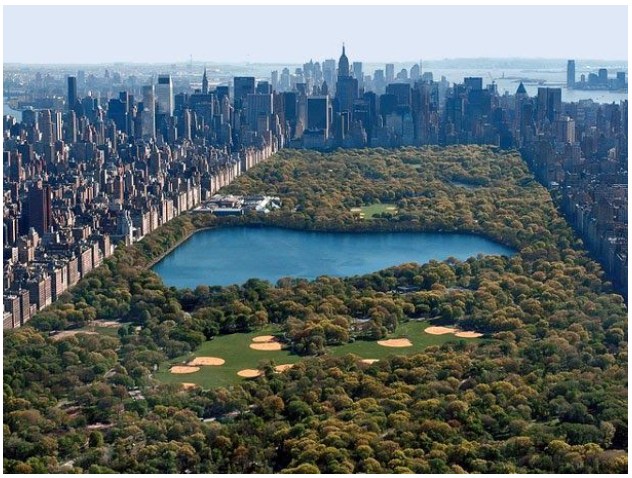
Remember that conventionally-configured PPPs are valid, workable structures focused on improved operational capacity. In the case of Central Park, the private and public sectors did not need to be in agreement about why Central Park should be improved. Both sectors valued free, open access to the park, but the private sector valued the increased real estate and lifestyle value that came with the improvements, while the public sector valued removing park maintenance from its balance sheet, and, in the long run, the increased property tax revenue that accompanied the increased real estate value. Yet despite these subtly divergent interests, the partnership still works, because success for both partners is contingent on the same outcome: improving the operational capacity of the park.
However, it is also true that many conventionally-configured PPPs fail when returns are not realized. For example, when FedEx partnered in the early 2000s with the Eaton Corporation and the US-based Environmental Defense Fund to begin integrating hybrid-electric delivery trucks, the project stalled and ultimately failed because while low-emission vehicles are of obvious public health and environmental benefit, the lower fuel costs did not make up for the 20% premium FedEx paid to purchase hybrid trucks. In the end, public and private values were not aligned, and the project proved unsustainable.25 Had this PPP utilized an optimal configuration, it might have been able to weather the 20% increase in truck costs. Perhaps-for example-a deal could have been designed in which Eaton stood to gain financially from FedEx's lowered fuel costs, incentivizing Eaton to sell the trucks at a lower price. This kind of structural change would have incentivized both partners to act in the best interests of the partnership. As designed, however, the project ultimately failed. FedEx was unable (or unwilling) to continue to participate at a loss.
8,000 miles from Central Park, in the small, African nation of Lesotho, a project to build a hospital faced a completely different set of challenges. As such, it leveraged an optimal configuration where value was shared in addition to operational capacity.
CASE STUDY Lesotho National Referral Hospital
Lesotho is a small landlocked country surrounded by South Africa, about 275 miles from Durban. With a population of just under two million, Lesotho's economic activity is limited. Its main export is water, to its neighbor, South Africa. As a lower-middle-income nation, Lesotho also struggles to meet the healthcare demands of its citizens. It has the second-highest incidence of HIV of any country in the world,26and an average life expectancy of 53.27 In 2006, the government of Lesotho engaged in a pioneering project, using a PPP to build a National Referral Hospital to replace its outdated major hospital. The Lesotho PPP project was marked by a concerted effort to use performance metrics to align the values and incentives of public and private stakeholders. The National Referral Hospital PPP brought together a private-sector operator and government regulators. The partnership agreement used standard performance monitoring metrics to determine the size of payments allocated to the operator. In other words, if the operator did well, they received payment. If they did poorly, they were penalized with reduced service payments, which cut into their profitability. The Lesotho PPP is innovative, however, in that it uses clinical performance metrics to determine the amount that the government must pay the operator. Failure to meet key clinical objectives results in steep penalties for the operator. In other words, profitability for the operator is directly contingent upon healthcare outcomes. The performance indicators were highly specific: How long were wait times for emergency surgeries, as measured by a random sampling? How often were sheets changed on beds? How clean were those sheets? The sophisticated metrics allowed partners to accurately measure the performance of the hospital, and assign payments accordingly. By explicitly tying government value to private value-making profit contingent on better healthcare outcomes-the PPP created an optimal configuration, where both values and operational capacity are shared between partners. |
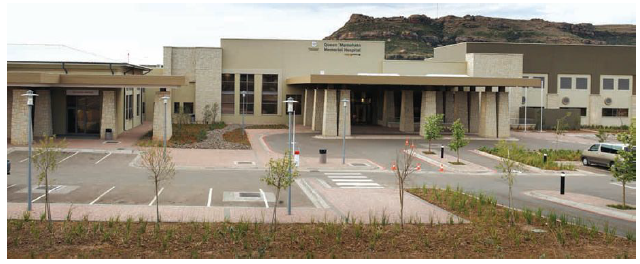
Imagine approaching the Lesotho hospital project with a conventional structure (i.e. without performance metrics). The partners would no longer be in agreement about the preferred outcome. The private-sector operator might be incentivized to suboptimize care, saving money and increasing their profit margin in the process. It could actually make more money by offering inferior service. The government, on the other hand, might be incentivized to defund the rest of the healthcare system, saving money in their budget by sending more patients to the hospital than the operator could manage profitably. (We will discuss the particular incentive structure that prevented the government from doing this later on.) Without a structure that tied their interests together, the partnership would have relied solely on the goodwill of both partners, hardly a stable foundation.
Of course, this doesn't mean that the private-sector operator would have necessarily taken steps to sub-optimize care without the performance metrics. The operator may have feared the political reprisal or public-relations consequences that come with cutting services. It may have even profitably provided better service than the metrics required. The metrics, however, act as an insurance policy for both parties. Instead of relying on abstract notions of trustworthiness or goodwill, both partners can rest assured that their interests and values are aligned.
Lesotho's sophisticated PPP design was highly contingent on officials developing key partnership skills like negotiation and communication to get the job done. Chapter Three will examine the frameworks and skills partners can use to execute PPPs.
___________________________________________________________________________________________________
22John D. Donahue, "Parks and Partnership in New York City" Harvard Kennedy School, 2004, Case Number 1743.0.
23The Central Park Conservancy. (2018). Annual Report. Retrieved at http://www.centralparknyc.org.
24"The Central Park Effect," The Central Park Conservancy, 2015, http://www.centralparknyc.org.
25Mack, B. & Trager, A. "Power Partnerships: The Creation of a Hybrid Electric Delivery Truck Eaton, FedEx and Environmental Defense," Harvard Kennedy School, 2005, Case Number 1820.0.
26"HIV and AIDS in Lesotho," Avert, 2019, https://www.avert.org/
27"Lesotho," in The World Fact Book. Central Intelligence Agency, accessed December 2019, https://www.cia.gov/