Narrowing the Funnel: Engaging the Food and Beverage Industries
Food and beverage companies generally fall into the "potential alignment" category, as their products can have profound impacts on health, but not always for the better. Many foods, of course, promote good health. Unfortunately, however, these foods tend to be more expensive, leading low-income individuals to source less healthy substitutes, such as processed foods and highly caloric beverages. These processed options are huge contributors to NCD incidence. Processed foods are high in salt and contribute to obesity and cardiovascular disease. And non-water beverages-most of which are quite high in sugar-have adverse effects on diabetes incidence.
On some fundamental level, addressing the incidence of NCDs will involve large-scale changes to dietary habits. But convincing the public to change the way it eats will be no small task. In most parts of the world, foods are inextricably tied with culture, family, religion, and society as a whole.
Nowhere is this more true than in Singapore, where a world-famous street food culture encourages citizens to over-indulge in high-sugar, high-fat foods.
CASE STUDY Singapore's Health Promotion Board
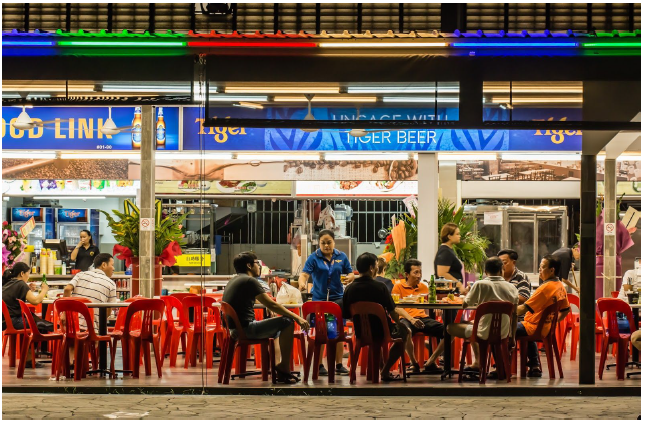
Singapore's food culture is incredibly rich, and Singapore's unique culture of street vendors forms the cultural backbone of its culinary heritage. In fact, street food is so much a part of Singapore's national heritage that the government recently submitted a bid to include Singapore's food hawker culture in the UNESCO Representative List of the Intangible Cultural Heritage of Humanity.48 It was a tall order, then, that Singapore's Health Promotion Board was tasked with reducing the NCD impact of Singaporean street food-generally high in sugar, salt, and saturated fats. Joining forces with 51 different food companies, the HPB launched the Healthier Hawker program in 2011. Hawkers who offered healthier options like brown rice or whole-grain noodles were given a special HPB-issued decal that they could display on their stalls. Menu items of 500 calories or less were also highlighted in Singapore's hawker centers. By partnering with a potent cultural institution, street hawkers, the HPB found a new, innovative way to engage the public. Ultimately, the HPB decided to pivot from the Healthier Hawker Program to the Healthier Dining Program, which targets large chains instead of individual food stands. A focus on large chains enables HPB to reach even more consumers at considerably less expense. |
___________________________________________________________________________________________________
48Liza Weisstuch, "Getting a Taste of Singapore's Famously Flavorful Street Food," The Washington Post, September 27, 2019, https://www.washingtonpost.com/