Key Skill: Political Management
Political management is the negotiation and communication of various political alternatives in problem solving and partnership design. This skill is generally best practiced with a facilitator or mediator who can motivate parties from different political leanings. In all government-backed projects-not just PPPs-there is a risk of sub-optimizing technical, financial, and design decisions in favor of political expediency. Strong political management can bring opposing political factions into alignment and avoid compromising a project's effectiveness. Weak political management will limit a project's reach, forcing a compromise between the right decision and the politically easy one. This demonstrates the significant roles that negotiations and communications play in the optimization of large-scale projects.
In the case of Stone Container, ineffective negotiation was inextricably tied to ineffective engagement of various political elements-including, for example, the local chamber of commerce, business organizations, newspapers, and the idigenous communities. Had Stone thought ahead and managed the relevant political factions, they might have been successful.
Let's examine a case in Taiwan that illustrates just how deeply political expediency can damage the technical success of a PPP and create avoidable financial distress.
| CASE STUDY Taiwan High Speed Rail52
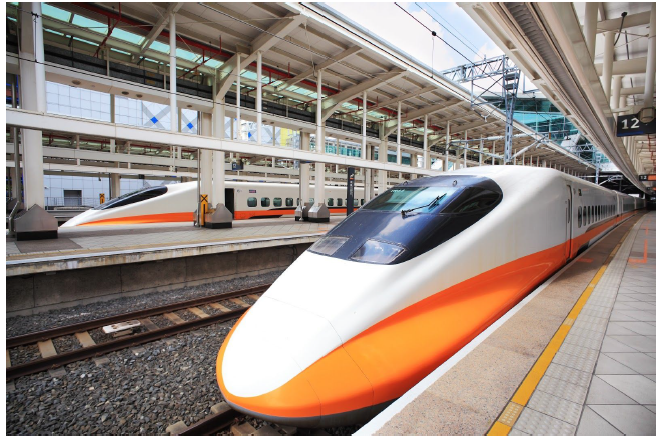
Completed in 2007, Taiwan's high-speed rail system (THSR)-a PPP project between the Taiwan High Speed Rail Corporation and the Taiwanese government-required additional government support when the financial crisis of the late 2000s resulted in a reduction in passenger use. When the PPP could not meet the government's debt service payments, the project failed. But the failure was not just a product of an untimely financial crash. The system itself was designed in such a way that failure was unavoidable. Hoping to avoid the political difficulties that come with laying new high-speed rail tracks in heavily populated areas-a challenge made more complicated by the fact that high-speed rail tracks must be exceptionally straight-THSR chose to situate the stations outside of major urban centers. In so doing, the project managed to avoid the staunch political opposition that comes with relocating citizens. But it also meant that riders on the train would need to travel to remote stations outside their respective cities to board the trains at all. This increased distance resulted in diminished demand. Even given the project's geographical compromises, the government could have taken steps to increase demand for the train. For example, the government could have raised the highway tolls along the parallel route to motivate drivers to take the new train. This was not done, and ultimately, the failure to create demand resulted in the sub-optimization of the project. Had THSR managed the political interests at stake more appropriately, the rail system might have seen higher ridership and a higher rate of farebox recovery. Often, the politically expedient choice is not the right one. |
But political management doesn't merely come down to the kinds of compromises we see in the Taiwan High Speed Rail case-political management can also be a far more multi-dimensional challenge. After all, as government professionals know all too well, a government is not a monolithic structure in which all of its representatives are in total agreement. In many cases, political management becomes a matter of managing the interests of various government institutions as well as private-sector partners.
Let's examine another economic development case-that of Boston's Park Plaza-to see how ineffective political management can derail progress on a PPP. Though the Park Plaza case is not specifically about a public-private partnership, it does contain important lessons for prospective PPP practitioners.
| CASE STUDY Park Plaza53
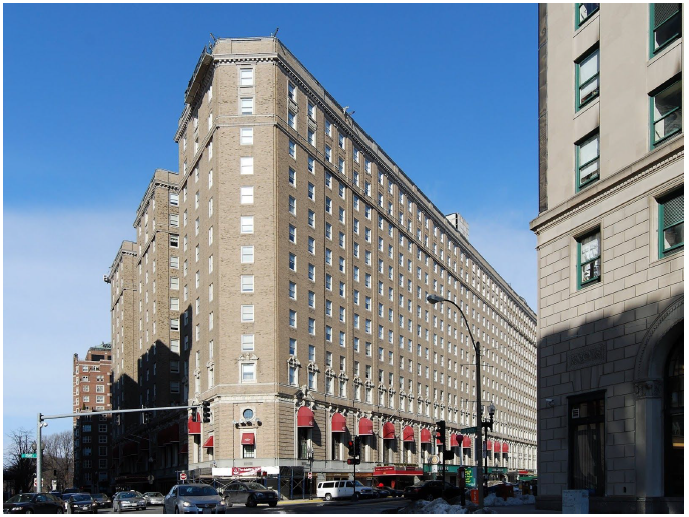
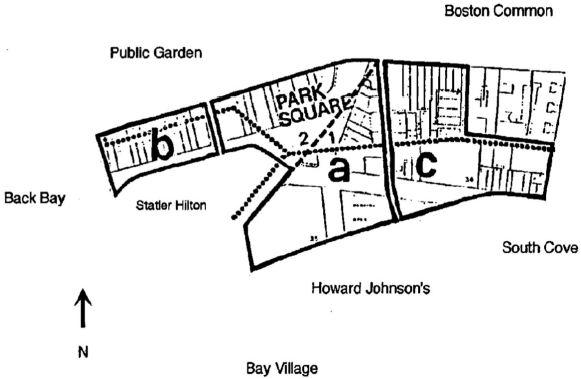
In the late 1960s, Boston's Park Square, a confusing intersection of major streets and retail stores just south of Boston Common, was in desperate need of redevelopment. The Square featured a large number of vacant offices, a few large vacant lots used for parking, and the northern end of the Square (known locally as the "Combat Zone") was home to a thriving pornography industry, complete with adult bookstores, strip clubs, and a rotating cadre of for-hire sex workers. The Square's location, however, made the land highly attractive to development; it was nestled directly between Copley Square and the thriving downtown commercial district. Though private investment had renewed portions of the district throughout the 1960s, there were still major areas in need of improvement in 1970.
The Square was characterized by a bizarre street pattern and a large number of tiny, irregular-shaped lots, meaning that a private developer would have a difficult time acquiring a large enough parcel of land to successfully redevelop it. The solution to Park Square's state of disrepair would rely on cooperation with the public sector-through a significant use of public authority-to dramatically rethink the area from the ground up. But the plan to redevelop Park Plaza would need to navigate an elaborate approval process, not just within the city of Boston, but at the state level as well. The Massachusetts Department of Community Affairs (DCA) was established in 1968 after the consolidation of several state-level agencies into a single department which reported directly to the governor. Though the department was nominally tasked with supervising local housing and development projects, in practice the department had shown little interest in this type of policing. By 1971, while the DCA had engaged in supervising projects in some of Massachusetts's smaller towns, it had never once come into conflict with the Boston Redevelopment Authority, despite the fact that enormous redevelopment had taken place in Boston. But in 1971, the DCA's new commissioner, Miles Mahoney, was determined to change that. It was his view that the DCA should take a more active role in supervising development projects, and the plan to redevelop Park Plaza would be one of the first tests of that role. In March 1971, the city awarded a relatively untested firm called Boston Urban Associates (BUA) with the redevelopment rights for Park Plaza. The plan, which did not feature a firm commitment to deal with the Combat Zone, faced significant opposition from community groups, who questioned BUA's track record, worried about the plan's adverse effects on the environment, and doubted the city's wisdom in selling off its land-in the form of streets that would be discontinued to make larger development lots-for a mere $3 million. But despite the concerns raised in the public hearing process, the Boston City Council passed the resolution. The mayor approved it, and on January 13, 1972, it landed on Miles Mahoney's desk at the DCA. The plan would need DCA's approval to proceed. And Mahoney was unimpressed with what he saw. In his mind, BUA was a less-than-ideal partner. The firm had insufficient capital and a nonexistent track record. And without a plan to address the Combat Zone, the plan was not, in his estimation, a good one for Boston. Unimpressed with the private sector partners and the logistics of the plan, Mahoney rejected the plan. Criticism was swift. Boston's mayor, Kevin White, alleged that DCA had been a part of a "conspiracy" from the governor's office. Governor Sargent denied the accusation, but stood by DCA. Until a second submission could be made to satisfy DCA's requirements, the plan was simply illegal. But opposition continued to mount. Boston's three daily papers-seldom in agreement about anything-denounced the decision and called on the city to reverse Mahoney's decision. Organized labor-which stood to gain roughly 3,000 construction jobs-protested outside the State House. Governor Sargent tried to reassure the crowd; while he supported the idea of a Park Plaza plan, the details would need to be right. Boos and catcalls drowned out his words. A hardhat, tossed from the mob, narrowly missed his head. This level of support caught both Mahoney and Governor Sargent by surprise. Clearly the governor was more vulnerable than he thought. The next day, Sargent asked Mahoney to reevaluate the proposal with BUA-negotiate and maybe come to some kind of agreement. Mahoney thought it was pointless, but agreed to sit down anyway. Negotiations seemed doomed from the start. BUA rehashed their original arguments to the DCA, and DCA's opinion of the deal, understandably, did not change. Public sentiment was largely with DCA-residents, environmentalists, and community organizers were all wary of the plan-but that didn't matter when the Governor announced to newspapers (without telling Mahoney) that a new plan had been submitted, and that it largely addressed his concerns. Without any political leverage of his own, Mahoney was out of options. With the governor fenced in by labor, the newspapers, and the city government, the project would move forward. |
The case of Park Plaza illustrates the pitfalls that can occur when negotiating in an unstable authorizing environment. By failing to manage the political dynamics at play, Mahoney sacrificed his leverage and influence over the Park Plaza decision-making process. Had he recognized the fragility of the authorizing environment, he might have been more able to come to the negotiating table productively. After all, having some positive influence over the plans would have been superior to being flanked by the State House. Not only did the DCA fail to maintain influence over the project, it sacrificed its credibility by not reading the situation correctly.
Professor Mark Moore of the Harvard Kennedy School describes the authorizing environment this way: "It [is] not sufficient for a public manager to have his or her own view of public value; others had to share it. In particular, the group of people in positions that could confer legitimacy and provide financial support to the manager would have to agree with the conception of public value that was to be pursued."54
While this may have been the case at the Park Plaza project's outset-the governor and Mahoney were in agreement about the public value of ensuring a legal and sustainable project-their definitions of public value soon diverged. In the governor's view, it was clearly more important to tack towards the interests of organized labor and the editorial boards than to maintain his opposition to the project.
This change in the conception of public value reflects a change in the authorizing environment, and thus a change in the negotiating terrain. In this case, the right decision was to work through the concerns of DCA to arrive at a Park Plaza plan that satisfied all stakeholders. However, because DCA was unable to manage the political calculations at play, BUA was able to effectively navigate around DCA. The politically feasible decision was, as it turns out, to cut DCA out of the process entirely.
Though the case of Park Plaza is not a healthcare case, it is still relevant to the kinds of PPPs we're discussing in this guide. For example, the coronavirus pandemic-and the need to rapidly develop and approve tests and vaccines-have dramatically shifted authorizing priorities in many nations. As of this writing, approvals for a Covid-19 vaccine developed in just over a year have raced through many countries' typically labyrinthine approvals processes. In the early weeks of the pandemic, tests were developed and approved at a startling pace. (We will discuss this more in Chapter Six.)
Ultimately, countries who mismanage this change in the authorizing environment might see their credibility diminished-not unlike Miles Mahoney. Imagine, hypothetically, that a vaccine with a significant side effect were to be authorized by the UK's MHRA, or the US's FDA, perhaps because those organizations were responding to political pressure. If that flawed vaccine were administered to hundreds of millions of people, it's hard to imagine those organizations retaining the same level of credibility that they enjoy now.
Moreover, most healthcare PPPs will have repercussions for economic development-the construction of hospitals and clinics, the development of healthcare professionals, or the improvement of public health at large. Governments that see the value outside of the Ministry of Health context will be more successful in leveraging that value to engage the private sector.
___________________________________________________________________________________________________
52Chung-Yuang Jan "Taiwan's High-Speed Rail: A Public-Private Partnership Hits a Speed Bump. " Harvard Kennedy School, 2010, Case Number 1910.0
53Colin S. Diver, "Park Plaza," Harvard Kennedy School, 1975, Case Number C16-75-707.0.
54Moore, M. & Khagram, S., "On Creating Public Value: What Business Might Learn from Government about Strategic Management, " Harvard Kennedy School, March 2004, Working Paper no. 3.