Cultural Sensitivity and Country Context
One common mistake in PPP negotiation lies in giving insufficient consideration to country context. The simple reality of engaging in a global PPP strategy is that no two countries are quite alike. Different countries have different cultural norms, different social mores, different forms of government, and different regulatory environments. These differences-sometimes vast, sometimes subtle-can all have a great impact on the reproducibility of a given PPP model.
In other words, what works in Saudi Arabia might not work in Singapore, and vice versa. Paying special attention to country context is a crucial element of a coherent PPP strategy. The case of the development of Dharavi, Mumbai's largest slum, provides an illuminating example.
| CASE STUDY Dharavi: Developing Asia's Largest Slum56
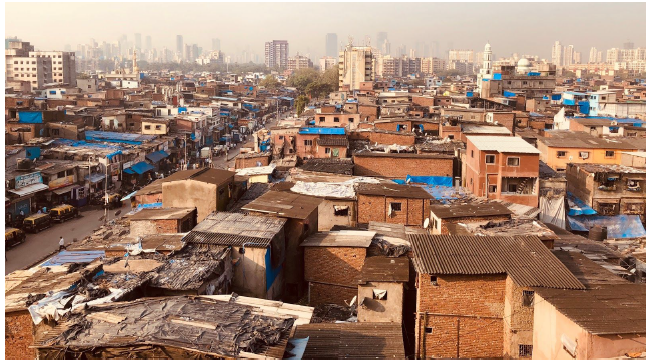
Dharavi is Asia's largest slum. Nestled in the south of Mumbai, the 2.23 square kilometers of Dharavi are home to some 700,000 people-roughly the population of Boston-making the neighborhood one of the most densely-populated settlements in the world. Disease and sanitation issues in the area are understandably rampant. On average, only 17% of Mumbai slum residents have access to household toilets. The plan to redevelop Dharavi would not be a simple urban redevelopment case-it would have remarkable public health benefits as well. However, the land on which Dharavi sits is also incredibly valuable. Property prices in Mumbai are among the highest in the world, and a single-story slum is hardly an efficient use of land located 20 minutes from the airport, between the city's two main railway lines. The Indian government felt that it might be possible to redevelop Dharavi using a public-private partnership. Because land value in Mumbai was so high, it was speculated that the project could remain profitable even if private developers were forced to provide free housing to current residents of Dharavi. Foreign developers rushed to get in on the action, and the project to develop Asia's largest slum was dubbed the Dharavi Redevelopment Project (DRP). And yet, the Indian government's attempts to redevelop Dharavi encountered a curious problem. Unlike other slums in the country, the citizens of Dharavi were highly politically organized. Because of the slum's large population, Dharavi acted as a massive political voting bloc. These were not the disenfranchised slum-dwellers typical of other low-income locales; the residents of Dharavi were organized and not afraid to wield their political power. Dharavi was also a hotbed of economic activity. These citizens were a mix of poor and middle-class residents, and the slum actually produced significant economic output-about US$600 million per year. This economic power added to Dharavi's political clout. Now the DRP had to contend with three powerful, active stakeholders: the private sector, the public sector, and the residents of Dharavi. This case illustrates the importance of country context. The value proposition for the project was quite reasonable, but the cultural and political elements that affected the project were enormous and hard to quantify. The political clout of Dharavi's residents meant that community buy-in was essential for the project to succeed. This condition forced investors to act not only as financial analysts, but as political analysts too, adding to the riskiness of the DRP. For one, few residents of Dharavi had legal deeds to their properties, and though slum dwellings were traded informally, residents raised concerns about how residents entitled to new housing could prove their eligibility. Residents, justifiably suspicious of massive relocations and change, also felt that environmental impact assessments and infrastructure plans had been left purposefully vague. Residents also were concerned that informal industries like leather tanning, recycling, and fabric dyeing-which employed a bulk of Dharavi's workforce-would be deemed environmentally hazardous and forbidden with redevelopment. These concerns, which often manifested in peaceful protests of the project, significantly impeded progress. Ultimately, hopes of moving the project forward were contingent upon understanding and reconciling the needs of various stakeholder groups unique to India, and to Dharavi. We will discuss the Dharavi case in more detail in Section Three: Value Creation. |
___________________________________________________________________________________________________
56Iyer, Lakshmi, John D. Macomber, and Namrata Arora. (2009). "Dharavi: Developing Asia's Largest Slum (A)." Harvard Business School Case 710-004. (Revised June 2011.)