Contract Strategy and Risk Assessment
3.7 Once a client is satisfied about real need and feasibility within overall budgetary constraints, the instinctive reaction is to retain a consultant to design the project - the "ring up an architect/engineer" syndrome. That takes a crucial step too quickly, and closes off potential procurement options. The next step should be the use of internal risk assessment to devise a contract strategy. The client should decide how much risk to accept. No construction project is risk free. Risk can be managed, minimised, shared, transferred or accepted. It cannot be ignored. The client who wishes to accept little or no risk should take different routes for procuring advice from the client who places importance on detailed, hands-on control.
3.8 The basic decision on the procurement route should precede the preparation of the outline (project) brief, since it necessarily affects who shall assist with the design brief as well. That choice of route must be determined by the nature of the project and the clients' wishes over acceptance of risk. Such decisions are difficult. Inexperienced clients need advice. There are a number of publications which can assist.
3.9 Tables 2 and 3 summarise the distribution of risk under the respective Standard Forms of Contract, and how the client may broadly assess it in advance.
TABLE 2: CONTRACT OPTIONS
| Contract options | |||
| RISK | |||
| Client | Contractor | ||
| MANAGEMENT |
| ||
| PRIME COST | %Fee | ||
| Fixed fee | |||
| APPROX QUANTS | Remeasured | ||
| LUMP SUM | Fluctuations | ||
| Fixed price | |||
| DESIGN AND BUILD | |||
| PACKAGE DEAL | |||
| | |||
| Fundamental risks |
| ||
| Pure and particular risks |
| ||
| Speculative risks |
| ||
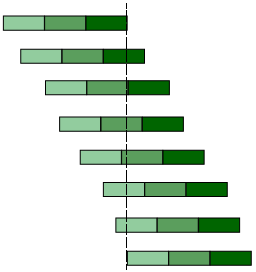


| 1. Fundamental risks: | War damage, nuclear pollution, supersonic bangs |
| 2. Pure risks: | Fire damage, storm |
| 3. Particular risks: | Collapse, subsidence, vibration, removal of support |
| 4. Speculative risks: | Ground conditions, inflation, weather, shortages and taxes |
Source: figure 4, page 82 of "The Shorter Forms of Building Contract", 3rd edition by Hugh Clamp published by Blackwell Scientific Publications, 1993.
TABLE 3: SUMMARY OF ADVANTAGES AND DISADVANTAGES OF CONTRACT STRATEGIES
| Project Objectives | Appropriateness of Contract Strategy in Meeting Project Objectives | ||||||
| Parameter | Objectives | Traditional | Construction Management | Management Contracting | Design & Manage | Design & Build | |
| Timing | Early Completion |
|
|
|
|
| |
| Cost | Price certainty before construction start |
|
|
|
|
| |
| Quality | Prestige level in design and construction |
|
|
|
|
| |
| Variations | Avoid prohibitive costs of change |
|
|
|
|
| |
| Complexity | Technically advanced or highly complex building |
|
|
|
|
| |
| Responsibility | Single contractual link for project execution |
|
|
|
|
| |
| Professional Responsibility | Need for design team to report to sponsor |
|
|
|
|
| |
| Risk Avoidance | Desire to transfer complete risk |
|
|
|
|
| |
| Damage Recovery | Ability to recover costs direct from the contractor |
|
|
|
|
| |
| Buildability | Contractor input to economic construction to benefit the department |
|
|
|
|
| |
|
|
| ||||||


[CUP Note: This table is for guidance only. Generally the appropriateness of the contract is not as clear cut as indicated. The project manager must advise the project sponsor on this.]
Source: CUP Guidance Note 36 "Contract Strategy Selection for Major Projects", June 1992.
3.10 Guidance on risk assessment for clients is crucial. It determines contract strategy. A range of procurement and contractual routes is emerging to meet clients' wishes. They are set out in box 3 below.
BOX 3
| STANDARD CONSTRUCTION The client and its advisers decide that the end product can be achieved through a pre-determined construction route, probably involving a limited range of standardised processes and components. This is best served by a design and build contract, with single point responsibility and the transfer of risk by the client. The contractor will be responsible for delivering the entire package. The amount of design provided by the client to the contractor will vary. It may involve the novation of some consultants to the contractor. The client retains an employer's agent to liaise with the contractor. "TRADITIONAL" CONSTRUCTION These projects involve well used and normal techniques of design and construction, but reflect specific wishes of the client. Most work is currently done on this basis, involving Standard Forms such as JCT 80 or ICE 5th/6th. This is the route with which the industry is most familiar. But it is also where many of the problems emerge through lack of co-ordination between design and construction. Problems can however be minimized or avoided by effective pre-planning of the design process, and efficient administration of the project by the client's representative, whatever title or designation that representative is given. An alternative is to use a combination of routes through design and manage approaches. The consultants, working for a lead manager, design and cost the scheme within their normal professional roles. They can then be paid their fees and discharged, after certifying that their responsibilities for the design are complete. The implementation of the design is then passed to a management contractor who is paid a fee to mobilise a series of works contractors to build the project. The client retains an employer's agent to liaise with the contractor. INNOVATIVE CONSTRUCTION The client commissions a project which involves a high degree of innovation, and many new design details. The client wants hands-on involvement and seeks strong management to produce the intended result. The best route here is construction management. It is a demanding procurement system, requiring firm leadership and team work throughout. There is no intrinsic reason why it should be limited to large or exceptionally prestigious schemes. It is also favoured by specialist/trade contractors because of its separate trade contract system. Some main contractors now offer this service, as do specialist construction management companies. |
_____________________________________________________
3 Main Procurement and Contractual Routes