1 Building infrastructure like there's no tomorrow
Before the pandemic, public infrastructure was booming in Australia. In March 2020, the value of the road and rail projects being built across the country exceeded $120 billion for the first time.1
Not only was the amount of work at an all-time high, so was the size of projects being built. It is no longer true that only a couple of very large projects are being built at any one time; now, most of the work being done is on 'megaprojects' - commonly defined as projects costing $1 billion or more (Figure 1.1). In fact, we have entered an era of mega megaprojects, with most work being done on projects with an expected cost of more than $5 billion. During the past five years, the value of an average road or rail project being built more than doubled, from $430 million to $1.1 billion (Figure 1.2 on the next page).
That was before the pandemic. Now, there are calls for even more public infrastructure. The Governor of the Reserve Bank has called for Australian governments to increase public investment to create jobs through infrastructure.2 The Prime Minister has called for the states to spend more on 'good projects'.3 The transport and infrastructure ministers of all jurisdictions say they are 'clearing the way for an infrastructure-led recovery'.4
Given that Australia was already in new territory before the pandemic, there is a big question mark over the wisdom of this path. The risk of rushing yet more projects into a construction sector that's already building more and larger projects is that the projects may end up costing more or providing fewer benefits than anticipated - or both. In other words, even that minority of projects that have been through a reasonable assessment process before the decision to build may turn out not to have been worth building at all.
Figure 1.1: All the growth in public road and rail infrastructure work is in megaprojects
Expected cost of projects under construction, $2020 billion
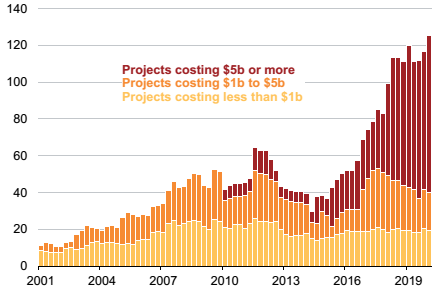
Note: Includes all public road and rail projects costing more than $20 million.
Source: Grattan analysis of Deloitte Access Economics Investment Monitor.
____________________________________________________________________________
1. Includes all projects costing more than $20 million.
2. Lowe (2020, p.5)
3. Coorey and Cranston (2020).
4. Transport and Infrastructure Council (2020, p. 1).