Conclusions/Findings - Whether the consenting strategy was appropriate
With regard to the specific questions in the IR scope regarding the consenting strategy, our specific observations from the review documents and interviews are:
• The DBC only contains a one-page statement outlining the TGP's "consenting strategy". We did not see a formal project artefact that we would class as a management strategy for consenting risk, which also could have been used to provide more information to the RFP Respondents on what they needed to take into consideration when developing their RFP responses regarding managing consents;
• The TGP Agreement risk allocation matrix reflected a contractual strategy that all consenting risk is transferred to the PPP Consortium. This contractual strategy appears fine in-principle, but it is an approach structured on a risk allocation of Board of Inquiry (BOI) approved consents rather than the different requirements that were set as part of the RFP documentation and which came to light during the Preferred Bidder phase (and eventually into the construction phase);
• In effect, we believe the RFP issued could be said to be an "unconsented RFP", given the number of changes that were required to made. The review documents we saw listed 355 designation and resource consent conditions requiring attention and these conditions would all have need to be factored into the detailed design for TG and preparation of outline (management) plans for implementing consents. Added to these 355 conditions were the subsequent consents, and changes to conditions from the local/regional government required to implement the BOI approvals. Working through all these issues would have time and cost implications for TG;
• Waka Kotahi was aware during the procurement phase of the need for the PB to put more effort and resources into managing their consent obligations and took active steps to work with the PB to work on this aspect of their performance. However, this effort was being focussed after a PB had been selected when all parties would have been focussed on achieving Financial Close - obviously and in hindsight, providing more consenting-risk information and assistance to RFP Respondents earlier in the procurement process would have been a better approach; and
• The impact of consenting authorities is perhaps better explained as the responsibility left to the five local/regional authorities to manage the implementation of the BOI-approved consents. The review documents and interviews suggest these parties were genuinely trying to implement the intent of the BOI conditions, but there may not have been a common understanding amongst all project participants about how this was to be done in a coordinated and collaborative manner. Added to this the obviously challenging situation is that the local/regional authorities were also themselves coming up to speed with the availability PPP model and a major road infrastructure project.
Our overall observation from the review documents and interviews is that the TGP's consenting strategy clearly could have been better managed by all parties involved. For example, this includes both improving information to the market about their consenting obligations, using a new management approach (i.e. a planning "alliance") to better manage the consenting process, and using a "flexible" consenting strategy that aligns the consents with an outcomes-focussed procurement rather than being directly linked a particular road design. These and other consenting management issues was reflected in lessons learnt information provided in the Puhoi to Warkworth (P2W) Detailed Business Case about how consenting would be done differently for P2W compared to the TGP. We specifically note Waka Kotahi has actively worked to implement many of these lessons learnt to ensure consenting risk is better managed for future PPP projects.
We also identified several "contributing factors" that together made the consenting strategy a high-risk area for the TGP, as shown in in the diagram below.
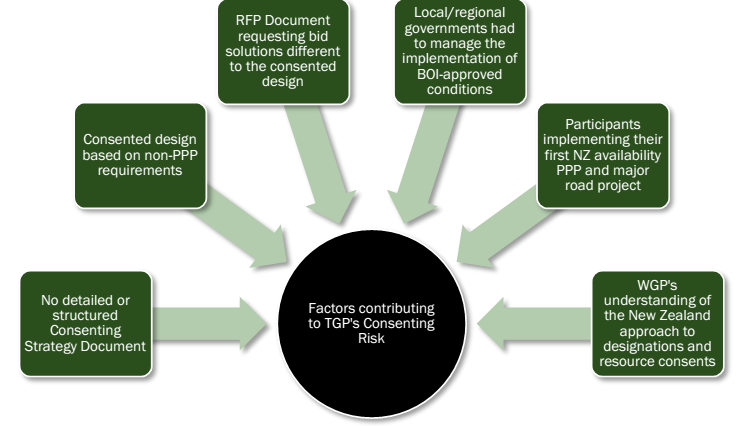
Figure 6: Contributing Factors Impacting on Consenting Strategy Risk
Our view is that no one single contributing factor can be identified as the primary cause of the consenting risk issues encountered by the TGP. It appears to us that all these factors were in play, in varying degrees, effectively from when the decision was made to procure TGP using the PPP delivery model using a non-PPP consented design.
Arguably, some of these contributing factors may also have crystallised if a non-PPP delivery model had been used - it just appears to us that the PPP model brought to the surface a raft of consenting-related issues, and that under a PPP contract there is a need to deal with matters as they arise given several parties are involved.
Also, we note that if a "PPP-version" of TGP in around 2009 was progressed, when the use of PPP was first signalled by the then Minister for Transport, then the development of the TGP and accompanying consents would have likely been more influenced by PPP requirements, potentially avoiding some/all the consent issues that the TGP has encountered.
Recommendations - Risk Transfer • Te Waihanga considers reviewing the definition of the PSC to provide clearer guidance that it represents the most efficient likely method of providing the defined output currently available to the public sector. • Te Waihanga considers developing whole-of-government PPP guidance on improved governance and delegations for the setting and approval of the AT. • Waka Kotahi consider developing for future PPP projects a structured consenting strategy document as a key project control document/artefact, including for use in procurement/tender documents. |