Effect of Condition on Forecast Lifecycle Costs
2.23 Condition data collected has been used to produce a Lifecycle model for each group of schools in line with industry guidance.
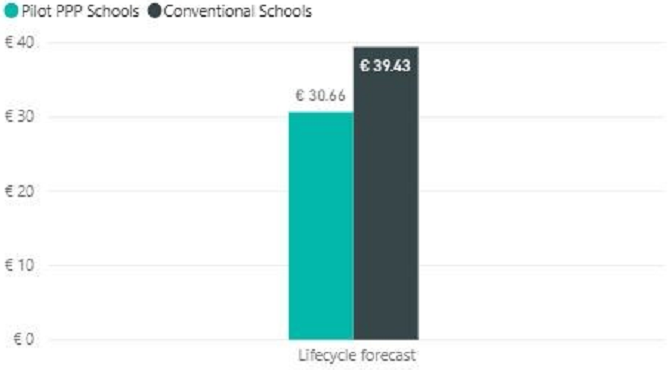
2.24 Over the remaining nine years of the PPP Concession, the Conventional Schools are profiled to cost and estimated additional €8.77/m2/annum (29% higher than the PPP costs), where the PPP costs are forecast at €30.66/m2/annum and the Conventional costs are forecast at €39.43 (Figure 2.7). The PPP costs incorporate the contractual 10% FM Contractor preliminaries mark-up. This 10% mark-up is not applicable to the Conventional Schools, where the management team manage and procure works as part of their day-to-day role.
Figure 2.7 - PPP and Conventional Schools Lifecycle Forecast (€/m2/annum)
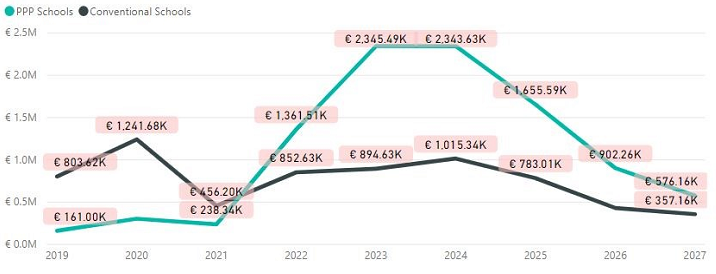
2.25 For the purposes of the forecasting model, there is a significant additional spend forecast at the Conventional Schools in the next three years (see Figure 2.8 beneath). This spend reflects the anticipated cost of Backlog Maintenance required to be completed at the Conventional Schools were they to be brought up to Condition B standards. These works required are as evidenced within the conditions survey data. Backlog Maintenance at the Pilot PPP Schools is very minimal, and the € per m2 rate reflects the typical Lifecycle replacements that would be expected to occur during these years. In the first 3 years the €/m2 of the Conventional Schools averages at €42.08/m2, whereas the €/m2 at the Pilot PPP Schools Bundle averages at €6.20/m2.
Figure 2.8 - PPP and Conventional Schools Lifecycle Profile (Total forecast annual costs - €)
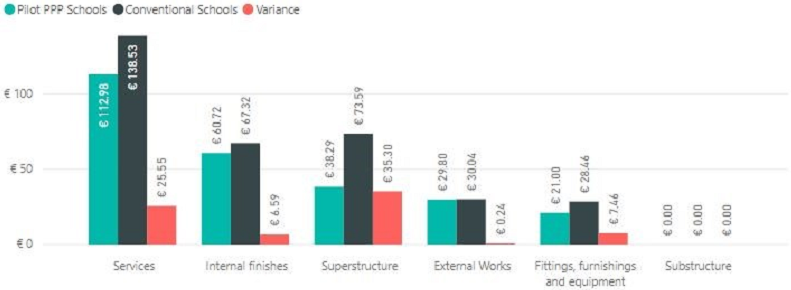
2.26 Figure 2.9 shows the variance in forecast Lifecycle costs by group element based on the condition survey data collected. The forecast costs are higher for the Conventional Schools across each category; this is typically due to Backlog Maintenance identified and the subsequent spend required to rectify these condition issues. Costs for the superstructure are significantly higher, predominantly due to condition issues highlighted with the roof and external walls. Whilst there is less of a difference between costs for Services (M&E), the overall condition at the Conventional Schools was poorer resulting in higher costs; however, the specification/different types of critical M&E systems at the Pilot PPP Schools are higher, increasing replacement costs. For example, the Pilot PPP Schools each have a BMS system unlike the Conventional Schools and have higher numbers of lifts (two of the four Conventional Schools are single storey).
Figure 2.9 - PPP and Conventional Schools Forecast Group Elemental Lifecycle Costs
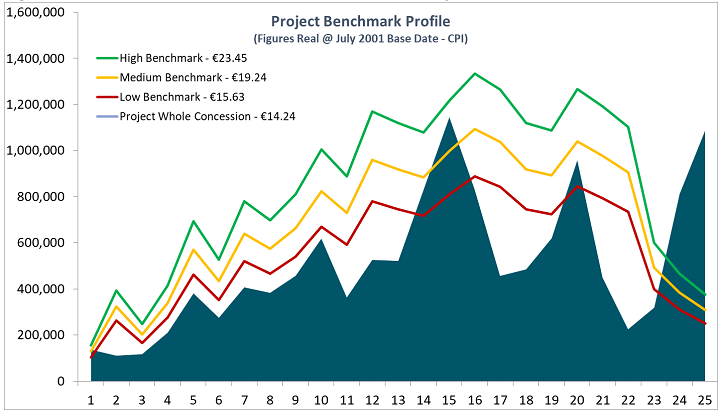
2.27 The PPP Financial Close Lifecycle model for the remainder of the Concession is very similar to the profile forecast as part of the Review (based on current condition of the facilities) on a €/m2 basis over the remaining concession period measured (Figure 2.10). The profile shape differs, with the Review forecast being influenced by actual condition on site. The similarity in profiles suggested that the Financial Close profile offers some value over the remainder of the Concession; however, spend to date is not known and the profiled spend in the earlier years of the contract may be significantly higher than the actual spend. It is not possible from the available information to tell if the whole concession profile offers suitable value based on actual spend. Figure 2.10a shows the whole concession financial close Lifecycle profile in comparison to market benchmark data. The profile falls below the low benchmark for a project of this type and location, indicating that the Lifecycle fund provides some suitable value relative to the wider PPP market.
Figure 2.10 - Current PPP Financial Close Profile and Forecast PPP Profile Comparison
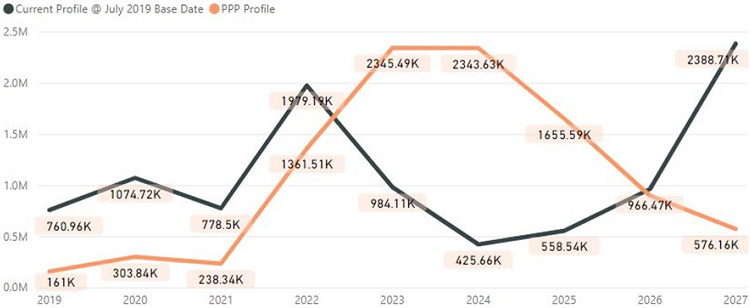
Figure 2.10a - PPP Financial Close Whole Concession Lifecycle Profile Benchmark