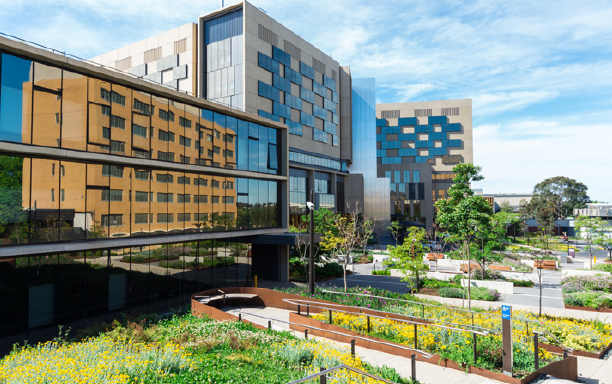
1.1 Rethinking our Fast-growing Cities
1.1 Recommendation Deliver globally competitive quality of life in Fast-growing Cities by growing economies and populations, enabled by place-centric infrastructure investment and reform. Proposed sponsor: Department of Infrastructure, Transport, Regional Development and Communications | ||||
When this should impact: |
| Where this should impact: |
| |
| 1.1.1 Improve cooperation between all levels of government by jointly developing a clear vision for each Fast-growing City that underpins land use, infrastructure and planning strategies. Proposed lead: State and territory planning departments Supported by: Department of Infrastructure, Transport, Regional Development and Communications, local governments | |||
| Build buy-in for each city's vision through industry and community engagement. Proposed lead: State and territory planning departments Supported by: Department of Infrastructure, Transport, Regional Development and Communications, local government | |||
| Embed priority quality of life outcomes for each Fast-growing City in a refreshed Smart Cities Plan. Proposed lead: Department of Infrastructure, Transport, Regional Development and Communications | |||
| Benchmark performance of each city against the Australian Government's policy priorities through the National Cities Performance Framework. Proposed lead: Department of Infrastructure, Transport, Regional Development and Communications | |||
| Harmonise local character and neighbourhood plans within each city's vision to: • account for local identity and assets • guide timing and scope of current and proposed projects • embed cultural considerations in planning, based on local demographics • address disparities in infrastructure provision within and across Fast-growing Cities • address community resilience, including behaviour changes associated with the COVID-19 pandemic. Proposed lead: Local governments Supported by: State and territory planning departments | |||
| 1.1.2 Incorporate diverse approaches and innovation in urban policy through collaboration between government, industry and academia. Proposed lead: Department of Infrastructure, Transport, Regional Development and Communications | |||
| Invigorate the Cities Reference Group to provide an interface between government, academia and industry on urban policy, including: • updated terms of reference that focus on quality of life and support population and economic growth • renewed membership to ensure broad representation from all levels of government, the infrastructure sector and industry representatives. Proposed lead: Department of Infrastructure, Transport, Regional Development and Communications | |||
| 1.1.3 Maximise the impact of city-shaping infrastructure delivery and operations through collaborative place-based governance models. Proposed lead: Department of Infrastructure, Transport, Regional Development and Communications Supported by: State and territory planning departments, local governments | |||
| Meet community needs by improving physical and digital connectivity through place-based approaches to infrastructure planning and governance: • Support the vision for a city by developing planning strategies focused on physical and digital connectivity that link places within cities, and their satellite areas. • Connect assets to communities by defining a spectrum of appropriate governance models for places of different scale. • Prioritise industry specialisations, innovation precincts and activity centres through infrastructure distribution decisions. • Share best practice in planning and deliver place-based projects between state, territory and local governments. Proposed lead: State and territory planning agencies Supported by: State and territory infrastructure delivery agencies and local governments | |||
| Identify local priorities and support efficient place-based planning and delivery by using community-led governance groups. Proposed lead: Local governments | |||
| Effectively deliver Australian Government-funded major infrastructure by developing a spectrum of place-based governance, financial and reporting models, including: • managing the interface of federal assets and land holdings with neighbouring state, territory and local government infrastructure through asset or precinct specific models • aligning city-shaping investment with supporting reforms and infrastructure provision through City Deal models • driving targeted economic development of Fast-growing Cities by creating innovation districts and activity centres. Proposed lead: Department of Infrastructure, Transport, Regional Development and Communications Supported by: Infrastructure and Project Financing Authority | |||
| 1.1.4 Ensure city-shaping infrastructure projects deliver value for money and amenity by applying place-based considerations to funding assessments. Proposed lead: State and territory treasuries Supported by: State and territory infrastructure departments | |||
| Support a coordinated approach to developing Fast-growing Cities by requiring funding applications to demonstrate their strategic fit with the vision and priorities identified at the local, state and territory and federal level. Proposed lead: State and territory treasuries Supported by: State and territory infrastructure departments | |||
| Ensure business case development incorporates a place-based approach when a project will create or cause material impacts on adjacent infrastructure. Proposed lead: State and territory treasuries Supported by: State and territory infrastructure departments | |||
| 1.1.5 Provide greater residential choice by planning and delivering high-quality medium-density residential areas alongside well-sequenced infrastructure investment. Proposed lead: State and territory planning departments Supported by: Local governments | |||
| Support amenity and infrastructure access for communities undergoing densification by developing local character plans to define expectations for the size and scale of infrastructure that will be provided. Proposed lead: State and territory planning departments Supported by: Local governments | |||
| Encourage a diversity of housing forms by revising planning codes to embrace a diversity of housing options, including explicitly supporting medium-density development. Proposed lead: State and territory planning departments Supported by: Local governments | |||
| Support local government decision-making by linking local character definitions to planning codes for medium-density forms. Proposed lead: State and territory planning departments Supported by: Local governments | |||
| Explicitly consider provision of affordable housing when planning medium density residential areas. Proposed lead: State and territory planning departments Supported by: Local governments | |||
| Effectively provide for infrastructure enhancement in brownfield communities undergoing step changes in densification by developing a transparent framework for population and activity levels, value-sharing funding mechanisms and associated infrastructure investment. Proposed lead: State and territory planning departments Supported by: Local governments | |||