Australia has a post-pandemic recovery advantage
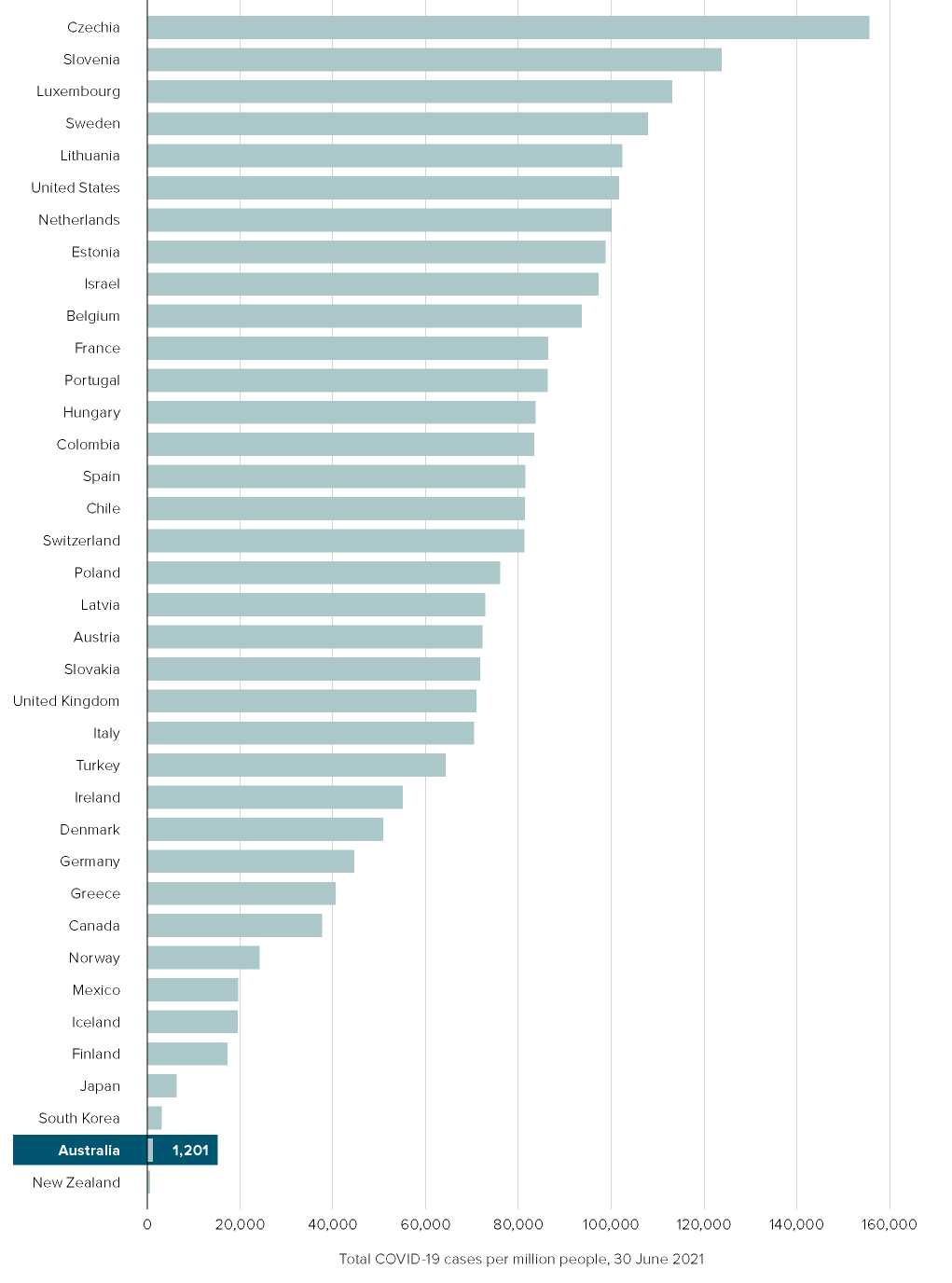
While the impacts of the COVID-19 pandemic have been devastating, Australia has largely escaped high infection and death rates (see Figure III.3).
It is widely acknowledged that much of this result is attributable to Australia's national and state governments acting early in the pandemic by introducing travel bans, lockdowns, border controls and support for domestic supply chains.
Figure III.3: Australia has had relatively low case numbers compared to other OECD countries
Source: Johns Hopkins University (2021)17
According to the World Health Organisation (WHO), there have been close to 130 million confirmed cases of COVID-19 worldwide, including nearly 3 million deaths.18
Tens of millions of people have lost their Jobs or had their working hours reduced. The International Labour Organisation (ILO) estimates that the working hours lost in 2020 (compared to pre-pandemic levels) were equivalent to 255 million full-time jobs, resulting in around $3.7 trillion in lost labour income.19
Australia has fared well relative to other countries, but the pandemic and the resulting lockdowns have still had a major impact on people's lives.
In late January 2020, Australia started to record a small but steady stream of COVID-19 cases, reaching its highest number of reported cases per day in early August 2020 (see Figure III.4).
As of June 2021, Australia has recorded 30,610 cases of COVID-19, including 910 deaths.20 At June 2021, over 20 million tests had been conducted nationally, with 0.1% testing positive.
The relatively low number of cases and deaths here mean that, as the world begins to emerge from the impacts of the pandemic, Australia will have a head start on the post-pandemic economic recovery.
Having lower levels of infection compared to other countries is likely to make Australia an attractive option for international students and tourists, and will support the reopening of industries that can safely deliver stimulus projects.
This will put the Australian infrastructure sector at a global advantage when accessing skills, assets and supply chains.
Figure III.4: Australia recorded several peaks in COVID-19 cases in 2020

Source: Johns Hopkins University (2021)21