Introduce a uniform approach to decision-making
For Smaller Cities and Regional Centres to grow and achieve their potential, a consistent national approach is needed to the planning and delivery of infrastructure.
Many regional councils struggle to fund infrastructure maintenance from their rate-base.64 This is exacerbated by established funding models, which may not reflect the role they play in providing a range of infrastructure, facilities and services to a broader number of people in neighbouring centres, beyond their local ratepayers.65
Additionally, some regional centres find it difficult to identify the return on investment for infrastructure spending because of project risks or because benefits may accrue over time.
To realise a vision for a strong regional Australia, it is essential to invest in infrastructure projects that will 'create an environment for people to invest in, stay in or learn in.'66 This will allow a build-up of people, skills and capability that will continue to unlock long-term economic benefits.
In addition, infrastructure investment must target regions with strong and established prospects for economic growth so their population growth potential is matched by an available workforce.
Ensuring infrastructure investment is both equitably targeted at a community level and delivers for the nation will require a consistent approach across the country to assessing infrastructure needs and determining funding.
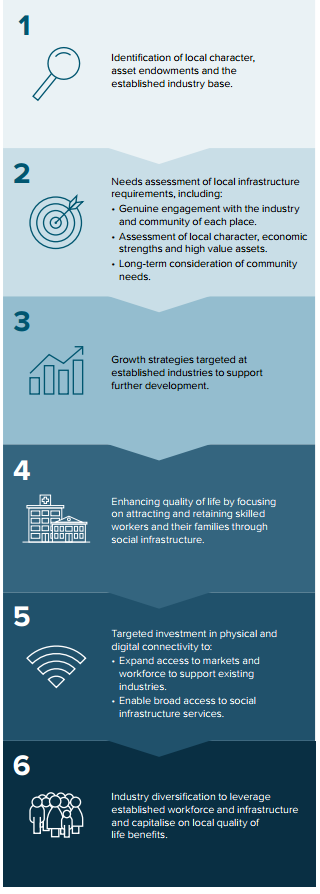
Infrastructure Australia proposes the settlements shown in Figure 1.6 to support Smaller Cities and Regional Centres to grow and achieve their potential.
To further increase their funding options and the broader value of the proposed infrastructure, these places should identify opportunities to align investment proposals with national policy priorities when they seek Australian government funding.
In considering these national priorities, the Australian Government and state and territory governments should consider local attributes when directing funding to regions. It is important to value each settlement's unique series of features, many of which will ultimately support national objectives.
Figure 1.6: A staged approach to regional investment will optimise economic and social outcomes