Improve data to support better infrastructure planning
A marked characteristic of 2020-2021 has been the shift for many from working in the office to working from home. This has accelerated a trend that was already underway as a result of technology developments.
With the future likely to include more remote working, the regionalisation that was already taking place before the pandemic will continue and accelerate (see Figure 1.7).67
Even after the pandemic declines, it is expected that 1 in 10 Australian workers will work from home 2-3 days per week.68
This change is expected to support longer, less frequent commutes for up to 1.4 million Australians, increasing the attractiveness of settling in Smaller Cities and Regional Centres (including satellites).
Figure 1.7: More people staying in regional areas, as well as increased departures from capital cities, led to a 200% increase in net migration during COVID-19
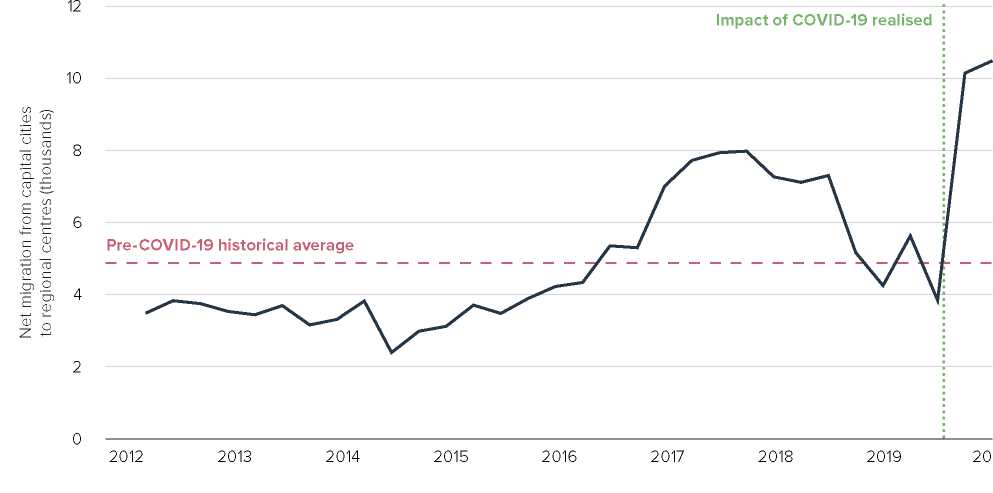
Source: L.E.K. Consulting commissioned by Infrastructure Australia (2020)69
This trend has significant implications for future infrastructure planning and delivery in both cities and regions.
To plan and develop assets that are fit-for-purpose and sustainable, governments will need an updated evidence base in relation to how people choose to live and work.
It will be essential to have access to leading indicators up-to-date, robust population data, and information about the role infrastructure plays in driving settlement and industry location decisions. The Industry productivity and innovation chapter has more detail on the need for additional data to support infrastructure decision-making.
This information will help to determine and prioritise the interventions needed to retain residents in Regional Centres and continue to catalyse growth.
" The focus of investment in economic and social infrastructure needed to support a population redistribution trend is substantively different to current scenarios. "
The Australian Government has invested $13.7 million over four years from 2020-21 in the Better Data Use to Support Delivery for Regional Australians program, which includes the development of a Regional Data Hub.70 The Regional Data Hub will be a new central source of economic, demographic and socio-economic data for Australia's regions. It aims to strengthen the evidence base for community and government decision-makers, informing place-based infrastructure planning and addressing the need for coordinated, comprehensive and accessible data on issues affecting regional Australia.