Ensure CSOs deliver the promised benefits
Subsidies are vital for some areas of infrastructure service delivery in Australia, and for all infrastructure sectors in Small Towns, Rural Communities and Remote Areas. They allow the provision of infrastructure that supports quality of life and addresses social disadvantage.
Subsidies are often provided through Community Service Obligations (CSOs) nationally, which target services that are provided for a social purpose and would otherwise be economically unviable.
Research conducted for Infrastructure Australia by the Centre for International Economics identified 315 infrastructure CSOs, 39% of which are not transparent (see Figure 1.8).94
In the 2016 Plan, Infrastructure Australia recommended that 'infrastructure community service obligations should be well-defined, transparently disclosed to the community, paid for by taxpayers rather than other users and, wherever possible, exposed to a competitive process to ensure services are routinely delivered at the right level, for an efficient price.'95
Figure 1.8: Despite being worth billions of dollars, CSOs are not always transparent
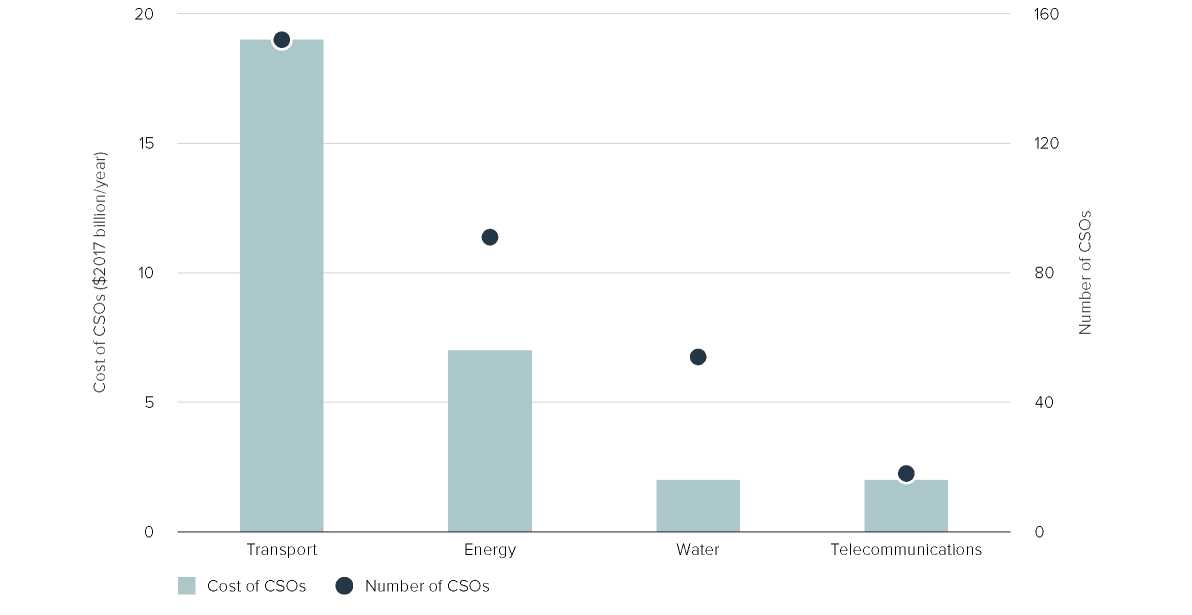
Source: Centre for International Economics (2018)96
The Australian Government supported the recommendation.97 However, there has been mixed progress on disclosing CSOs and redesigning them where appropriate. While telecommunications CSO transparency has improved, the true cost of providing other infrastructure is opaque.
A lack of consistent review processes for funding arrangements results in taxpayers being unsure they are efficient and deliver value for money. This can reduce community support for CSOs and the benefits they deliver.
Australian governments can improve the design of CSOs to better achieve the policy outcomes they seek. CSO design should consider delivery efficiency, encourage contestability, and take into account the impact of technology changes on infrastructure and service delivery.
Making the nature, costs and objectives of CSOs more transparent would ensure the costs and benefits are understood by governments, communities and other stakeholders. This would empower all stakeholders to engage in evidence-based discussion and decision-making on services that best meet their local needs.