Meeting emissions reduction commitments
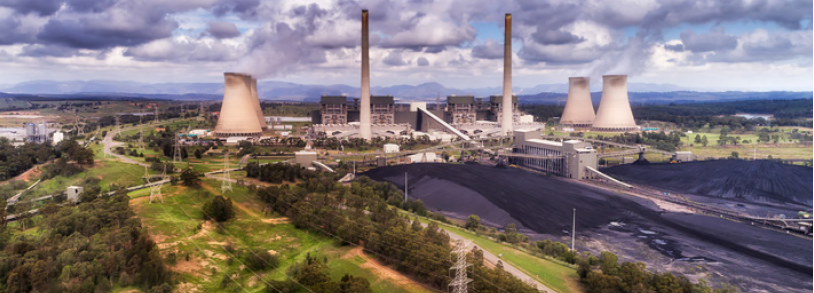
Australia's international commitments to reduce emissions are evident in a number of emissions reduction policies across levels of government.
The Australian Government has committed to a technology-led approach to reduce emissions, focusing on investments in new and emerging low-emissions technologies that drive economic growth.57 Prime Minister Scott Morrison has signalled an intention to achieve net zero 'as soon as possible, and preferably by 2050'.58 Australia is also a party to the Paris Agreement (United Nations Framework Convention on Climate Change), which mandates the reduction of greenhouse gas emissions by 26% to 28% by 2030 compared to 2005 levels.59
States, territories and many local councils have adopted ambitious commitments to a net zero future. They have done this through progressive policies and whole-of-economy or sectoral targets to either reduce emissions or reach net zero emissions by 2050 or earlier.60
In many cases, government commitments follow private sector leadership. Investors are moving rapidly to capitalise on opportunities associated with the transition to a low-carbon future and limit their exposure to climate and carbon risk.
Collectively, these trends present opportunities for governments to:
• attract additional competitively priced investment in assets that are designed and operated to reduce emissions
• deliver sustainability outcomes for the community
• lead through policy settings that provide certainty and confidence for business.
Governments have the power to pull many levers to accelerate change, particularly in Australia's most emissions-intensive infrastructure sectors. They can do this through infrastructure assessment frameworks, performance and procurement targets, reporting, and changes to standards and regulations.
Individually and collectively, these changes have the potential to catalyse sustainable investment in the best interests of current and future users and taxpayers.
| 2.2 Recommendation Meet Australia's present and future needs by establishing the quadruple bottom line as a goal for all infrastructure policy and investment. Proposed sponsor: Department of Infrastructure, Transport, Regional Development and Communications Supported by: State and territory environment departments | ||||
| When this should impact: |
| Where this should impact: |
| |
|
| 2.2.1 Achieve consistency and shared ownership through embedding the quadruple-bottom-line into infrastructure decision-making frameworks. Proposed lead: Department of Infrastructure, Transport, Regional Development and Communications Supported by: Infrastructure investment assurance and assessment agencies, state and territory treasuries and state and territory infrastructure bodies | |||
|
| Ensure consistent understanding by adopting the quadruple-bottom-line definition of sustainability. Proposed lead: State and territory environment departments Supported by: State and territory infrastructure delivery agencies, state and territory infrastructure bodies and state and territory treasuries | |||
|
| Meet Australia's commitments to net zero through long-term sector-specific plans that set interim emissions reduction targets and strategies that prioritise infrastructure investments and services. Proposed lead: Department of Industry, Science, Energy and Resources Supported by: State and territory environment departments, industry representative groups | |||
|
| Ensure consistent application of the quadruple-bottom-line at the strategic proposal development phase by embedding sustainability guidelines in investment frameworks and guidance materials. These should include considering sustainability when identifying problems, developing options and undertaking economic analysis. Proposed lead: State and territory treasuries Supported by: Infrastructure investment assurance and assessment agencies and state and territory infrastructure bodies | |||
|
| Facilitate national and cross-sectoral consistency by using quadruple-bottom-line guidelines to develop complementary, sector-specific sustainability principles and frameworks. Proposed lead: Infrastructure Australia Supported by: State and territory infrastructure bodies, infrastructure investment assurance and assessment agencies, state and territory treasuries and industry representative groups | |||
|
| Support common approaches to assessment, cross-sector collaboration, shared responsibility and best practice, and develop connections and networks, by forming a cross-Jurisdictional sustainability group. Proposed lead: Infrastructure Australia Supported by: State and territory infrastructure bodies, infrastructure investment assurance and assessment agencies, state and territory infrastructure bodies, state and territory treasuries and industry representative groups | |||
|
| 2.2.2 Deliver cost-effective emissions reduction and broad sustainability benefits consistent with the quadruple-bottom-line by prioritising energy efficiency in the built environment and social infrastructure. Proposed lead: State and territory social housing providers Supported by: Community housing providers, state and territory education departments and state and territory housing departments | |||
|
| Identify potential to embed quadruple-bottom-line outcomes in social infrastructure assets by auditing existing social infrastructure assets and using Green Building Council of Australia's Green Star rating system, Infrastructure Sustainability Council of Australia IS Rating Scheme and NABERS tools. Proposed lead: State and territory infrastructure departments | |||
|
| Ensure quadruple-bottom-line outcomes by introducing procurement standards. These should mandate sustainable performance, including energy efficiency measures and the electrification of appliances, for government-owned social infrastructure. Proposed lead: State and territory infrastructure departments | |||
|
| Ensure quadruple-bottom-line outcomes by accelerating performance upgrades to social infrastructure, including schools, hospitals and public and community housing stock. Prioritise the increased installation of solar PV, storage and smart meters in social housing. Proposed lead: State and territory housing departments, state and territory health infrastructure agencies, state and territory education departments | |||
|
| Improve energy efficiency and reduce emissions from new social infrastructure by increasing performance standards and updating the National Construction Code in line with the Trajectory for Low Energy Buildings. Proposed lead: Building Ministers Meeting Supported by: State and territory housing departments, Australian Building Codes Board, state and territory health infrastructure agencies, state and territory education departments, and state and territory government property agencies | |||
|
| Support ongoing monitoring and improvements in social housing by creating and implementing a work program for updating energy performance standards that streamlines approval processes and conducts regular reviews. Proposed lead: State and territory energy departments | |||
|
| Ensure the built environment's emissions reduction pathway is understood and coordinated by establishing collaborative sectoral leadership groups, similar to the Better Buildings Partnership or the Materials and Embodied Carbon Leaders' Alliance. Proposed lead: State and territory environment departments Supported by: State and territory energy departments and state and territory transport departments | |||
|
| 2.2.3 Deliver cost-effective emissions reduction and broad sustainability benefits consistent with the quadruple bottom line by managing zero emissions vehicle uptake and vehicle standards. Proposed lead: Department of Industry, Science, Energy and Resources | |||
|
| Ensure the uptake of electric vehicles at the right scale and time to optimise quadruple-bottom-line benefits by delivering a national electric vehicle strategy through the expansion of the Future Fuels Strategy. Proposed lead: Department of Industry, Science, Energy and Resources | |||
|
| Facilitate cost-effective emissions reductions by aligning vehicle emission standards with global best practice and requiring manufacturers to reduce emissions over vehicle portfolios. Proposed lead: Department of Industry, Science, Energy and Resources | |||
|
| Ensure national consistency and coordination by aligning state and territory strategies and actions to the national strategy, including targets and timelines for transitioning all government fleet vehicles to electric vehicles whenever they are fit-for-purpose. Proposed lead: State and territory finance departments Supported by: Australia, state and territory government fleet managers, and state and territory transport departments | |||



Measuring progress
|
| Greenhouse gas emissions Infrastructure sector emissions - net zero by 205061 | ||
| Environment | Target: Net zero | Timeframe: |
|
|
| Quadruple-bottom-line Percentage of projects submitted to Infrastructure Australia that are expressed and measured against the quadruple bottom line of economic, environmental, social and governance outcomes | ||
| Governance | Target: 100% | Timeframe: |
|
|
| National climate adaptation scenarios Percentage of Australian, state and territory government infrastructure strategies adopting common climate scenarios | ||
| Environment | Target: 100% | Timeframe: |
|