Be open and fair about project risk
The current contract approach in public infrastructure is to pursue the maximum transfer risk to the successful bidder. This is perceived to protect the government and taxpayer from these risks. However, many providers are unable to mitigate or minimise these risks, or do it cost-effectively. Despite the belief risk is transferred and therefore managed, poorly allocated risk exposes government to inflated project costs and the risk of project cost and time over-runs, or potential project failure.
At its best, this practice is misleading as it erroneously suggests risks are being effectively managed.66
The practice of forcing industry to accept risks they cannot reasonably control or bear increases the likelihood of variations and inflated budgets, including excessive contingencies. It increases the risk of default and can drive negative behaviour such as withholding payments to suppliers and sub-contractors, and over-engineering or 'gold plating' project designs to cope with uncertainties. Such negative outcomes compound and erode value for money.
Governments can create positive outcomes by being transparent, highlighting risk and implementing management best practices. Championing the role of 'model client' and reviewing risk models with the successful bidder will increase industry confidence and value for money outcomes.67 The resulting project scope will lead to fewer claims and variations and ultimately increase the market's capacity to bid.68
Project risk can be reduced through the use of standard form contracts, reviewing onerous clauses in contracts, and moving towards more 'collaborative' arrangements (irrespective of the contracting model used). Even high-risk transfer models, such as 'design and construct', can be more collaborative.
Another key opportunity to reduce risk in infrastructure is to review the Private Public Partnership (PPP) model. PPPs are the primary vehicle to support private investment in public infrastructure. However, recently the use of PPPs has been declining in both in Australia and domestically. The decline is in part due to the industry concerns about risk allocation or complexity. The reduction in the use of the model could have the undesirable impact of reducing opportunities for private investment, thereby reducing overall investment or increasing costs to taxpayers.
In the face of declining use, PPPs in Australia need to be reviewed. This should start with government and industry focussing on the 'partnership' element of PPP. A reinvigorated PPP model that establishes genuine delivery partnerships through greater sharing of risk and reward will increase the accessibility of this model for smaller projects and deliver more projects overall.69
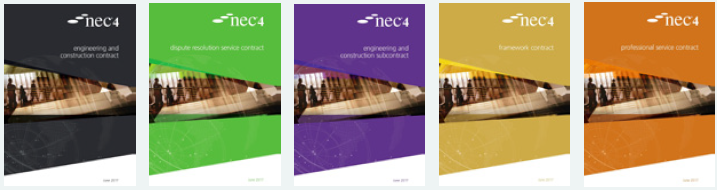
| The UK is leading the way The United Kingdom Institute of Civil Engineers has developed the New Engineering and Construction Contracts (NEC). These formal, consistent guides, templates and other supporting documents can be used on a range of infrastructure in the United Kingdom. The latest iteration, NEC4, was launched in 2017. The NEC is a family of standard contracts, so it promotes a range of options for use in a variety of commercial situations, project types, scenarios and locations. Beyond project implementation, the system includes supply contracts, frame agreements, professional services arrangements and design, build and operate contracts. NEC is attracting global support and accolades from practitioners, owners and all parts of the supply chain. The NEC simplicity, collaborative focus, and effectiveness at sharing risk and reward has seen it adopted internationally, supporting the United Kingdom's access to international markets for exporting services and attracting investment.
|