Move from 'megaprojects' to 'megaprograms'
Ongoing changes to Australians' settlement decisions, working routines and travel habits after the COVID-19 pandemic promise challenging and uncertain times for transport decision-makers.10
In addition to the effects of the pandemic, innovative digital technologies and new ways of sharing vehicles and mobility services are already transforming transport. Transport planners and economists should reset their assumptions about people's travel behaviour.
Breaking down investment in major new transport corridors into programs of separate projects that will be completed sequentially over many years ('megaprograms') is one suitable response to uncertainty.
It will allow passenger volumes for capital- intensive transport solutions to build over time, reducing the risk of over-committing investment to the wrong projects.
Corridor preservation Setting aside the land where future infrastructure will be built, before surrounding urban development happens |
For high-volume passenger movement corridors, this process will involve, in order (see Figure 4.2):
1. protecting surface land corridors from inappropriate development
2. identifying centres as the location for future mass transit stations and starting to develop them as busy community hubs
3. connecting these centres with flexible public transport services and developing active travel opportunities, such as walking and cycling networks, across their local catchment areas as early as possible
4. progressively upgrading public transport services, including high-quality bus services, to meet existing demand and encourage travellers to start to shift from car to public transport use. For example, rapid bus services supported the early development of the 20-year-old Rouse Hill town centre, now served by Sydney Metro Northwest (see Figure 4.3).
5. delivering high-capacity mass transit on dedicated infrastructure such as busways, light rail and heavy rail.
Taking this sequential approach will orient urban planners towards providing users with sustainable transport choices from the outset.
For instance, once demand has been established, they can make capital-intensive investments that are equitable and targeted.
In line with this approach, the Australian Government should seek to enter agreements with Jurisdictions delivering staged enhancements to significant transport corridors and networks.
The agreements should be multi-year and have defined funding thresholds.
See the Sustainability and resilience chapter for more information on infrastructure planning for an uncertain future. That chapter also addresses coordinated corridor management for all infrastructure types.
For more information on a sequential approach to implementing a pipeline of infrastructure projects, refer to the Industry productivity and innovation chapter.
Figure 4.2: Corridors will evolve through progressive investments in different transport modes
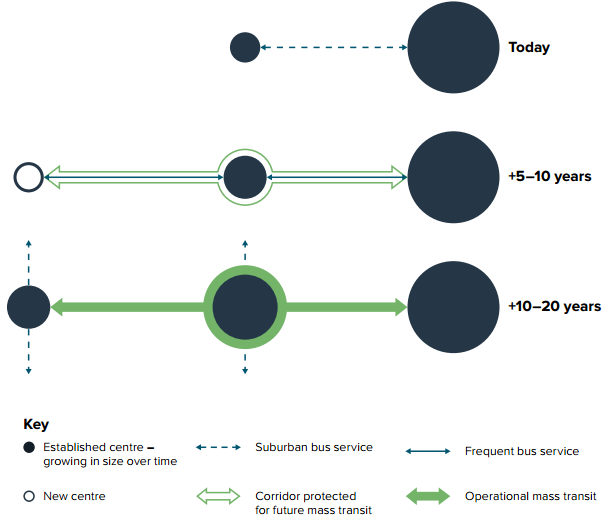
Figure 4.3: Phasing infrastructure projects supports judicious investment and new centre growth
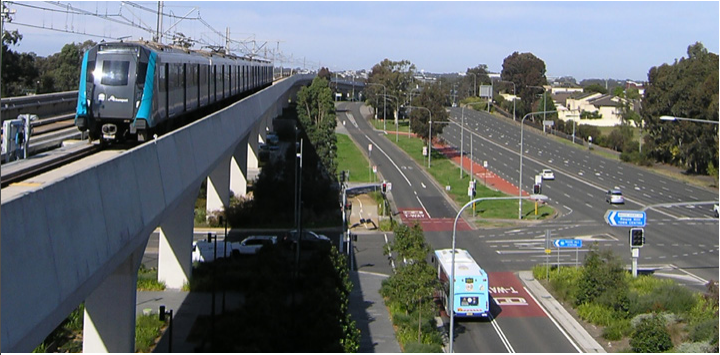
Image source: Infrastructure Australia (2021)