Harness development-driven funding to meet user needs
The COVID-19 pandemic has increased the attractiveness of low-density and spacious housing, drawing people away from large centres to outer- urban areas, Smaller Cities and Regional Centres as they become more home-based for work.14
As a result, local and cross-regional Journeys are increasing.
This is likely to put pressure on roads that have not previously experienced city centre traffic jams, and they are at risk of getting more congested.
Even before this trend, traffic congestion was increasing at a faster rate in outer-urban areas than on older road networks around established centres.15
To address this emerging challenge and reduce car reliance, state and territory governments must invest more in outer-urban public and active transport options.
This should include introducing flexible first- and last-mile services (such as buses) in areas of low-density growth.16
Funding regimes should be designed and managed to support efforts by councils and others to provide public transport and active travel facilities before people move into new suburbs.
For example, funding sources could include developer contributions and - for areas where significant transport corridor projects are planned - mechanisms for sharing the resulting land value increases and returning this to users in the form of better facilities, which can contribute further to land value (see Figure 4.4).
First and last mile Local transport choices that connect to higher- capacity and faster services (often rail) to get people or freight all the way from and to the start and finish points of end-to-end Journeys Value sharing Funding transport infrastructure using contributions from the owners of land that increases in value because the new road or railway makes it more accessible |
There should be related reforms to facilitate councils' choice in accessing cost-effective finance that provides forward funding to build infrastructure supporting transport choices as soon as people move into greenfield areas. The cost can then be repaid by developers as new suburbs become fully settled.17
Figure 4.4: Integrating mobility infrastructure into early urban planning makes places more liveable and reduces delivery costs
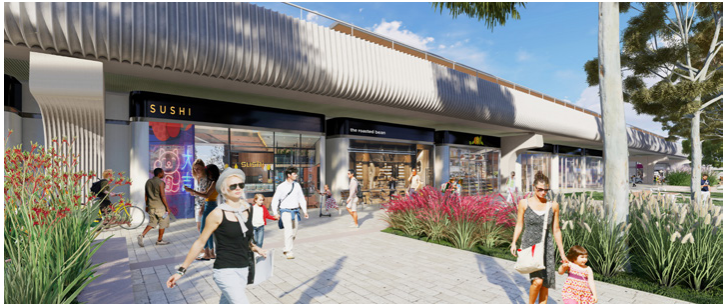
DevelopmentWA is master planning the METRONET East Redevelopment Scheme around Perth's Bayswater Station, ensuring publicly funded infrastructure supports good place outcomes.
Image source: METRONET (2021)18