Protect the vulnerable
Australians need to trust that any transport pricing reform process is equitable and be confident vulnerable users will be protected.
Community service obligation Governments specify community service obligations (CSOs) that require contracted businesses to provide services that are not commercially profitable. A public transport CSO may specify the maximum wait time between timetabled services or the furthest distance that a user must walk from home to the nearest bus stop. |
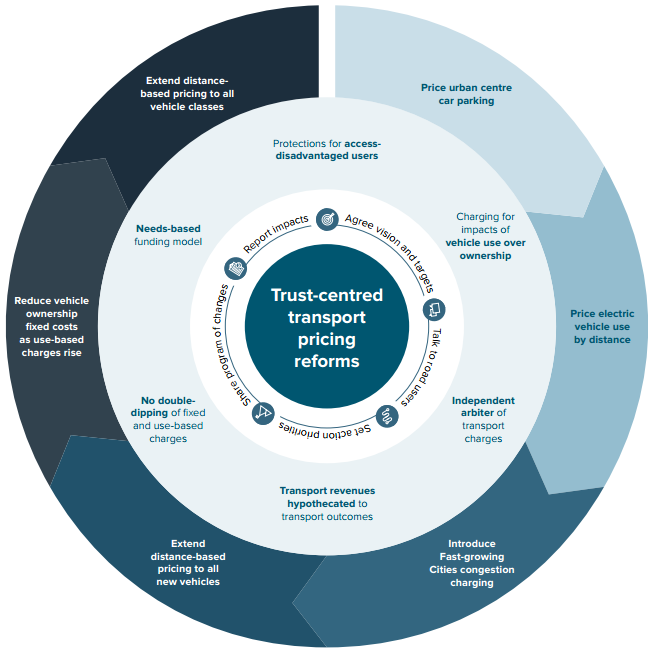
Transparency builds trust, so the reform process must start with a national conversation on the need for change.46
Ahead of reforms, there should be protections for users who are disadvantaged by geography or their financial situation, such as a robust system of community service obligations and fare concessions.
The reformed pricing system should hypothecate transport revenues to specific targeted investments that deliver a better travel experience by integrating multiple modes.47
Nationally, and in each state and territory, independent bodies should monitor the impacts the reforms have on users and report on the outcomes of hypothecation.
These agencies might include the New South Wales Independent Pricing and Regulatory Tribunal, and Victoria's or South Australia's Essential Services Commission. These bodies already promote users' interests by overseeing reliable and fair-priced access to important services.
There is more information on the broad question of how to maximise community confidence in a challenging reform process in the Sustainability and resilience chapter.
Figure 4.13: Incremental reforms, coordinated across jurisdictions, have more chance of success