The energy sector is transforming
Energy underpins the Australian way of life. It powers homes, helps people and goods to move around and keeps essential social services running. It also contributes significantly to the economy, not least by fuelling every Australian business.
Australia is the third-largest fossil fuel exporter in the world,1 exporting more than two-thirds of the energy produced here.2 But the way Australia - and the world - is powered is going through an unprecedented transformation.
The energy sector is fundamentally changing - from how, where and when it is generated and how it is transported and stored, to who participates in the market and how users pay for it.
Figure 5.1 illustrates how the electricity grid is shifting from a centralised one with small numbers of generators to a decentralised one with more participants who both produce and consume energy.
This transformation is being fuelled by changing technology, changing user behaviours and expectations, and the need to reduce human impact on the planet.
Getting this energy transformation right is critical to Australia's future. Energy assets have a long lifespan - typically 30 to 60 years - so the infrastructure decisions made today will impact Australians for decades to come.
" The energy sector is fundamentally changing - from how, where and when it is generated and how it is transported and stored, to who participates in the market and how users pay for it. "
Many of the challenges, opportunities and reforms are shared across Australia. Therefore, while most of what is recommended in the 2021 Plan relates to the eastern National Electricity Market (NEM), it also applies to the South West Interconnected System (SWIS) and North West Interconnected System (NWIS) in Western Australia, as well as the many small interconnected systems in the Northern Territory.
Electricity will become even more fundamental as other areas of the economy, such as transport and industry, start to transition from being fossil-fuelled to renewable electrification.
The energy transformation has been, and will continue to be, a core focus across all levels of government, energy market bodies, energy regulators and industry bodies. The Energy Security Board (ESB) has been tasked by Energy ministers with developing reforms through the Post-2025 market design project to ensure a fit-for-purpose market design for the NEM. Government energy departments, the Energy National Cabinet Reform Committee, Australian Energy Market Commission (AEMC), Australian Energy Market Operator (AEMO), Australian Energy Regulator (AER) and other industry bodies are working together to support an orderly transition. The 2021 Plan is part of that ongoing discussion.
Figure 5.1: The electricity system is changing from centralised to decentralised
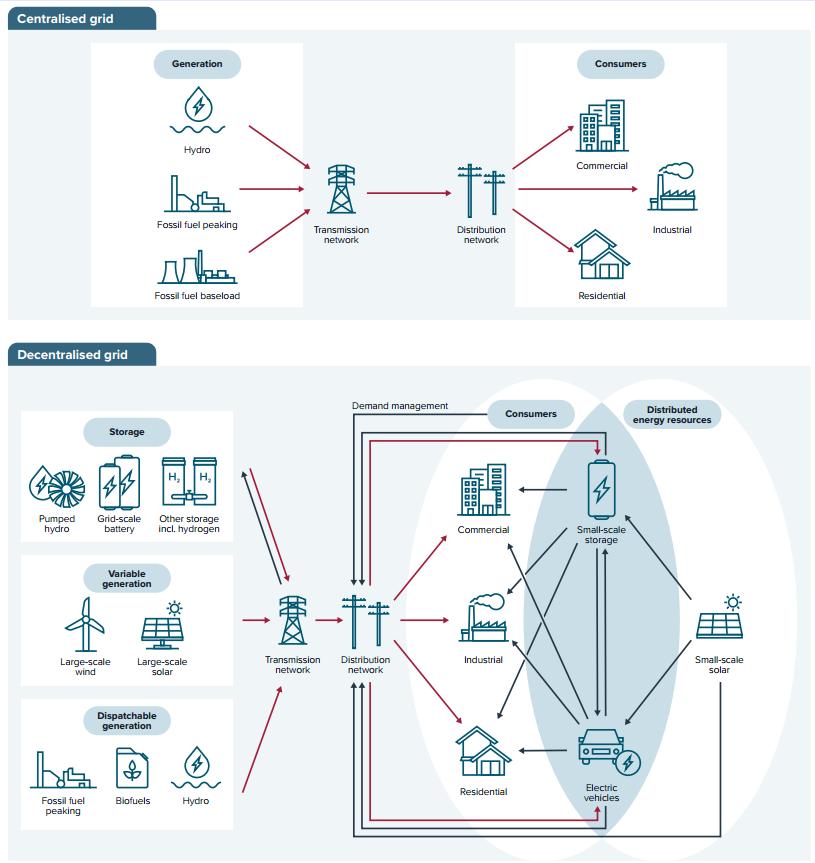
Source: Adapted from Energy Efficiency Council (2020)3
Energy sector governance - the energy market bodies• The Australian Energy Market Commission (the AEMC) - develops the rules for electricity and gas markets. It makes and amends the National Electricity Rules (NER), National Gas Rules (NGR) and National Energy Retail Rules (NERR), which are the regulatory instruments that govern the national energy markets. While the AEMC cannot propose rule changes, it manages the rule change process, and consults and decides on rule change requests made by others. • The Australian Energy Regulator (the AER) - enforces the rules set by the AEMC. It monitors, investigates and enforces compliance with national energy legislation and rules in Australia's national energy markets. The AER regulates electricity networks and natural gas pipelines by setting the maximum amount of revenue they can earn. • The Australian Energy Market Operator (AEMO) - operates the electricity and gas market. It monitors system performance, forecasts demand and supply, and coordinates emergency arrangements. AEMO is also leading the design of Australia's future energy system through the Integrated System Plan (ISP) that provides an integrated roadmap for the efficient development of the National Electricity Market. • The Energy Security Board (the ESB) - provides whole-of-system oversight for energy security and reliability. It is leading a post-2025 market design process, and was established in 2017 by the COAG Energy Council to make the national electricity market fit for purpose. The ESB consists of an independent chair, independent deputy chair, and the heads of AEMO, AEMC and AER. • Council of Australian Governments (COAG) Energy Council, now the Energy National Cabinet Reform Committee (the Committee) - provides oversight and coordination of energy policy at a national level, as energy policy is the responsibility of states and territories. The Committee consists of Energy and Resources ministers for the Australian Government and states and territories. It has overarching responsibility for electricity and gas markets and provides national leadership on strategic issues. |