Supporting customer-led transformation
Businesses and households share a common need for affordable and reliable energy. Emerging technologies are enabling new choices for energy customers to meet these needs with greater flexibility and increasing control over both their demand and supply.
These choices are forcing changes across the industry and could realise efficiency and productivity benefits across the economy.
More than ever, there are tools to help energy customers better understand their electricity use and manage it:
• Smart meters and apps are providing real-time monitoring and helping to change how and when customers choose to use electricity.
• Energy management systems are automating and optimising consumption for best value.
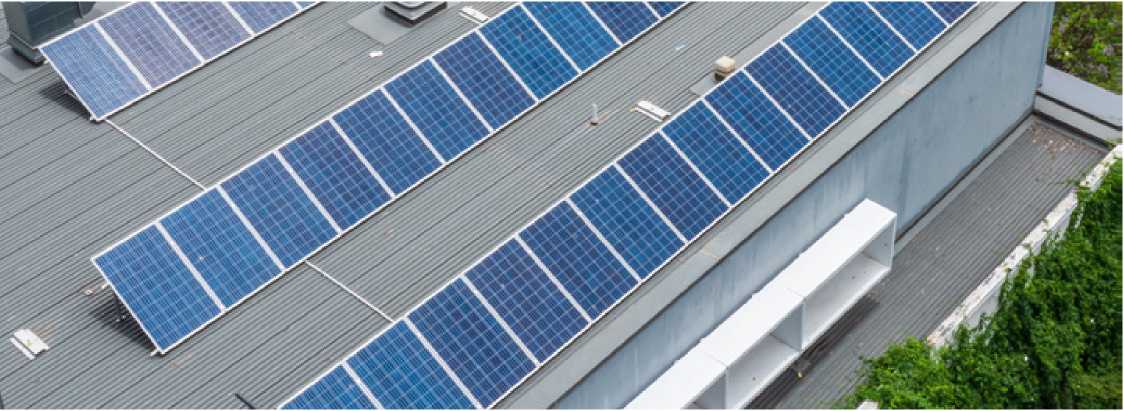
• Rooftop solar systems are reducing electricity consumption from the grid and can help customers participate in the market.
• Batteries are enabling customers to store cheap off- peak or rooftop solar energy for use in peak periods.
• Electric vehicles will soon be able to power homes and export to the grid.
• Increasingly, energy-efficient homes and appliances are reducing bills and, for vulnerable households, supporting a better standard of living.
This customer-led transformation is being replicated in similar sectors, such as telecommunications, water and transport, but customers think energy is providing the worst value for money of these services.11
While many customers have already applied one or more electricity management tools, few have applied them all. Both households and businesses are time-poor, and decisions to invest in energy efficiency and productivity are often not a priority due to a lack of information and understanding of the benefits.
Industry and governments need to do more to close this information gap and increase awareness. This will enable Australians to realise the potential to reduce bills, increase productivity and help vulnerable people to improve their living standards.
Scaling up and harmonising existing best-practice initiatives across states and territories, supporting new investment in energy efficiency, and promoting the opportunities for businesses to improve their energy productivity are no-regrets opportunities.
This will empower customers to unlock savings and create an affordable, efficient and customer-centric energy system for the future.
5.1 Recommendation Help households and businesses reduce electricity bills by making sure they have the right information and incentives. Proposed sponsor: Department of Industry, Science, Energy and Resources Supported by: State and territory energy departments | |||
When this should impact: |
| Where this should impact: |
|


| 5.1.1 Help residential energy customers invest in products and services that reduce their energy bills through education campaigns and tools that help them access the right information when they need it. Proposed lead: Department of Industry, Science, Energy and Resources Supported by: State and territory energy departments |
| Reduce household energy bills (and improve residential energy efficiency) through the broader promotion of easily accessible information and education campaigns (leveraging websites like Energy Made Easy and Your Home), and supporting residential customers to: • invest in the energy efficiency of their homes, renovations and appliances • understand and manage their energy consumption • choose their retailer. Proposed lead: Department of Industry, Science, Energy and Resources Supported by: Australian Energy Regulator, state and territory energy departments |
| Reduce energy bills and improve health and wellbeing for vulnerable and low- income customers by delivering funding assistance programs to support energy audits and energy productivity upgrades for public and community housing, low- income households and associated rental properties with poor energy performance. Proposed lead: Department of Industry, Science, Energy and Resources, Supported by: State and territory energy departments, Energy Consumers Australia, Australian Council of Social Services, Department of Social Services, Services Australia |
| 5.1.2 Help buyers and renters make informed decisions by mandating energy efficiency disclosure for residential dwellings at time of sale or lease and raising minimum energy efficiency standards for rental properties. Proposed lead: Department of Industry, Science, Energy and Resources Supported by: State and territory energy departments |
| Inform home owners, buyers and tenants of the energy performance of their home through the development and application of a national residential energy performance rating scheme for all homes (new and existing) consistent with the Trajectory for Low Energy Buildings and Report for Achieving Low Energy Existing Homes. Proposed lead: Department of Industry, Science, Energy and Resources Supported by: State and territory energy departments |
| Improve the energy efficiency, health and comfort of rental properties by implementing a national minimum energy efficiency standard, including mechanisms for tenants to initiate energy efficiency upgrades of rental properties. This should build on work already underway to set out considerations for development of rental standards through the Trajectory for Low Energy Buildings and Report for Achieving Low Energy Existing Homes. Proposed lead: Department of Industry, Science, Energy and Resources Supported by: State and territory energy departments |
| 5.1.3 Give energy customers clear and consistent incentives to take up energy efficiency opportunities by harmonising energy efficiency obligation schemes across jurisdictions. Proposed lead: Department of Industry, Science, Energy and Resources Supported by: State and territory energy departments |
| Give energy customers clear and consistent incentives to take up energy efficiency measures by harmonising jurisdictional energy efficiency obligation schemes into a national scheme, or otherwise harmonising schemes, incentives and standards across jurisdictions in line with National Energy Productivity Plan goals. Proposed lead: Department of Industry, Science, Energy and Resources Supported by: State and territory energy departments |
| Ensure widespread access to energy efficiency schemes throughout states and territories by introducing nationally harmonised schemes where they do not already exist. Proposed lead: State and territory energy departments |
| 5.1.4 Help businesses lift energy productivity through targeted information, communications and education alongside direct incentives to invest in energy productivity upgrades. Proposed lead: Department of Industry, Science, Energy and Resources Supported by: State and territory energy departments |
| Improve the energy efficiency and productivity of businesses through targeted communications and education campaigns, and connecting businesses with expert advice to help them identify and implement upgrades to equipment and modernise processes. • Include programs that specifically target manufacturing, energy-intensive small to medium enterprises and large energy users to assess and report on their opportunities for improving energy efficiency, in the style of the Energy Efficiency Opportunities program and building on the Business Energy Advice Program. • These tools and touchpoints should help businesses take advantage of opportunities at key points of decision and investment (through major purchases or at tax time) and comply with obligations under harmonised national energy efficiency obligation schemes. Proposed lead: Department of Industry, Science, Energy and Resources Supported by: State and territory energy departments, industry representative groups |
| Give businesses a direct short-term incentive to implement energy efficiency measures and lift energy productivity by extending the instant asset write-off scheme to energy efficiency upgrades of up to $150,000. Proposed lead: Australian Treasury Supported by: Department of Industry, Science, Energy and Resources |


Measuring progress
| Energy intensity Australian energy intensity, expressed as the ratio of primary energy used to Gross Domestic Product12 | ||
Economic | Target: 2.5% reduction | Timeframe: |
|
| Average weekly energy expenditure Average weekly expenditure on electricity as a percentage of household disposable income, averaged across all households13 | ||
Affordability | Target: Less than 3% | Timeframe: |
|
| Energy affordability Ratio of electricity price index to generic Consumer Price Index. When the ratio is 1, the cost of electricity is changing at the same rate as other goods and services | ||
Affordability | Target: 1 (parity) | Timeframe: |
|