New approaches are needed to managing water infrastructure to cope with the pressures of climate change and population growth
The 2019 Australian Infrastructure Audit concluded that, although Australia's water sector is performing well overall under challenging circumstances, there needs to be further work to safeguard water resources.3
The 2019 Audit identified 180 opportunities and challenges across five infrastructure sectors: transport, energy, water, telecommunications and social infrastructure. Of these, the water sector had nine challenges and four opportunities:
• improving the security of Australia's water resources under a changing climate and population growth
• managing a growing number of assets reaching the end of their lifecycle
• protecting the health of people as well as urban waterways.
A key finding was that customer and community expectations and understanding will need to shift around:
• embracing alternative water sources for drinking
• finding new ways to improve water efficiency
• the value of water in urban environments.
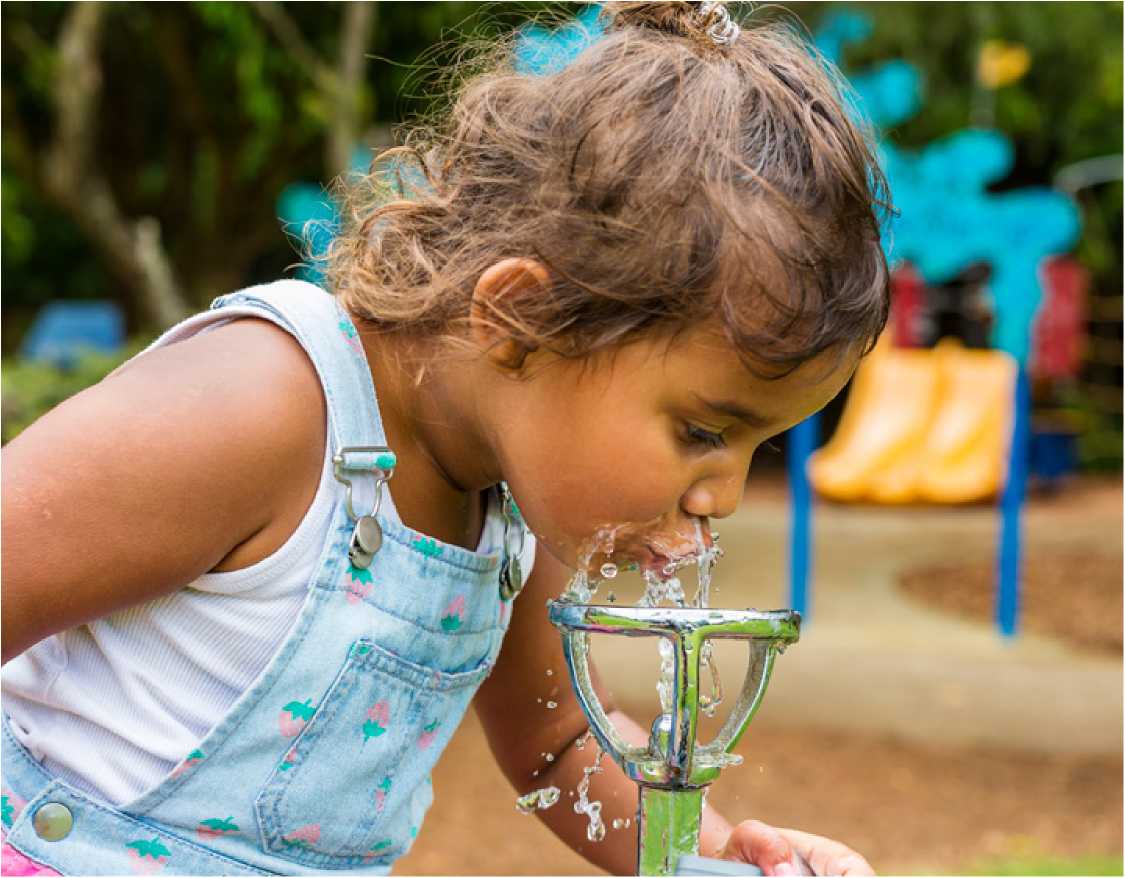
The 2019 Audit also identified significant issues in regional communities, where water service providers struggle to deliver the same level of service as metropolitan communities receive. In some cases, services in remote communities do not meet Australian health and environmental standards.
This means Australia is failing to meet national water targets and its commitment to the 2020 National Agreement on Closing the Gap.4 Water performance also forms part of this country's international obligations, such as the Australian Government's pledge to the United Nations' Sustainable Development Goals.5