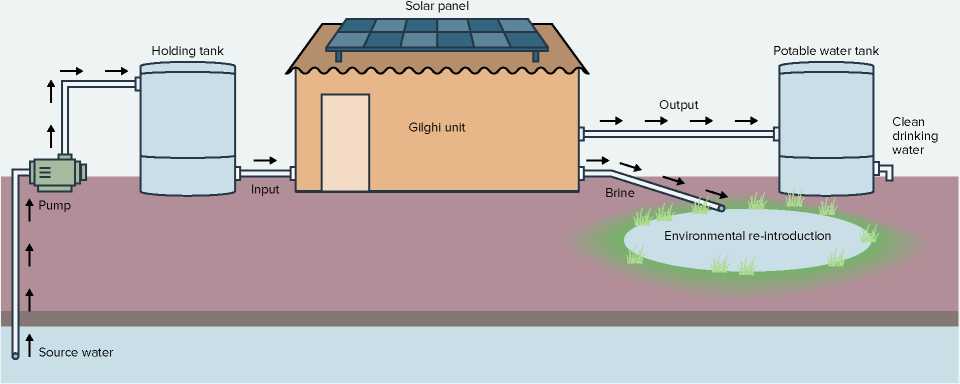
| Case study: A collaborative solution at Gillen Bore Delivering water and wastewater infrastructure solutions to remote communities should be fit-for-purpose, fit-for-place and fit-for-people.71 • Fit-for-purpose means providing water that is the right quality for its intended use, not Just providing potable water for all uses. • Fit-for-place considers the unique environmental and climatic conditions of remote areas. • Fit-for-people means incorporating community preferences and values into the design. The Gilghi trial project at Gillen Bore (75 km from Alice Springs) is a valuable case study for how to supply a lower-cost, fit-for-purpose, fit-for-place and fit-for-people solution to delivering safe drinking water to a remote community. The project was a partnership between Aurecon and Ampcontrol. The Gilghi remote water system (see Figure 6.4) is an off-grid, containerised water treatment system that can provide up to 250 kilolitres of potable water per day, which is enough water for 500 people. Established approaches for providing water to remote communities are often energy-intensive and costly as they operate continuously. The Gilghi system uses available solar power to run the plant and charge batteries during the day. The concept was developed using a people-centred approach that focused on addressing the community's wants and needs. The design is simple, which allows for streamlined ongoing maintenance. Figure 6.4: Potable and modular water treatment systems, such as the Gilghi system, are now cost-effective
Source: CPS National (2020)72 |