Change community behaviour
There is an opportunity for state and territory municipal services departments to address how people use water in remote communities, with the goal of reducing demand.
Inappropriate outdoor water use such as hosing roofs to cool buildings or suppress dust is often widespread, with outdoor water use accounting for 60% of total water demand.73
Poor housing infrastructure, harsh environmental conditions and low community knowledge about water security can contribute to high water use.74 75 Municipal services departments should co-develop community-based demand management and water education strategies that target outdoor water use as a priority.
Approaches that consider community dynamics such as preferred language, and incorporate traditional knowledge, practices and values, support effective strategies for delivery. Local community leaders could be engaged to champion education strategies in schools and at community forums.
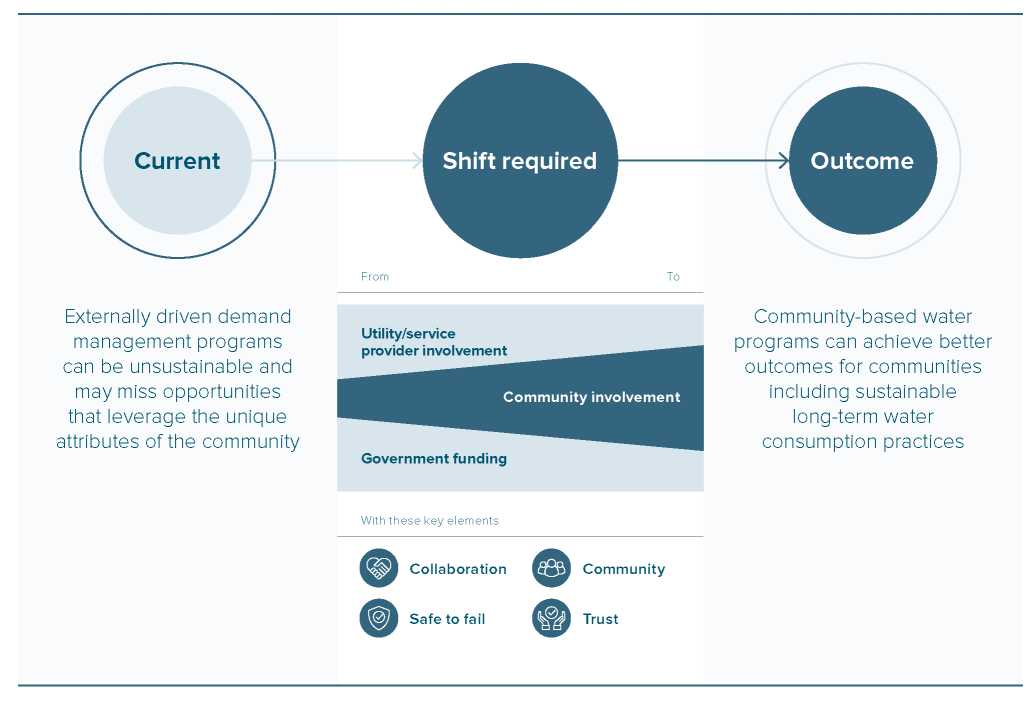
As shown in Figure 6.5, a co-developed approach whereby the community is supported to drive its own demand management programs leads to better long-term outcomes.
Figure 6.5: Achieving better results from a community-based water demand management approach
Source: Based on Beal et. al (2019)76