Use in-field hardware to support resilience
Funding more emergency hardware will make emergency services more effective. It will also help at-risk communities to be more resilient and aid their recovery.
Network operators use a range of temporary solutions during emergencies to make sure network technicians, communities and emergency crews can stay connected:
• Satellite handsets have near-universal coverage across Australia so they can be used when normal telecommunications networks are down.
• Liquid fuel generators and heavy-duty batteries provide short-term power when traditional power is interrupted (see Figure 7.3).
• Cell on Wheels (CoW) units are a portable base station that fits on a trailer. They can provide temporary coverage to areas and are portable, cost-effective and quick to assemble. Some take several days to set up; some 'rapid deployment units' can provide coverage very quickly.
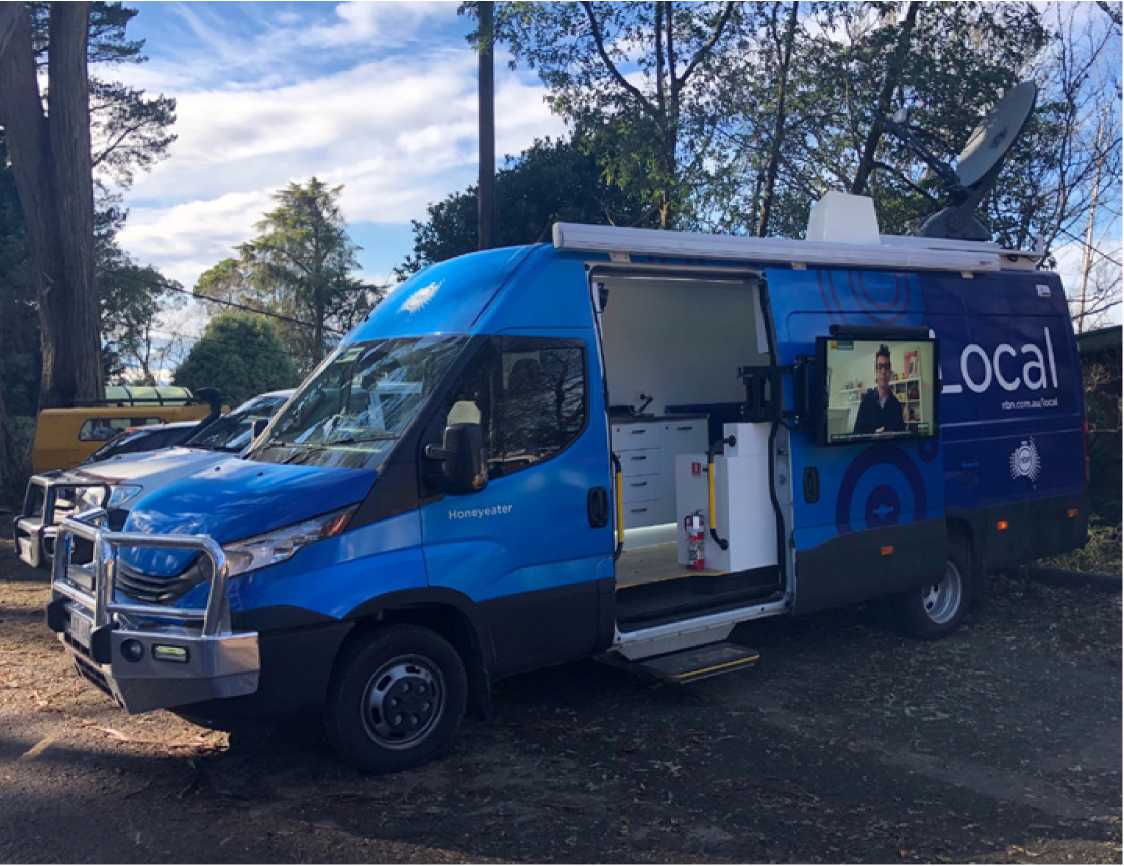
• The NBN-operated Road Muster truck fleet (see Figure 7.4) is made up of large vehicles that are designed for use near evacuation centres, and other rugged vehicles. They can be driven to an emergency area and activated immediately to provide wi-fi and charging points for small devices.
By prioritising and locating this equipment near community evacuation shelters to support resilient network connections, people can stay in touch with each other and keep informed about local conditions.
Figure 7.4: An NBN Road Muster truck provides emergency fixed wireless, wi-fi and device charging
Reprinted with the permission of nbn co, © 2021