Refreshing and energising frameworks
Many review participants suggest there is a pressing need to refresh and energise framework systems by adopting more transparent and efficient practices designed to reduce waste and improve outcomes. The practices that will refresh and energise frameworks cover four interlocking stages that comprise framework strategy, framework procurement, framework contracts and framework management.
The interlocking stages of a Gold Standard construction framework are illustrated in Diagram 1 and can be summarised as:
■ A Framework Strategy establishing the intention of framework providers and clients in terms of credible plans and commitments, clear requirements for project outcomes and clear expectations for improved value and reduced risks
■ Framework Procurement exchanging the information between framework providers, clients and prospective suppliers that forms the basis on which to implement agreed plans and commitments, to achieve required project outcomes and to meet expectations for improved value and reduced risks
■ A Framework Contract creating and sustaining integration of the mutual commitments of framework providers, clients and suppliers, supported by supply chain members and framework managers, to implement agreed plans and commitments, to achieve required project outcomes and to meet expectations for improved value and reduced risks
■ Framework Management achieving incentivisation through instructions, support, guidance and motivation for framework providers, clients and suppliers to integrate their mutual commitments, to implement agreed plans and commitments, to achieve required project outcomes and to meet expectations for improved value and reduced risks.
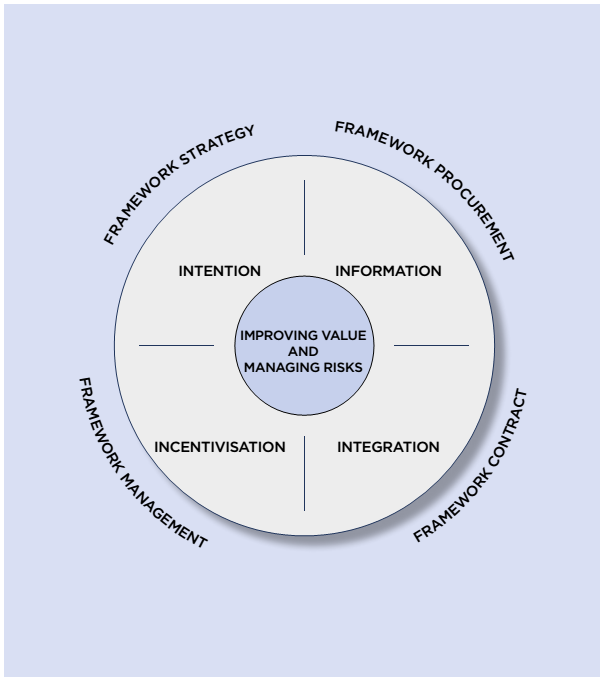
Diagram 1: The interlocking stages of a Gold Standard construction framework
The recommendations for Gold Standard public sector construction frameworks are summarised by reference to the 24 numbered sections of this review, which mirror the structure and requirements of the Construction Playbook. Each section also includes specific actions that form part of Gold Standard framework strategy, framework procurement and framework contracts, and the adoption and implementation of these recommendations form part of Gold Standard framework management.
Whenever changes are proposed to construction procurement, the initial enthusiasm is often eroded by a growing chorus suggesting that the changes are not possible or prudent, that they will cost too much money and take too much time or that they do not apply to the needs of a particular client or sector. In order for Construction Playbook policies to survive and create new commercial norms, Gold Standard framework practices need to be practical, agile, commercially viable, easily useable and supported by guidance and training. Otherwise, they will soon become lost in the 'Bermuda Triangle' of idealistic debate, cynical criticism and unrealised good intentions.
|
The Government's 2012 Effectiveness of Frameworks report records the following benefits of effective frameworks: ■ Delivery of sustainable efficiency savings ■ Reduction in consultancy and construction costs ■ Delivery of projects closer to target cost and time ■ Reduction of disputes, claims and litigation ■ High client satisfaction rates ■ High proportion of value of work undertaken by small and medium-sized enterprises ■ High proportion of local labour and subcontractors ■ High take-up of government initiatives such as fair payment and apprenticeships ■ High proportion of construction, demolition and excavation waste diverted from landfill ■ Good health and safety performance against national average ■ Acting as a key enabler to integration of the supply team. |
|
The Effectiveness of Frameworks report describes frameworks created by: ■ Department for Education who established 'regular contractor forums in which issues are raised and discussed', whose performance indicators included 'SME engagement, apprenticeships, waste and carbon measures', and whose framework generated 'a 9.5% reduction in outturn costs... when compared with single procurements' ■ Department of Health who encouraged early engagement of the supply chain 'to increase quality of design, engage key stakeholders, ensure cost robustness, minimise risk and increase certainty of delivery in time and budget', and who established 'a solid governance structure that involves suppliers and clients in development of the framework' ■ Environment Agency who 'adopted a partnering approach ... and work collaboratively in the delivery of all contracts called off' ■ Ministry of Justice whose alliance framework led to 'reduced procurement costs estimated at £10 million, reduced burden on industry tendering of around £30 million and procurement risk mitigation of about £2 million. This suggests a total framework operation cost saving in the order of £42million to industry and the department.' |
This review illustrates current practices that have been shared by framework providers, clients and suppliers, and it summarises framework case studies from the government's Trial Projects programme. These illustrations and case studies show how Gold Standard frameworks can capture the strategic vision of clients and the full potential of industry proposals. They show how frameworks can build trust, confidence and competence through strategic thinking, balanced procurement processes, professional management and collaborative joint working.
|
Recommendation 2: Ensure that all Gold Standard features are adopted by clients and suppliers when comparing the different construction frameworks on offer For clients and suppliers to make informed decisions when comparing the many construction frameworks on offer, this review recommends that they adopt the features of a Gold Standard framework, a Gold Standard framework contract and a Gold Standard action plan to identify the questions they need to ask and the answers they should expect. |