Framework alliance contracts
The Construction Playbook recommends that alliancing arrangements 'should be considered on more complex programmes of work as the effective alignment of commercial objectives is likely to improve intended outcomes as well as drive greater value for money' (p.41). The Infrastructure Client Group's 'Alliancing Best Practice in Infrastructure Delivery' describes an alliance as 'an arrangement where a collaborative and integrated team is brought together from across the extended supply chain. The team shares a set of common goals which meet client requirements and work under common incentives.'
Confusion is created when clients, suppliers and advisers make a binary distinction between alliances and traditional frameworks, assuming that an alliance must adopt particular approaches to matters such as cost reimbursement, incentivisation and risk sharing. There is no reason to restrict the features of an alliance in this way, and a rigid definition can be unhelpful if it leads to an alliance being seen as exotic or uncommercial. A closer look at the case studies in Annex 3 reveals that, in practice, alliancing arrangements reflect many of the features that comprise a Gold Standard framework contract.
The collaborative procurement of infrastructure projects and programmes is supported by the initiative known as 'Project 13', which seeks 'to develop a new business model - based on an enterprise, not on traditional transactional arrangements - to boost certainty and productivity in delivery, improve whole life outcomes in operation and support a more sustainable, innovative, highly skilled industry'. Review participants have shared details of strategic alliances that apply the Project 13 principles, such as the Anglian Water @one alliance Construction Playbook case study (Annex 3 case study 1).
Framework providers, clients, managers and suppliers can use alliance principles to create collaborative framework contracts. The collaborative framework model known as a 'framework alliance contract', as illustrated in Diagram 3, has gained traction in recent years and its benefits have been illustrated in Trial Project case studies. Crown Commercial Service use this model for all their frameworks, and the Ministry of Justice framework alliance contracts have underpinned two Trial Projects and the Five Wells Construction Playbook case study (Annex 3 case study 2).
|
The Ministry of Justice reports that ' the MoJ Strategic Alliance Agreement' has been a very positive framework where: ■ Suppliers understand the call-off process ■ Terms and conditions and risk allocations deliver time and cost efficiencies for the MoJ and the supply chain ■ The suppliers have grown to understand us as a client, our estate (and the types of projects & risks) and our technical requirements. The use of PPC2000 has aligned all those working on the project and allowed the project scope to be developed through the Project Partnering Agreement prior to moving to the Commencement Agreement. This aligns the supply chain and also works well with governance and funding decision points.' |
Trial Project framework alliance contracts were established on the SCMG housing programme by Hackney Homes and Homes for Haringey with seven contractors, and on a highways programme by Surrey County Council with Kier, both enabling new strategic relationships with multiple tier 2 and 3 supply chain members in order to harmonise and aggregate demand, to support ESI and to deliver improved economic, social and environmental value (Annex 3 case studies 8 and 9).
The features of a framework alliance contract include a multi-party structure which:
■ Establishes direct links between the framework provider, multiple clients, the framework manager and multiple suppliers
■ Avoids the fragmentation and 'divide and rule' culture created by separate two -party framework contracts
■ Facilitates and supports shared systems for improving value and reducing risks.
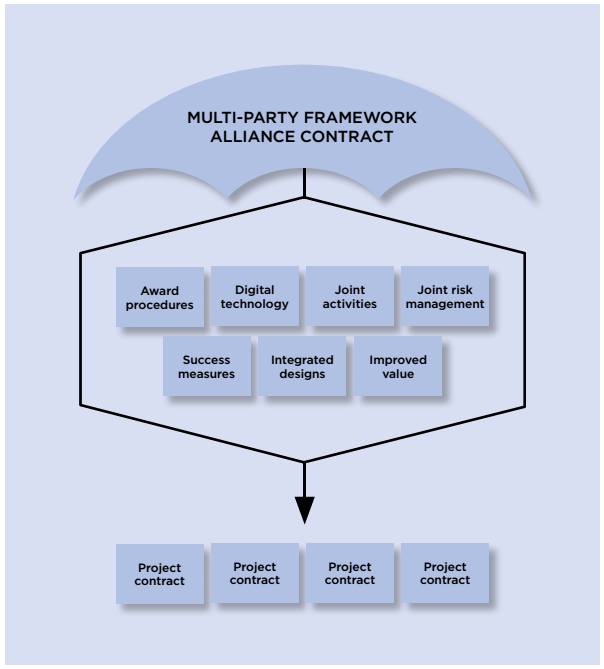
Diagram 3: Structure of a framework alliance contract
The transparency, clarity and integration offered by multi-party framework alliance contracts has a positive impact on outcomes, for example as recorded on the Ministry of Justice, SCMG and Project Horizon Trial Projects (Annex 3 case studies 2, 8 and 9). These framework alliances achieved agreed efficiency savings averaging 18.5% combined with design improvements, extended warranties, improved safety, new opportunities for local and regional SMEs, environmental benefits, improved employment and skills opportunities and improved whole life value.
By contrast, separate two-party framework contracts entered into by each client with each supplier create administrative burdens and leave all parties without the assurance of framework consistency. They lack the direct connections and mutual commitments through which frameworks can integrate working practices, align differing interests and reconcile the rules of competition with the rules of collaboration.
Separate two-party framework contracts make it difficult to align the objectives, success measures, targets and incentives of framework providers, clients, managers, suppliers and supply chain members. The two-party framework contracts created with each supplier are not visible to other suppliers, and this lack of transparency is unnecessary and inefficient. It contributes to an atmosphere of mutual distrust and limits the collaboration through which shared experiences, ideas and innovations can improve outcomes, improve value and manage risks.
18.5% efficiency savings plus improvements in quality, safety, social value and environmental value were delivered under Trial Project framework alliance contracts. |
Annex 4 comprises a summary of the terms and conditions that comprise a Gold Standard framework alliance contract, illustrating how these terms and conditions support the implementation of Construction Playbook policies by providing for:
■ An outcome-based strategic brief that drives economic, social and environmental value with strategic supplier proposals for delivering that brief
■ Multi-party relationships that align objectives, success measures, targets and incentives with commitments to joint work on improving value and reducing risk
■ A timetable of strategic actions to improve integration, value and outcomes, for example using MMC, digital technologies, ESI and Supply chain Collaboration
■ Framework call-off systems, cost models and incentives that provide a fair return for suppliers and that drive value rather than a race to the bottom
■ Transparent performance measurement and work allocation procedures
■ Management systems that support collaboration and avoid disputes.