3.5 Range of solutions
This common driver results in a wide variation in the types of carbon reduction or energy improvement methods being introduced to projects. While the majority of schemes had targeted lower risk solutions such as LED lighting replacement, more complex solutions are also being considered and introduced.
Opportunities such as improved building and lighting controls can represent a range of solutions and the systems introduced within the reviewed projects included automated lighting controls and enhanced building management systems. Enhanced building management systems enable users to assess utilisation on a zonal basis and even in some circumstances on a room by room basis with the introduction of additional thermostatic controls and zone valves. One project did consider the feasibility of introducing automated ICT switch-off to reduce overnight consumption and, while ultimately this was not taken forwards for that specific project, it does demonstrate the variety of solutions that can be considered within a PPP context.
Other public bodies have worked closely with their FM providers to roll out a range of solutions across their PPP estate including LED lighting, lighting controls, HVAC system optimisations, building controls/BEMS, onsite renewable generation, and sub-metering. This approach has been delivered iteratively to meet a range of factors, including small scale rollout to provide a proof of concept to working within timescale constraints whether fiscal or core function related. Project Cos that were involved also found this beneficial in working with their lenders and investors to improve confidence of low-risk delivery.
Figure 6 below illustrates the range of opportunities that have been taken forward across the PPP/PFI estate to date.
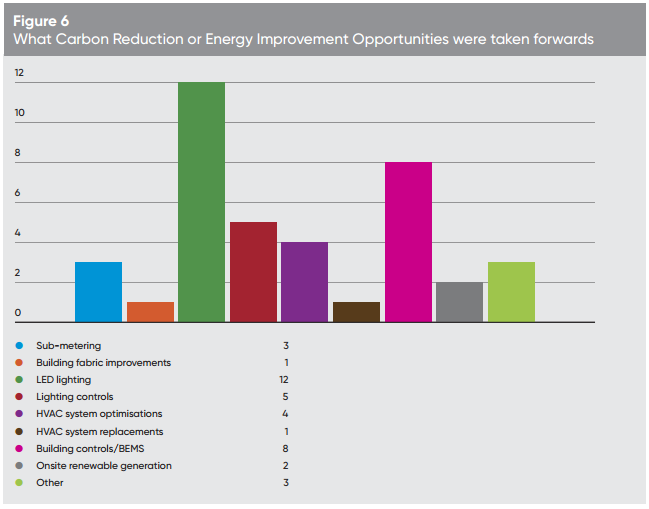
A number of projects highlighted the implementation of non-typical approaches to delivering energy savings and carbon reduction, noted as other within Figure 2. These include the introduction of biomass heating, voltage optimisation and boiler optimisation. Approaches such as these are all beneficial and should be considered particularly in relation to optimisation of systems. Where more significant changes such as a change of heat source are considered then these should be looked at in their full context to account for factors such as robustness of supply chain for fuel and implications for air quality management in the surrounding area.