Conclusion 6: Net zero by 2050 remains the right target for the UK - it is backed by the science, widely followed, and is creating real opportunity
39. Net zero by 2050 is not an arbitrary target. It was put forward through the 2015 Paris Agreement, which 193 parties including the UK, endorsed. The Government's independent climate advisors, in recommending net zero by 2050, described the target as:
"achievable with known technologies, alongside improvements in people's lives, and within the expected economic cost that Parliament accepted when it legislated the existing 2050 target for an 80% reduction from 1990."87
40. The target of limiting global warming to 1.5°C is not arbitrary. It was determined by a combined assessment of the physical climate impacts of different levels of warming, the economic and technical feasibility of different rates of emission reduction, and political choices on the balance between benefits and costs. Higher levels of global warming will lead to progressively greater risks of adverse impacts across multiple sectors. With increasing global warming, losses and damages will increase and additional human and natural systems will likely reach adaptation limits. While the Earth's climate will still experience year-to-year variability, limiting warming to 1.5°C will reduce the frequency and intensity of weather events such as heatwaves, heavy rainfall and droughts compared to higher levels of global warming. While there are some economic and technically feasible pathways that can still limit warming to below 1.5°C, limiting warming to much lower levels is likely to exceed the current bounds of economic and technical feasibility.
41. The Government's Net Zero Strategy sought to establish what was needed to decarbonise our economy over the next 30 years and keep us on the path to net zero. The Review has had access to the underlying modelling that informs the Government's approach to net zero.iii The Net Zero Strategy technological mix was based on cost-minimisation, going with the grain of consumer choice, and avoiding wasteful scrappage. In particular, it focuses on the intensive activity needed in the next decade - this ranges from early-stage research to deployment of mature technologies to better understanding of different clean power sources. However, it did not account for changes in circumstances, namely the Russian invasion of Ukraine, leading to high energy bills, contributing to inflation and the cost-of-living crisis.
42. The Strategy's approach remains broadly the best way to maximise delivery confidence and minimise cost - even as the context has changed. Updated modelling, using UK TIMES, commissioned by the Review team based on higher fossil fuel prices shows that while gains from decarbonisation are even higher now, the cost-optimising pathway does not see significant acceleration of change.iv This is because the speed of how quickly we can roll out the main decarbonisation technologies is constrained by the current realities of supply chains and production, rather than costs.v This, together with uncertainty over future fossil fuel prices, means that it would not be credible to re-set the pathway to a substantially faster one - but where government can help to speed up the roll out of low-carbon solutions, this will likely lead to increased benefits to people and businesses. This analysis is also in line with recent CCC modelling using a more bottom-up approach.
43. Recent changes have not significantly affected the mixture of technologies required for reaching net zero. The updated analysis conducted for the Review shows that the cost-minimising technological mix for net zero in 2050 scenarios is similar to what the Government expected in late 2021 (see Figure 4 below, visually very close to the equivalent scenario shown in the Net Zero Strategy). In the extreme scenario modelled, the new results see more energy being delivered through power and less by hydrogenvi and an increase in the proportion of green hydrogen vs. blue.vii Given long-term uncertainty and the use of an extreme scenario in this modelling, these variations do not suggest a need to alter current targets or policy - but remind us that modelling should be done at regular intervals to check the optimal system design at more recent fossil fuel prices.
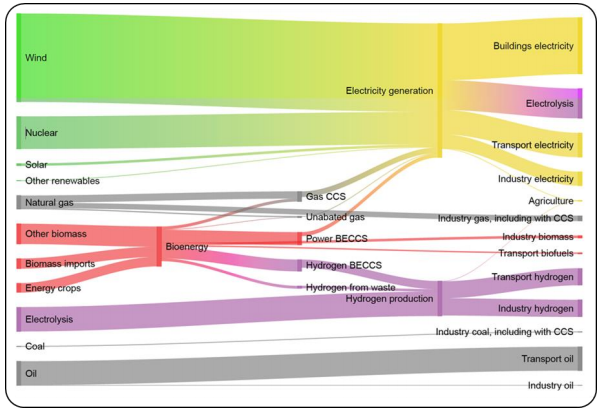
Figure 4 - Net Zero Strategy 2050 High Electrification Technology Mix
(2022 Fossil Fuel Price Projections) (Source: UK Times Analysis by BEIS)
44. However, we predict that the costs of the transition will be comparatively lower if fossil fuel prices remain high. Even though the technology mix required for net zero by 2050 does not change, the costs do, showing lower costs of decarbonisation in the case that high fossil fuel prices persist. This makes the case for net zero even stronger and means that, while it would not be credible to re-set the pathway to a substantially faster one, government helping to speed up the roll out of low-carbon solutions will likely lead to increased benefits to people and businesses.
45. There is some scope to go further and faster in specific areas. The pathway to net zero has already been made more ambitious. The 2022 British Energy Security Strategy accelerated the deployment of some of UK's leading clean electricity supply technologies. UK's investment in offshore wind provides an example of an intervention which resulted in progress beyond the boldest projections. Well-targeted interventions have the potential of accelerating some parts of the transition, while decreasing the delivery uncertainty of the whole project. They can also reduce costs. The Review does not recommend reopening the planned pathway to net zero, however its recommendations are intended to clear the way and turbocharge the UK's progress in key areas, particularly those with a major opportunity to drive growth or bring down costs.
_____________________________________________________________
iii The overall 2050 energy mix and emissions from different areas of economic and social life were determined with the use of a cost-minimising model, UK TIMES. This model, used also by UCL, solves for the least-cost way to provide the needed energy requirements to processes in all sectors of the economy, subject to pre-determined emissions targets. Bottom-up modelling supplemented this analysis, focusing on the intensive activity needed between now and 2037.
iv When modelling a very high stress-case scenario for future fossil fuel prices, the model deploys EVs and heat pumps ~10% faster by 2030, and accelerates the deployment of electricity, while slightly holding off on hydrogen. The higher ambition on electrification is in line with already-existing policy direction given that the 2022 British Energy Security Strategy accelerated offshore wind and nuclear deployment.
v Bottom-up modelling at the time of the NZS publication was roughly in line with UK TIMES deployment rates, so even though it was not possible to re-run sector-level analysis within the timescales of the Review, we can use UK TIMES modelling as the basis for the above conclusion on the validity of the pathway.
vi Though no change in predicted hydrogen use is observed in 2030, meaning that the government's current target remains valid even if fossil fuel prices persist to be as high as projected by a 'stress' case scenario.
vii Since UK's hydrogen policy mechanism is technology agnostic, the result on green hydrogen does not point to a need to change policy direction, though it should send an important signal to industry and investors regarding the importance of electrolysers and related technology.