1.1 The guard-rails for net zero
59. The transition to net zero will see a fundamental shift from the systems of today, from a changing how we generate and consume energy, to how we travel and the objects we use. This new system requires new, long-term ways of thinking and new, more agile structures for delivery. Securing net zero means laying the foundations of the net zero economy, without which the entire energy transition would be impossible. The underpinning architecture of net zero may seem prosaic, but without the enabling power of a stable regulatory environment, one which provides long-term investment opportunities in business models that send strong price signals to investors and encourages investment in UK businesses, the net zero transition will not be financed. As the UK Corporate Leaders Group told the Review:
"there is a need for clarity and stability in the policy environment, with long term strategies in place that support businesses to make the decisions needed to achieve net zero" - UK Corporate Leaders Group95
60. Infrastructure is the key that will unlock net zero; to achieve net zero by 2050 and the decarbonisation of power supply by 2035, along with the 68% emissions reductions required across the whole economy in the UK's Nationally Determined Contributions (NDCs) for 2030, it must be done not merely at scale, but at speed. The net zero clock is ticking. Amid the Government's targets to deliver on its net zero ambitions, the concept of how to monitor time is lacking: whether through delivery at the centre, planning delays, lack of capacity, or capability in the supply chain, delays to progress need to be measured and monitored. Alongside emissions targets we should develop monitoring mechanisms to track progress, similar to delivery targets enshrined in other organisations such as the NHS.
61. The Review has heard calls from all quarters for a step change in how we plan, build, and operate key infrastructure that will underpin the transition. We will discuss the specific challenges of accelerating energy network infrastructure in Pillar 2. Stakeholders told us that we will only get to net zero if we utilise private investment and unlock the 'wall of capital' waiting to invest in green, sustainable projects. But to turn on the taps, investors and businesses told us of the need for government to put 'guard-rails' on the transition. These will unlock investment, drive down the cost of capital, and ensure the transition results in economic growth.
62. Individual activity alone will not get us to net zero, we need to take a systems approach. Government has a role in setting the bold, ambitious missions to get there - challenges that can only be tackled through the combined effort of industry, government and the public breaking down traditional barriers and taking new approaches. Time and time again, stakeholders identified common barriers to progress, articulated clearly by the Confederation of British Industry (CBI) as:
"Inconsistency in policy [...] lag time to get projects up and running due to slow and inconsistent approaches to planning and consenting across technologies and regions [and] lack of clarity over clear delivery pathways and interim targets with key milestones for adoption." - Confederation of British Industry (CBI)96
63. In this Review we find that an approach, driven by missions (see below and the Executive Summary) to provide certainty, clarity, continuity, and consistency, will galvanise momentum and deliver tremendous green growth in the UK. Well-defined missions that aim to resolve complex cross-cutting technological, social, behavioural, and economic challenges, can create momentum, and build confidence. The archetype of a successful mission consists of these four interlinked components, addressing common challenges identified in our evidence base (see Figure 1.1).
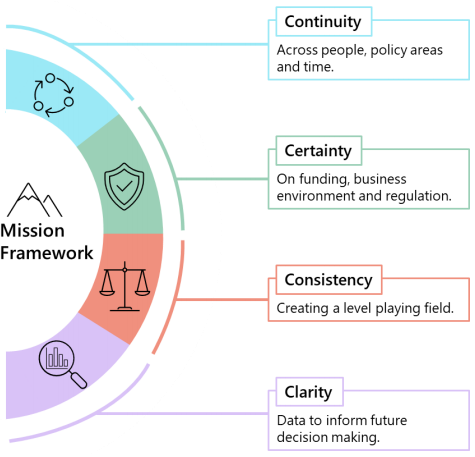
Figure 1.1 - This Review takes a mission-led approach