2.1.2 How energy security can lay the platform for the net zero transition - addressing supply
171. We must double down on production of renewables, nuclear and hydrogen and other low carbon fuels to give our future energy system a homegrown, secure platform. In the long run, production of hydrocarbons will be replaced with these cleaner alternatives. Future Energy Scenario modelling by National Grid Electricity System Operator (ESO) highlights that without aggressively tackling demand through electrification of transport and heating, coupled with greater energy efficiency, we will face an expensive and potentially destabilising dependence on oil and gas imports.143
172. However, in the short term we still need oil and gas to secure our energy independence and as transition fuels towards 2050. We will continue to be dependent on gas and its wholesale price for multiple years, including for heating buildings and marginal production within the power sector.144 Also, while demand will fall in some parts of the economy such as surface transport, all major forecasters expect resilient or even growing demand for other parts such as petrochemicals.145 Petrochemical products are ubiquitous and integral to modern societies. They include plastics, fertilisers, and medical equipment, and are also found in many parts of the modern energy system, including solar panels, batteries, and electric vehicle parts.146 Alternative technologies have not been fully scaled up yet, and therefore demand for oil and gas will remain.
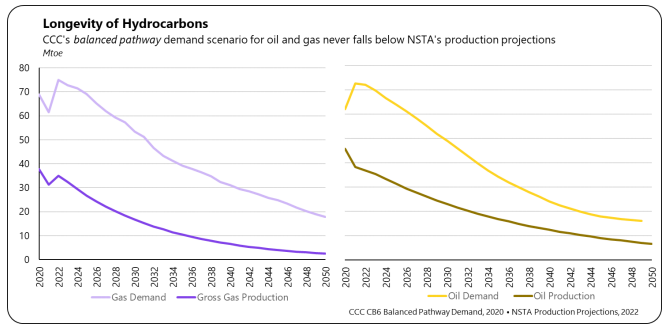
Figure 2.3 - Comparison of North Sea Transition Authority's production projections against the Climate Change Committee's
173. That is why, only when absolutely necessary for security, we need domestic production and storage of fossil fuels to reduce our vulnerability to international oil and gas imports.
174. The North Sea Transition Authority has been clear in written evidence provided to the Review that "the [UK Continental Shelf (UKCS)] can demonstrate emissions reduction from oil and gas production whilst meeting our security of supply needs".147 The BESS affirmed this, setting out a strategy to reduce dependence on imports of oil and gas by increasing dependence on the UKCS and setting an ambition to reduce gas demand by 40% by 2030 through increased efficiency and faster uptake of renewables. This has also been reflected in industry action. Centrica recently reopened its Rough gas storage site at around 20% of capacity, enough to heat 1 million homes for 100 days this winter.148 This will help balance the grid by storing gas when there is a surplus and withdrawing when demand peaks during cold weather. Increasing flexibility like this is a crucial means by which we can deal with the crisis without having to significantly increase production of natural gas.
175. Replacing imports of liquefied natural gas (LNG) with domestically sourced natural gas does not have to come at the cost of meeting our carbon budget targets. The production of natural gas from the UKCS can create less than half as much greenhouse gas as imported LNG.149 At the same time, we must do more to make the extraction of oil and gas cleaner. Importing gas via pipeline from Norway produces a lower average emissions intensity than UK domestic production.150 We must therefore find ways to make extraction as clean as possible and avoid stranded assets.