2.3.3 Developing energy markets to meet future needs
Government should commit to outlining a clear approach to gas vs. electricity 'rebalancing' by the end of 2023/4 (depending on the fossil fuel prices), and should make significant progress affecting relative prices by the end of 2024. In outlining this approach, ensure that the distribution of the costs which make up energy bills are passed through to consumers, through their suppliers, in a way which is fair, affordable, and supports competition, decarbonisation and economic growth. |
Government should deliver REMA as a priority, to scale up electricity sector investment, unlock the benefits of renewables, reward flexibility and maintain security of supply. |
209. We need to ensure that energy markets provide the right signals to market participants and investors in the transition to net zero.
210. The UK has been leading in the design of liberalised energy markets. However, the integration of new technologies also poses new challenges. The ongoing review of electricity market arrangements (REMA) considers what changes are necessary to increase further investment in generation capacity, increase system flexibility, provide more locational signals to minimise costs, ensure the system retains system operability and how to manage price volatility.
211. The REMA reforms, which government has consulted on, were generally welcomed by respondents to the Review. Respondents highlighted the possibility for REMA to unlock smart energy systems and digital energy innovation. Stakeholders also highlighted the need for a more holistic perspective in the future, including how the electricity market of the future is to interact with other markets, such as gas and hydrogen. Alongside reforms to the wholesale energy market, the retail market will also need to play a crucial role in enabling the transition to a net zero energy system as it is the main interface between energy users and energy suppliers.
212. The past approach of levying policy costs and taxes onto electricity bills keeps the price of electricity artificially high and can stifle the signal for the use of low-carbon technologies, from electrifying industrial fuel use to vehicles and heat pumps. Analysis conducted for the Review shows that keeping the relative price of electricity vs. gas consistently competitive on a long-term basis will be the single biggest determinant of ensuring that the transition brings a significant amount of savings to the average household. For example, we found that a gas price below 150p/thermviii is a reasonable tipping point beyond which rebalancing would make a difference in helping many more households save after installing a heat pump.
213. Recent BEIS fossil fuel price assumptions made available to the Review expect the price of gas to drop towards 2019 levels by 2024 in most scenarios, except in the extreme scenario where it remains high. Government should, therefore, use this as a trigger, and commit to making significant progress on gas vs. electricity price rebalancing by the end of 2023, or by the end of 2024 if the gas price remains at a clearly elevated threshold.
214. The Government previously stated an intention to consider rebalancing these costs, but it should provide more policy certainty and use the opportunity of REMA to complete this ambition. Solutions previously discussed by government in the Net Zero Strategy include shifting or rebalancing energy levies (such as RO and FiTs) and obligations (such as ECO) away from electricity bills, but the options are manifold, as described in the international examples below.
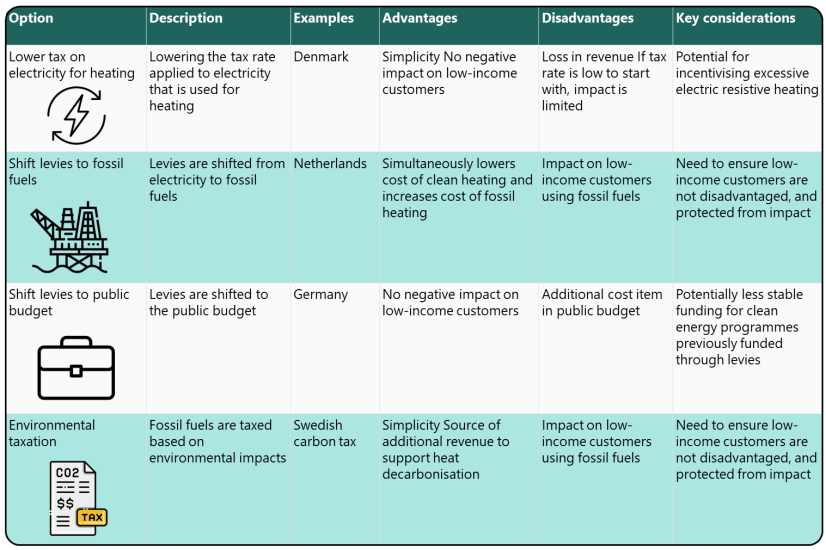
Figure 2.5 - Regulatory Assistance Project analysis - Options to rebalance electricity and gas price170
_____________________________________________________________
viii For reference, the UK gas price average in 2022 has been at around 200p/therm, Source: Bloomberg, UK NBP day-ahead prices last price settlement.