2.4 Energy Supply
A secure energy supply is the foundation for all our economic activity, as we need power and fuels to manufacture products, transport goods and people, and deliver power and heat to homes. Decarbonising our energy supply has wider, positive impact on our economy and society, and we need to go further faster to build new, clean power supply, increase the power system's flexibility and replace our fuels with greener alternatives. |
215. Energy has historically been the biggest source of carbon emissions in modern society. The UK has made significant progress in moving away from fossil fuels as a primary energy source. Evidence shows that carbon emissions from the power sector alone have fallen by more than 70% since 1990 (see Figure 2.6 below)171 and the Review has heard support for the high ambitions set out by the Government to go further in both power and other energy uses. However, more will still need to be done to deliver on these ambitions and ensure that the UK benefits from the economic growth opportunities these changes offer.
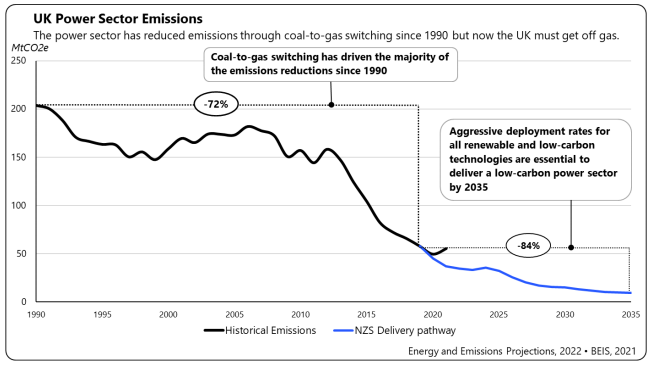
Figure 2.6 - UK power sector emissions over time
216. The costs for renewable technologies have fallen dramatically and their use will reduce overall costs. In the last decade, costs for solar PVs and onshore wind in the UK have come down by 78% and 36%, respectively (see Figure 2.7 below).172 For most of the world's population, solar and onshore wind are the cheapest source of new-build power generation,173 and most renewable technologies are now cheaper than coal-powered plants.174 Once installed, renewable energy generation typically needs no further fuelsix and therefore reduces dependence on volatile fuel prices. Modelling by the International Energy Agency estimates that achieving net zero will reduce the impact of fossil fuel price shocks on household energy bills.175
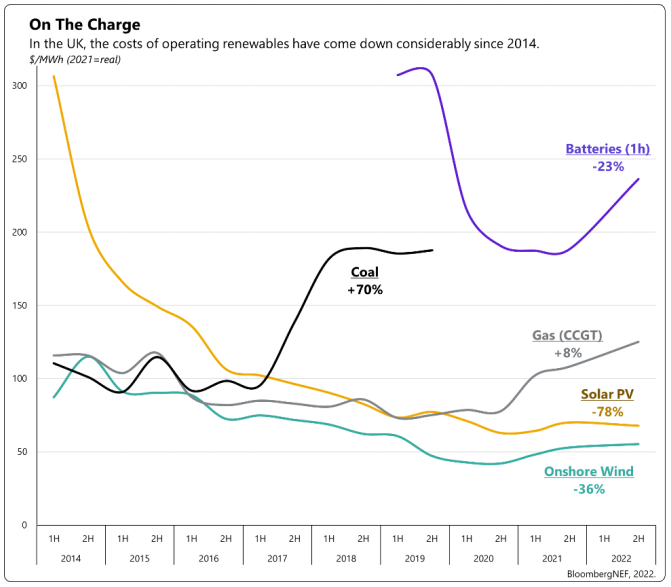
Figure 2.7 - UK levelised cost of electricity (LCOE) data
217. The growth in clean energy sources has opened up new economic opportunities in the UK. According to industry figures, 1 in every 48 jobs is in the energy sector or 138,000 direct and 605,000 indirect jobs, with the sector contributing £40bn of the UK's gross value added (GVA).176 The five-fold increase in renewable energy generation since 2010 created new jobs across the country. ONS data suggests that in 2020, more than 200,000 people were employed in the UK low carbon and renewable energy economy, which had a turnover of £41.2bn.177 Bloomberg New Energy Finance (BNEF) estimate that in 2021 alone, around $31 billion of new investment was committed in the UK across low carbon sectors.x178 Research suggests that investments in renewables over the last decade have led to a return of over 400%, compared to 59% for investments in fossil fuels.179
218. The UK is attracting significant investments and leading in the deployment of renewable technologies. In EY's 2022 Renewable Energy Country Attractiveness Index, the UK ranked third, after US and China.180 In particular, the UK has been leading on the development of offshore wind.181
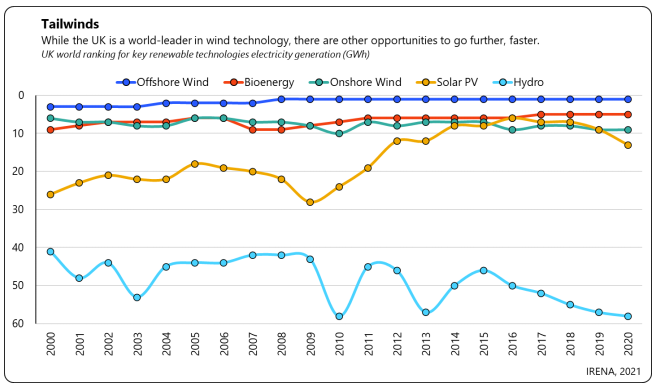
Figure 2.8 - UK's world ranking in key renewable energy technologies
219. However, the UK is in a global race to transition to cleaner and greener energy sources. The IEA estimates that to reach net zero, global annual clean energy investments will need to triple to around $4 trillion by 2030.182 Around the world, countries have enacted ambitious policies, including for example the US Inflation Reduction Act, the EU's 'Fit for 55' package, Japanese plans to build new nuclear or Chinese investments in renewable energy. Growth in these markets can be an export opportunity for UK supply chains but may also negatively impact on the UK's access to components and skills. To profit from the export opportunities these global changes offer, the UK must act decisively now to develop these supply chains. Otherwise, we will end up buying in technologies from abroad and missing the chance to create high quality British jobs.
220. The UK will need to move fast to lead on development and deployment of technologies as well as to build up the necessary supply chains and skills. In doing so, the UK also needs to reduce the risks of creating bottlenecks and resource dependencies that may affect prices in the long-term. The Review heard from industry that:
"Increasing investment and growth in the UK supply chain is also a necessity if we are to develop the renewable energy required [.], and mitigates the risk of fluctuating availability in global supply chains." - RenewableUK183
221. According to an estimate by National Grid, the energy sector will need to recruit for 400,000 jobs between now and 2050.184 These roles will be spread across every nation and region - 60,000 in the North West linked to offshore wind, 40,000 in the North East, Yorkshire and the Humber linked to offshore wind and carbon capture, usage and storage (CCUS), 50,000 in Scotland for both onshore and offshore wind, and 25,000 across a number of possible net zero hubs in Wales. Many of these jobs will be highly skilled and well-paid.185
222. Recognising the importance of decarbonising our energy sources, the Government has ambitions for a fully decarbonised power sector by 2035. This requires the installation ofnew clean power production capacities such as renewable energy sources and nuclear. These new installations will also need to meet new demand from sectors such as heating, transport and industry, as electrification is expected to play a major role in their decarbonisation.
223. Not all our energy needs can be met with electricity and so we will continue to need liquid, gaseous and solid fuels. Government has therefore set ambitious targets for greener fuels, including hydrogen, low carbon fuels produced from biomass and other waste resources for use in different sectors such as transport, heating, power and wider industrial applications.
224. The transition will also need to be supported by wider changes to the energy system, including changes to markets, transmission and distribution networks, which support the building of new production capacities and transport the energy to where it is needed. Indeed, as prices for renewable electricity have come down, many stakeholders consider expansion of enabling infrastructure including electricity grids to be the key to unlock further investments. For the power sector, the upcoming Review of Electricity Market Arrangements (REMA) should address some of the changes needed. Further changes are needed to ensure that the distribution of policy costs added to bills are passed through to consumers, through their suppliers, in a way which is fair, affordable, and supports competition, decarbonization, and economic growth.
225. Respondents to the Review's call for evidence and participants at the roundtables generally welcomed the Government's ambitions to decarbonise UK energy supply. However, businesses and other stakeholders were also clear that more concrete steps still need to be taken to deliver on these ambitions and support growth in the UK. Stakeholders involved in new energy projects highlighted that current ambitions are at risk due to administrative, infrastructure and supply chain constraints that can significantly slow down and delay projects, and that streamlining planning decisions or environmental permitting would speed up delivery. Businesses also made clear the need for long-term certainty on policies and support available to unlock investments. Many respondents highlighted the benefits of taking a long-term view connecting energy, industry and innovation policies to help build UK production, supply chains and skills. Given the challenges ahead, many also stressed that the regulatory framework needs to allow for more innovation and risks.
_____________________________________________________________
ix The exception to this is for example biomass.
x Low carbon sectors covered renewable energy sources, hydrogen, carbon capture and storage, nuclear, sustainable materials, energy storage, electrified transport, and heat.