2.4.2 Nuclear power - the no-regrets option
| Investment in new nuclear is a no-regrets option given expected increase in power demand and retirement of existing plants. Delivering on government's ambitions set out in the British Energy Security Strategy is key to support development of new UK projects, jobs and skills. But the commitments need more detail to ensure their implementation and we need nuclear deployment targets for 2035 rather than 2050 to capitalise on the opportunities for small modular reactors, advanced modular reactors, fusion technology and nuclear uses outside of the power sector (e.g. heat, hydrogen). The Government should therefore implement reforms set out in the British Energy Security Strategy to double down on achieving UK's nuclear baseload requirement: 1. Expedite the set-up of Great British Nuclear in early 2023, ensuring required funding and skills are in place. 2. Government and GBN to set out clear roadmap in 2023, including interim targets to reach 2050 ambition, and government to ensure funding is in place. As part of the roadmap, government should assess the possibility to increase the current ambitions, supporting the development of supply chain to service a fleet of projects. 3. Roadmap to set out clear pathways for different nuclear technologies (including small modular reactors) and the selection process. This should consider how to use programmatic approach to deliver further cost reductions in a competitive environment. 4. Government to deliver on siting strategy by 2024 |
271. The UK was the first country in the world to develop civil nuclear power plants and for decades, nuclear energy was the main zero emission energy technology in the UK. However, since the 1990s the role of nuclear in the energy mix has been in decline, with new projects struggling to come through. Currently, about 15% of our power supply comes from nuclear plants, as seen in Figure 2.9.221 Within the next 10 years, four of five nuclear plants are scheduled to retire, with only one new plant currently under construction and one more in the pipeline. Significant efforts are therefore needed to not only maintain the current role of nuclear energy but also for nuclear to help meet rising energy demand.
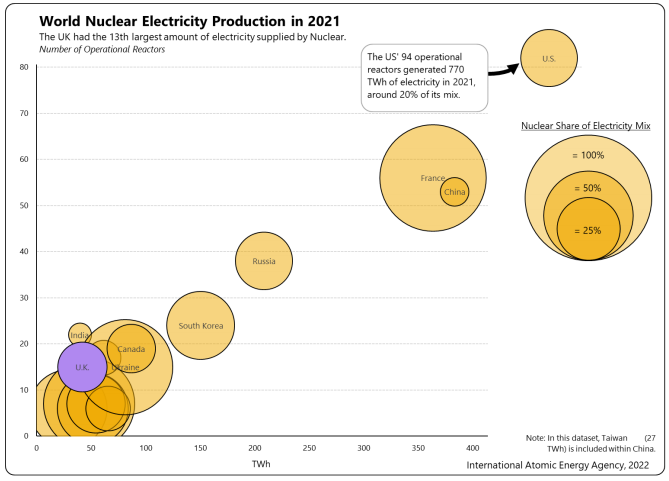
Figure 2.9 - World nuclear electricity production in 2021
272. Most experts agree that building new nuclear is a no-regrets option, despite high up-front costs and long construction times.222 In view of rising power demand, nuclear energy can provide reliable baseload power which is not weather dependent and can provide other services to power networks (e.g. inertiaxii). Nuclear sites also have low land use requirements and can often make use of existing power network infrastructure.
273. As part of the British Energy Security Strategy, the Government set out a nuclear ambition for up to a quarter of power consumed in the UK. This Review heard from industry that there is a lack of clarity on the pathway and interim milestones to achieve UK's ambition. To achieve affordability and efficiency, the Government needs to commit to funding a fleet of projects. Recognising the start times for new build nuclear, a clear roadmap for nuclear deployment up to 2035 is required.
_____________________________________________________________
xii Inertia in relation to the power system refers to the energy stored in the rotating parts of a power plant, which keeps those spinning for a while even when the generator fails. In case of a power plant failure, inertia therefore provides the grid operator with some extra time to restore balance in the system. term programme and roadmaps could further increase investment certainty, stressing the need for clear interim steps to track progress.