2.5.2 Demand-side flexibility
299. A smart and flexible energy system will empower households and industrial actors alike. Smart meters, technologies, tariffs and services- driven by greater access to high quality energy data - will enable consumers to change their consumption patterns to match times of cheap and abundant low carbon electricity, give consumers greater control over their energy use and save money by helping to balance the energy system.237 These actions will become increasingly important and beneficial as electricity demand is expected to roughly double due to the electrification of transport, heat and industrial processes.238 They will reduce the need to overbuild the grid to account for winter days where demand could be double that of milder days.
300. Today, industrial and commercial consumers are already providing demand side flexibility whereas participation from households is still relatively nascent. During the Review, we have consistently heard that consumer flexibility provides broader benefits to the energy system and households.
301. To be successful, consumers need the tools and incentives to offer flexibility. Smart meters underpin a flexible energy system by providing consumers and energy providers data to inform decisions on shifting demand.239 For instance, if consumers charge their electric vehicles (EVs) at low demand/high supply times of the day, drivers would be able reduce their costs whilst the costs of operating the energy system would be reduced.240 Some services may do this in a smart way.241
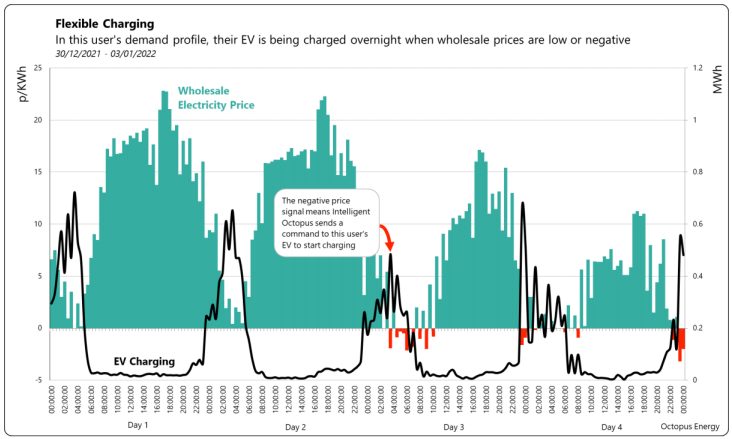
Figure 2.12 - Graph of wholesale electricity price (bars) against an Intelligent Octopus user's EV charging profile (black line)
302. Heat pumps can also load shift to a degree. This is partly determined by the thermal mass of the building they're heating but mostly by the ability to pre-heat homes and have access to a thermal storage medium such as a hot water tank or phase change materials. Octopus Energy analysed the consumption data for around 1000 heat pump users on their Agile Octopus tariff and found they were able to reduce their peak usage by 73% by automatically programming their heat pump to come on at off-peak times.242 This saved users 20% on average on their annual heating bill versus the equivalent flat rate tariff - £210 per annum for an average home at current prices.243 These savings are already possible with a basic programming feature (standard in all new heat pumps) and a smart tariff. However, they could be even greater with more intelligent controls, which consider factors such as weather, home profile, heat pump operation/efficiency and linking to grid flexibility services.
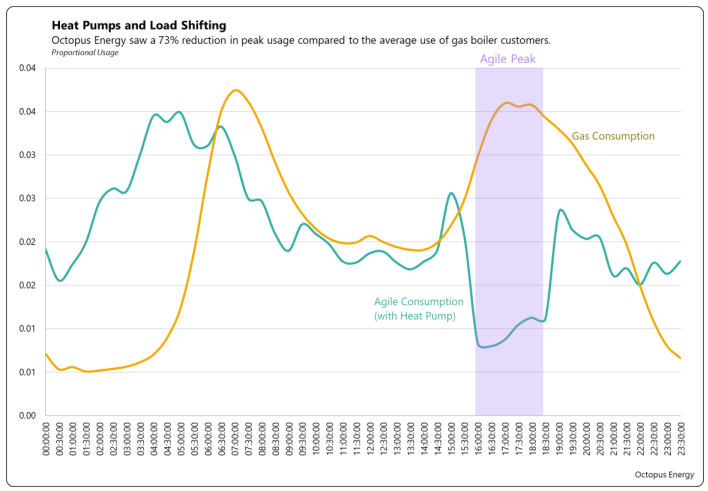
Figure 2.13 - Heat pump potential to load shift
303. The potential for consumer demand flexibility is being trialled this winter by major energy providers in the UK through the ESO's demand flexibility service, which allows households to get paid for shifting their energy usage out of peak times.