Accelerate efforts to decarbonise upstream production
Accelerate the end to routine flaring from 2030 to 2025. Government should ensure all new oil or gas fields must have abatement built in now to avoid backwards engineering when they are electrified. Government should ensure the Climate Compatibility Checkpoint is an effective tool to shape policymaking. |
366. According to the NSTA, "The UKCS has enormous potential to reduce emissions from offshore oil and gas installations and support the decarbonisation of the wider UK economy."281
367. The Climate Change Committee's (CCC) optimal pathway for reduction in upstream oil and gas emissions by 2030 is 68%, from 2018 levels.282 This is significantly more ambitious than the 50% for 2030 target that was agreed by industry, government and the NSTA in the NSTD.
368. The easiest way to achieve these emissions reductions in upstream production is by reducing supply. Forcing this in the short term will present risks for our energy security, and could lead to the UK importing higher carbon intensity liquefied natural gas (LNG). Plus, production is already declining and will continue to do so because of maturity of the UKCS. By the NSTA's own estimates, the basin's emissions would decline by 44% in a business-as-usual scenario.283
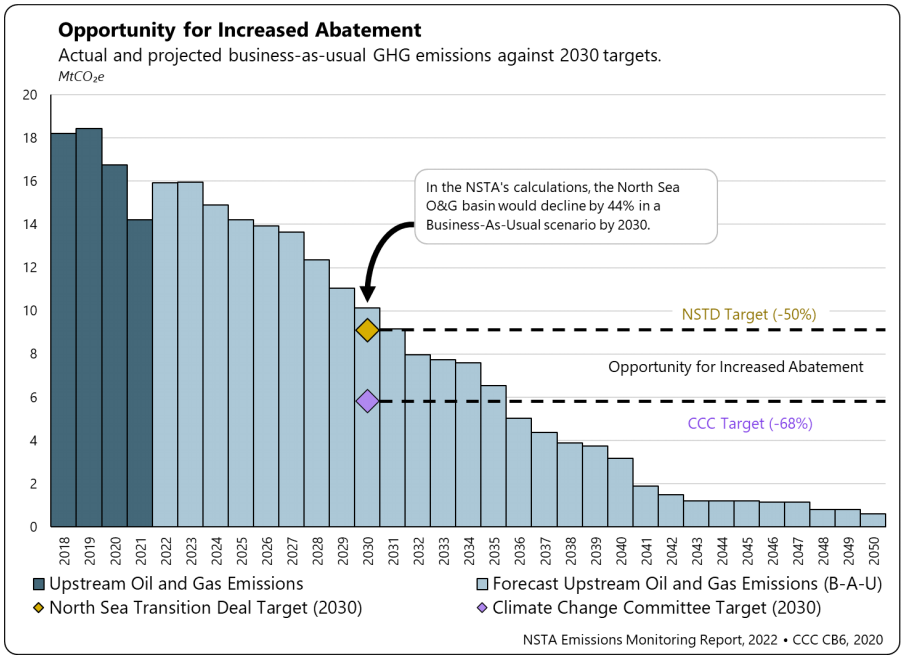
Figure 2.14 - NSTA emissions reduction target against CCC pathway
369. Therefore, instead of looking to suppress production, the oil and gas industry must accelerate efforts to reduce carbon intensity of production to meet the 50% NSTD target and go some way towards meeting the CCC's 68% pathway. This report recommends vital steps which must be taken to achieve this.
370. Accelerate the end to routine flaring from 2030 to 2025 - the NSTA have issued guidance saying the ban on flaring should be implemented by 2030 at the very latest. Shell have committed to zero routine flaring by 2025. We recommend that industry follows suit.
371. All new oil or gas fields must have abatement built in now to avoid backwards engineering when they are electrified. It should be noted that there are safeguards in the NSTA's strategy around satisfactory commercial returns that mean they cannot force an operator into an investment decision that would be uneconomic, such as on platform electrification.
372. Ensure, as soon as possible, that the Climate Compatibility Checkpoint, which is to check the compatibility of future oil and gas licensing rounds with UK's climate objectives, is an effective tool to shape policymaking as opposed to just a hurdle to new North Sea licences.284