Unlocking local action
706. Having considered how to deliver net zero in a more pro-growth way at a whole-economy level, this pillar will focus on the growth opportunities at regional, local and community level.
707. More than 300 local authorities have set a net zero target and/or declared a climate emergency, including 182 with targets of 2030 or sooner.xxviii 512 There is clearly a great deal of opportunity and ambition across the country for achieving net zero, which the Government's Net Zero Strategy has begun to encourage. Many mayors and local leaders are already moving quickly, and the devolved administrations all have their own clear strategies and priorities for delivery of net zero.
708. The Local Government Association (LGA), the national membership body for local authorities, told the Review:
"Local Government wants to work with Central Government, the regulators and with business to create a deliverable plan for achieving net zero both affordably and inclusively."513
709. UK100, a network of local leaders on climate change, told the Review:
"Regional, city and local authorities must be the partners of choice for the government in the development of, and delivering on, Net Zero commitments."514
710. Similarly, the Climate Change Committee (CCC) noted that:
"There is considerable momentum at local government level. However, there is currently a lack of shared understanding of where these good intentions would be most effectively directed."515
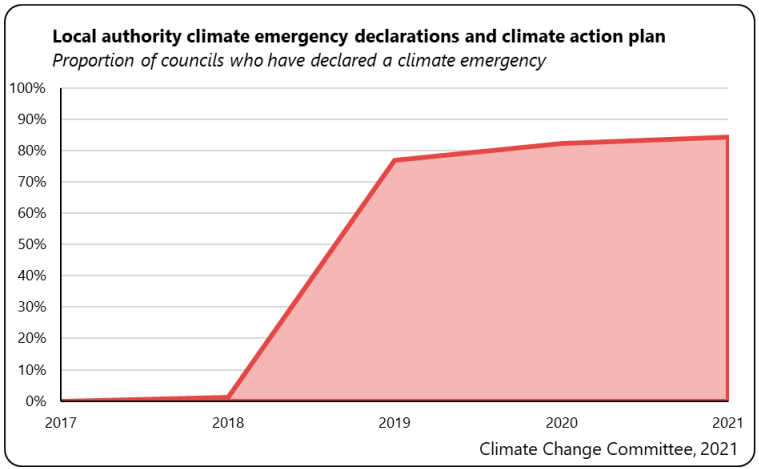
Figure 4.1 - Local authority climate emergency declarations and climate action plan516
711. The national net zero target has provided a clear mission for the UK, catalysing action across the country and the economy. But at the same time, every region and every community in the UK is different, and each will need different support if they are to thrive through the transition to net zero. For example, rural areas may face more of a skills challenge in their transition compared to cities, but they may also have more opportunity to grow a renewable energy industry.
712. Similarly, more than 50% of UK jobs in carbon-intensive industries are in the Midlands, the North and Scotland.517 Many of these areas' economies have already suffered from deindustrialisation, and we cannot afford for them to be left behind on the road to net zero. It is particularly crucial that people in these communities feel the economic benefits of net zero, and that green industries contribute positively to their regional identities and their sense of pride in place.
713. Since 2005, CO2 emissions have fallen in every region of the UK, both in absolute and per capita terms. Part of this is due to an increasing move towards a services-based economy in the UK, but it shows that the national trend of decarbonisation and growth is largely replicated across the whole of the UK.
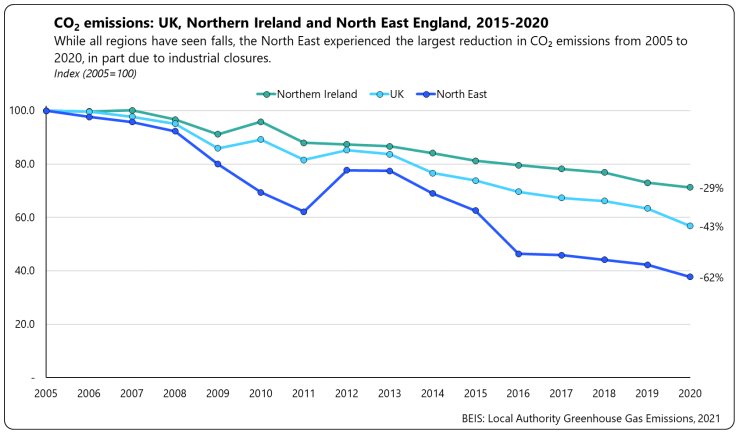
Figure 4.2 - CO2 emissions: UK, Northern Ireland and North East England, 2015-2020518
714. Recent government strategies have recognised the importance of place-based and locally-led action. For example, the Levelling Up White Paper announced the biggest shift of powers from central government to local leaders in modern times in a bid to improve local and regional economic growth. The Net Zero Strategy found that:
"Devolved and local government play an essential role in meeting national net zero ambitions [...] Taking a place-based approach to net zero is also vital to ensuring that the opportunities from the transition support the Government's levelling up agenda."519
715. But the UK Government's current approach to net zero delivery is creating inefficiencies at a local level. Often, local leaders are better placed to engage with communities and businesses on net zero, better placed to understand the challenges and opportunities their areas face in transitioning to net zero, and better placed to deliver locally-tailored net zero interventions. However, they currently face a lack of clarity over their role, a disjointed and short-term approach to funding, and require further support to build the capacity and capability needed locally to deliver a successful transition.
716. There is clearly a role for national coordination and direction-setting on net zero, as the Review has already shown. But to achieve a place-based, place-sensitive, locally-led transition to net zero, Government must place its trust in local leaders and communities to deliver.
717. If it does this, Government can galvanise the ambition of communities and ensure that every corner of the country feels the economic and social benefits of action on climate change.
718. By driving action from a community level upwards, we can make sure that it is tailored to local situations, responsive to local needs, makes the most of local opportunities, and is more popular and impactful as a result.
719. Polling commissioned by UK100 found that the public think local authorities are well-placed to act on green issues. 40% agreed that local authorities were best placed to take action, compared to 30% believing central government was best placed, and 19% individuals.520
720. Importantly, taking this more locally-led, place-based approach to net zero delivery will not just deliver a better tailored, more supported transition, but it can also deliver greater economic and social benefits. UKRI's Accelerating Net Zero Delivery report found that "a place-specific approach delivers more benefit for less cost".521 This was the first time a place-based approach to net zero was directly compared to a place-agnostic one.
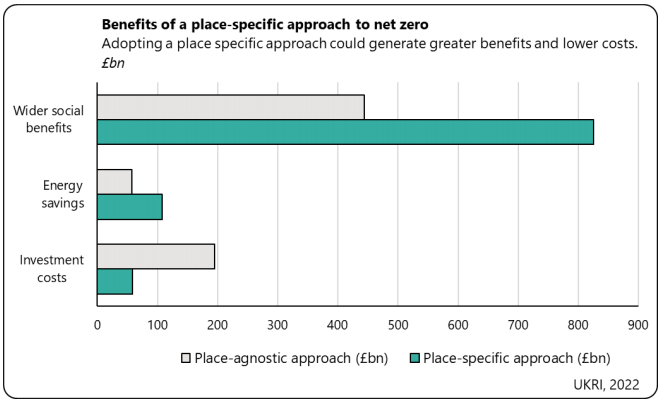
Figure 4.3 - Benefits of a place-specific approach to net zero522
721. The opportunity for better economic returns is largely because the costs and benefits of the transition to net zero will vary by place. For example, cities with poor air quality may see greater health benefits from investing in active transport solutions. Rural areas may need a greater focus on retrofitting older, less dense housing where residents could see greater savings on their energy bills. A locally-led approach is better placed to identify such challenges and opportunities.
722. Government funding has already shown that net zero and growth can go hand-in-hand at a local level. For example, the Levelling Up Fund, Community Renewal Fund, Community Ownership Fund and Towns Fund all included net zero or clean growth principles. £20 million from the Levelling Up Fund will, for example, go towards the development of a new construction skills academy and sustainable housing project in Sunderland, providing green jobs and economic growth for local people.
723. The Review also heard this from stakeholders:
"Net zero is pivotal to our growth ambitions - and offers our region's greatest single opportunity to grow our economy and provide well-paid skilled and professional jobs for local people in the coming decades. We estimate [major local stakeholders] are investing £9.1 billion in net zero technologies across the region" - Tees Valley Combined Authority.523
"[I]n Greater Manchester the low carbon environmental goods and services private sector already represents over 14% of Greater Manchester's business base (by GVA) and over 3% of total employment. Such activity outperforms many other leading global cities and is a clear example of economic growth potential of the net zero economy" - Manchester City Council.524
CASE STUDY: Bristol City Leap Bristol City Leap is an innovative new public-private partnership which will attract up to £1 billion of investment in the city's energy system over the next 20 years. Following a procurement process, Bristol City Council selected Ameresco as its strategic partner to form the City Leap Energy Partnership. The partnership is expected to deliver around £424 million of investment over the first five years of the twenty-year partnership, as well as £61.5 million of social value including ca.£50 million of contracts delivered by local supply chains. Bristol City Leap plans to deliver low carbon energy infrastructure, such as solar PV, heat pumps and building energy efficiency measures at scale on the City Council's land, buildings, and social housing. These investments will enable the Council's operations and council homes to be carbon neutral for heat, power, and fleet. Infrastructure such as the zero carbon heat networks will make a significant contribution to the rapid acceleration of the city's net zero goals. As national net zero policies develop, the partnership will be a powerful delivery route to implement innovative solutions and to multiply the impacts of government funding with private sector investment. Bristol City Council has invested £7.5 million and over two years of planning in the City Leap procurement. The partnership will now be working to effectively engage with the private sector supply chain and deliver economic growth in a way that provides value for the public sector, grows local business, and supports local communities with jobs and training.525 |
724. While there are inefficiencies in the system, there are already examples of local net zero successes on which to build. Central government has also taken some steps to facilitate local net zero action, such as creation of the Local Net Zero Forum, which has been widely welcomed by local government. However, to make the most of the opportunities outlined above, we need a new relationship between central and local government and a more locally-led approach to net zero.
_______________________________________________________________
xxviii The Review generally uses the term 'local authority' in a broad sense to refer to all types and tiers of local government.