Affordability - Bringing down costs
877. Citizens Advice told us that "the largest barrier to consumer uptake across a range of low carbon technologies remains the initial upfront cost."609 Half of those surveyed by Opinium who felt that current net zero measures are not working well attributed this to high costs, particularly upfront costs in sustainable transport and home heating.610
878. New analysis undertaken by the Review shows that cost savings will take time to materialise, and not every household will gain. The average household will save £400- £6,000 cumulatively by 2050.xxx With some of the policies suggested in the Review, this could go further - as much as £14,000 with electricity-gas price rebalancing. However, these savings are not immediate - according to our analysis they will not have materialised by 2040, when the average household will still have borne a cumulative cost of £4,000-£6,000 because of long pay-back periods from the investments (e.g. savings from better home energy efficiency).xxxi In some cases, there will not be a net saving by 2050 at all - unless the government acts.
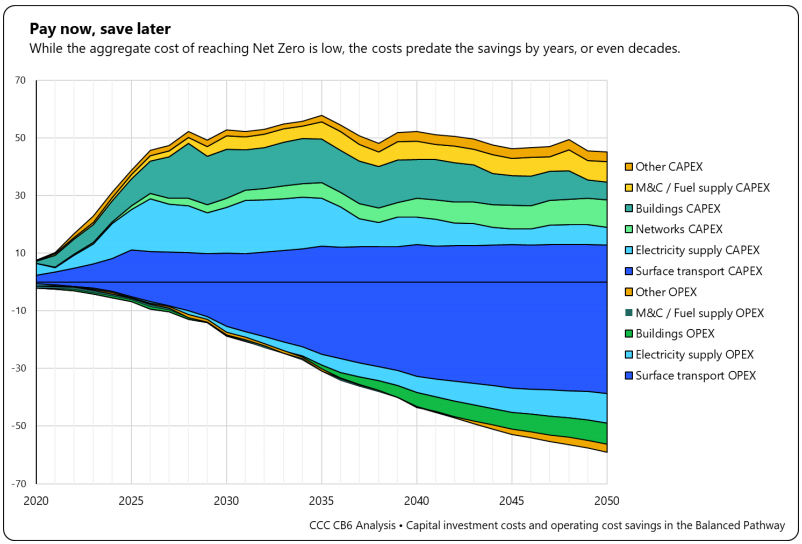
Figure 5.3 - Aggregate cost of reaching net zero
879. Support for low-income households remains essential. Our analysis shows that even with additional measures to reduce the overall cost of the net zero transition for households, only 1.6% (or 450,000) households still would not make an overall saving by 2050. xxxii In scenarios with rebalancing and a 2033 backstop,xxxiii those households could break even with a £900 million (or £2,000 per household) well-targeted subsidy over the course of the whole transition. For many people, the long payback period means that even if they do break even or save by 2050, going ahead with changes to decarbonise their home and transport won't feel worthwhile. Government must take action to reduce costs and address these multiple barriers.
880. Not only is supporting these households the right thing to do, but it promotes growth, unlocks significant health benefits and is popular. National Energy Action (NEA), in conjunction with Newcastle University, have found that decarbonisation measures focused on low-income households boosts demand in the economy more than if measures are targeted at average income homes, unlocking £5.6 million compared to £4.7 million.611 This is because those on low incomes are more likely to spend a larger proportion of any additional income in their local communities, while higher earners are more likely to invest overseas or to put money into savings. HMT's Net Zero Review also concluded that targeting support at low-income households would be most effective.612 Additionally, as lower income households generally live in colder homes, they are more likely to see improvements to their health from moving to more efficient properties, resulting in fewer sick days and improved productivity. NEA told the Review "insulating fuel poor homes will have a direct impact on economic productivity."613 Moreover, all groups are much more likely to support policies if they believe they benefit those most in need.614
881. It is vital that government takes action to ensure the distributional impacts of the net zero transition do not unfairly fall on certain groups or those living in certain locations, exacerbating inequalities. With smart policy design, net zero policies can be a vehicle to address some of these issues and improve the financial situation of all household types, including those which would lose out otherwise.
882. Our analysis has found that various measures can make a significant difference to the way that costs and benefits are distributed, and can increase the overall savings households stand to make.xxxiv These include: increasing the number of people with access to an overnight tariff to charge their electric vehicle, increasing the heat pump 'coefficient of performance' (i.e. the relationship between the power (kW) that is drawn out of the heat pump as cooling or heat, and the power (kW) that is supplied to the compressor) and decreasing heat pump and electric vehicle capital costs. These measures (discussed in detail in the Transport and Homes chapters) significantly reduce the number of households who do not save by 2050 and decrease the level of support needed if government were to try to ensure that all households break even. These measures should be taken forward alongside other interventions to make the transition more affordable, improve accessibility and empower people.
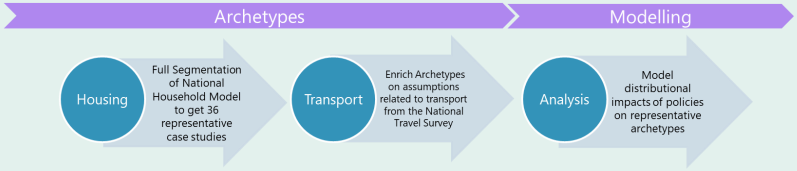
Focus Box: Net Zero Distributional Analysis Our model estimates the distribution of costs to households under different low-carbon heat and transport policies required to deliver net zero. We consider annual bills and capital expenditure until 2050 and test multiple variables which affect the costs and benefits from the transition: fossil fuel prices, heat pump cost and coefficient of performance (COP), electric vehicle prices and types, and simple variations in current policy design. Costs and benefits are presented in 2021 prices, taking into account inflation but not applying the Green Book discount rate which decreases the measured value of costs and benefits which happen far in the future. For the fullest analysis of policy impacts, we chose household case study types which together add up to 99% of the UK housing stock. Fuel usage and heat demand of these archetypes were taken from the National Household Model and data on transport behaviours predominately from the National Travel Survey.
The results have allowed us to form additional policy recommendations in the areas of transport and low carbon heating. Due to time constraints and the complexity of the UK housing stock, this analysis makes some simplifications. We have not considered: • Differences between households which fall into the same case study type; • Regional differences; • Ethnicity-based distributional impacts; • Age-related distributional impacts; • Impacts of any potential future changes in fuel duty, which could decrease the relative price of petrol vs. electricity. This brings the Exchequer's yearly revenues of the range of £26 billion, which, from 2037 onwards, is less than the annual total of household savings from the net zero transition modelled here if our proposed policies are taken on board (totalling £46 billion per year by 2050); • Any specific analysis of households eligible for heat networks or modelling use for hydrogen for heat. This model simplifies the transition, effectively assuming that every household not currently heated with electricity could end up with a heat pump after energy efficiency measures bring its EPC rating up to EPC C. Households currently heated with electricity are assumed to retain their mode of heating supply; • Analysis of the 1% of UK households using coal. These limitations could be improved upon with dedicated time and resource, and we urge Government to take this forward. |
_______________________________________________________________________
xxx 2021 prices, undiscounted. Not accounting for any potential future changes in fuel duty.
xxxi In some scenarios. In scenarios with very high fossil fuel prices persisting (gas over 150p/therm) and average heat pump COP of 350%, the cumulative cost by 2040 is under £250.
xxxii These are: low-income social housing tenants in urban areas on the gas grid, and low-income owner-occupiers in urban areas on the gas grid, adding up to 450,000 households.
xxxiii Explained in detail in Pillar 2 and recommendations section of this Pillar
xxxiv Above the many measures already set out in the Heat and Buildings Strategy, which are also paramount.