5.3.2 Challenges and opportunities
959. Despite the benefits that energy efficiency and low carbon heating offer, they are not yet being take up at the scale required. The number of annual home energy efficiency improvements has been slow, having peaked a decade ago, where up to two million energy efficiency measures were being installed a year. In comparison to European markets, the roll-out of heat pumps in the UK has been relatively modest. Some 1.8 million gas boilers are sold on average each year in the UK while just 37,000 heat pumps were sold in 2020, and 55,000 in 2021 (~3% of residential heating units).
960. In part, this is because the UK faces particular challenges when it comes to decarbonising homes. These challenges can affect different groups in different ways.
961. Firstly, the UK's housing stock is older than similar nations, with over half of homes in England built before 1965 and almost 20% built before 1919.686 According to the ONS, the age of a property is the single biggest factor affecting its energy efficiency.xxxvii Nearly half of low-income households in England still live in homes with an Energy Performance Certificate (EPC) rating of D or below, meaning they may use 27% more gas and 18% more electricity on average than EPC C-rated homes. 687, 688
962. Secondly, heating in the UK is dominated by natural gas, which serves as the main source of heating for around 80% of homes.689 Another 10% rely on oil - largely in rural areas without access to the gas grid. 690
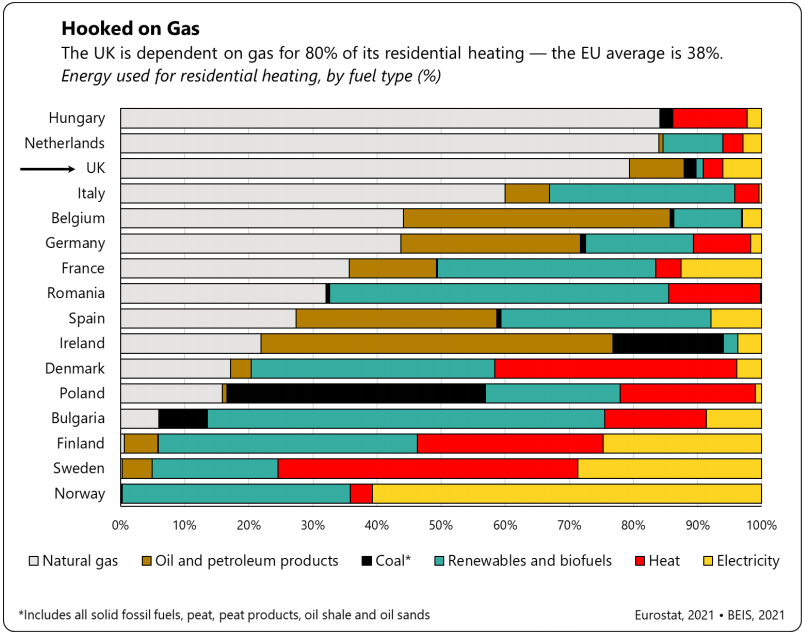
Figure 5.10 - Energy used for residential heating across Europe, by fuel type
963. Thirdly, the UK has experienced years of low home insulation rates. In 2013, government cut support for insulation and rates fell by around 90%, with successive policies failing to resurrect the industry due to being ended early or not funded enough. See graph below.691
964. This means a typical UK home uses more energy than many of its European counterparts, as it loses heat faster. This has left the UK particularly exposed to volatile gas prices, which has significantly contributed to economy-wide inflation; electricity prices rose by 66% and domestic gas prices have doubled in the 12 months to October 2022.692
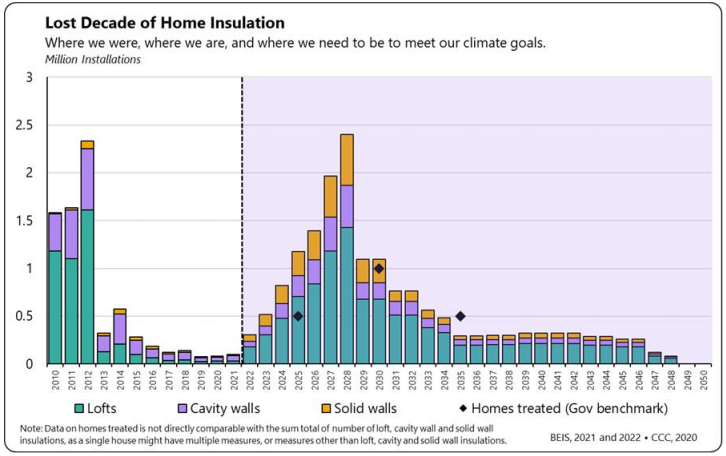
Figure 5.11 - A lost decade of home insulation
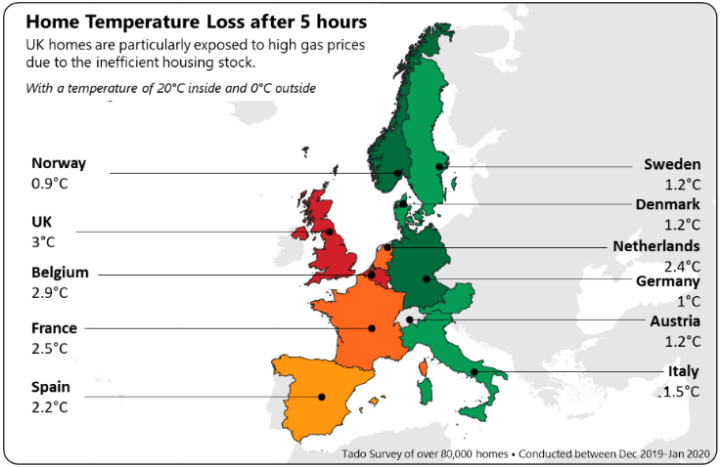
Figure 5.12 - Comparison of home temperature loss
965. While it is true that the UK must go further than many other European nations to eliminate greenhouse gas emissions from its homes, the UK also stands to reap great benefits from the change, such as warmer homes and lower bills.
966. Alongside these challenges, households need to feel empowered to make changes in the home and these changes need to be affordable and accessible (as described in section 5.1). The Review has heard that cost is the number one barrier to people improving the energy efficiency of their homes, with 34% citing this as preventing them from doing so.693 This view was supported by the BEIS Public Attitudes Tracker, specifically for owner-occupier homes, which comprises the largest proportion of homes rated below EPC C. Nationwide Building Society has shown that:
"Installing all the recommended energy improvement measures in homes currently rated F or G would result in an average saving of around £1,780 per year. However, the installation cost for such measures is also high at an estimated £25,800, meaning a payback period of around 14 years... The average cost to improve a property to an energy efficiency [rating] of band C is £8,100, though the cost is considerably higher for properties rated F or G."694
967. Without government intervention, spending on energy would be equivalent to an eye-watering 7% of GDP, more than the health budget (before the current Energy Price Guarantee was announced).695 This starkly illustrates the economic cost of our reliance on gas, with the impact greater where people spend a higher proportion of their money on their bills. When the Energy Price Guarantee ends, households will be exposed and the pressure for government support will still be there. These costs must still be paid for, even with bill support transferred from households to taxpayers. Energy efficiency measures deployed at scale could ease this burden.
968. While current circumstances mean a well-installed heat pump should be cheaper to run than a gas boiler, there are multiple conditions that underpin this, and a suite of policies must be implemented to ensure: a) the market delivers on this momentum and b) this market involvement remains a permanent fact.
Government should regulate through a suite of measures to create the conditions for sustained growth of new markets for low-carbon heat, so that at least 600,000 heat pumps are installed each year by 2028, and up to 1.9 million by 2033. The Government should implement the off-gas grid regulations that envisage the end of new and replacement fossil fuel heating systems in the mid-2020s. |
969. The UK is not alone in its energy efficiency efforts; other countries' efforts can be seen below across the globe:
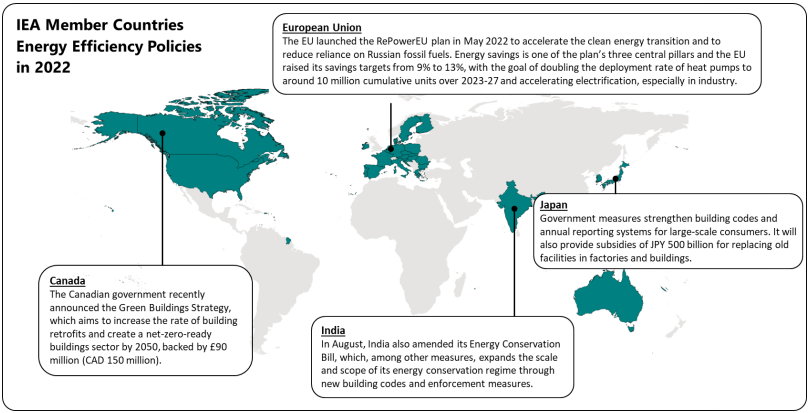
Figure 5.13 - International examples of energy efficiency measures
_____________________________________________________________________
xxxvii Newer homes (those built after 2012) are almost 200 times more likely to have a band A to C energy efficiency rating in England and 300 times more likely in Wales, than properties built before 1982.